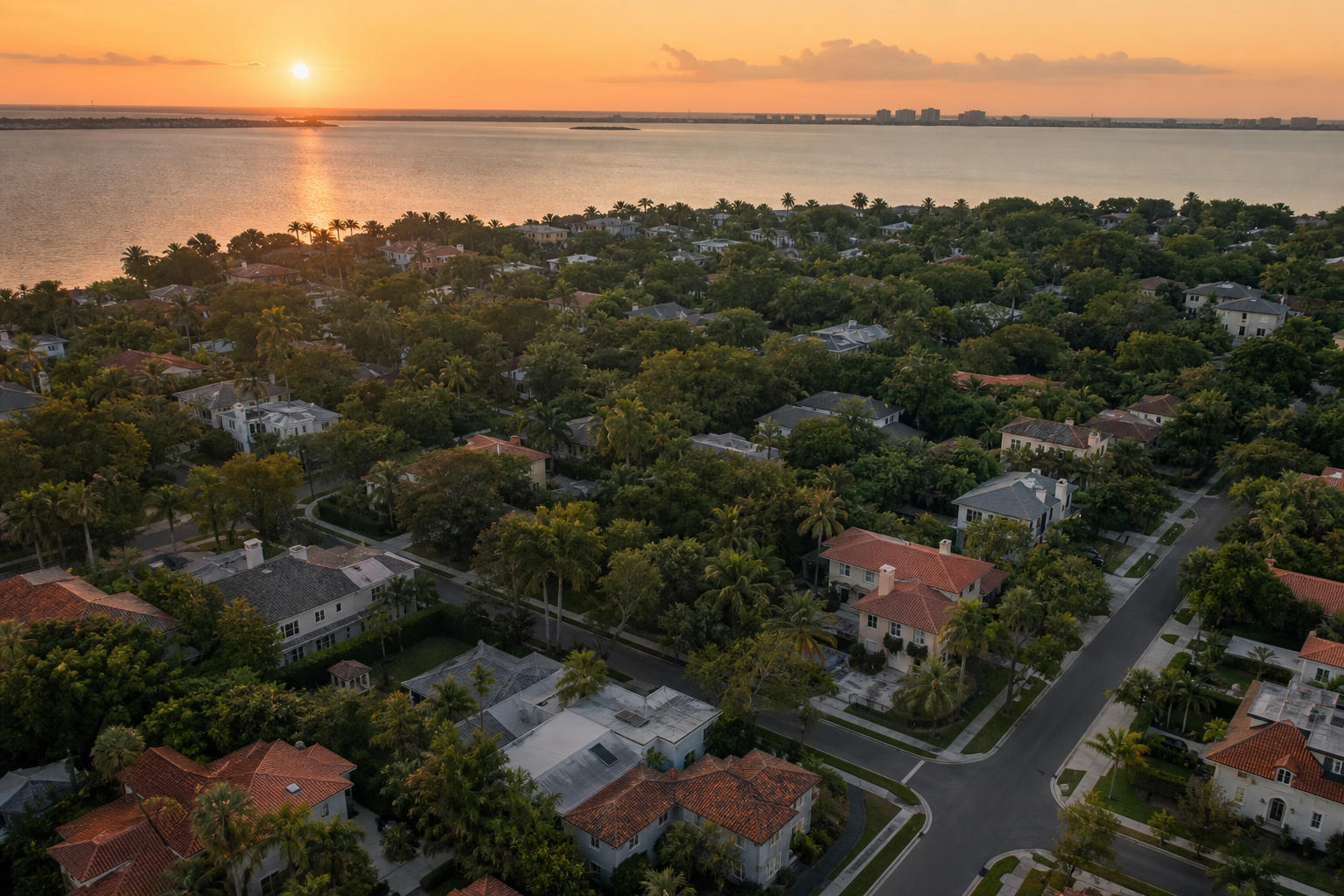
Selling a home in Tampa Bay involves several cost categories beyond commission: Florida's documentary stamp tax on the deed, owner's title insurance, recording fees, prorated property taxes, HOA adjustments, and any buyer concessions you agree to. Every line item affects your net proceeds, and most are negotiable except the statutory doc stamp rate.
How much does it cost to sell a house in Tampa Bay?
Selling a home in Tampa Bay typically involves Florida's documentary stamp tax on the deed, owner's title insurance, recording fees, prorated property taxes, real estate commission, and any seller concessions negotiated during the contract. These costs are deducted from your sale price before you receive the remainder, and while some rates are set by Florida statute, most line items are negotiable between buyer and seller in the contract.
Here's the honest answer most sellers don't hear until they're sitting at the closing table: the gap between your sale price and the check you walk away with is almost always larger than people expect. I walk every seller I work with through a preliminary net sheet before we list, because surprises at closing are avoidable.
Let me break down exactly what drives that gap for Tampa Bay sellers in 2026.
The Full Tampa Bay Seller Cost Stack
Think of your net proceeds as a waterfall. You start with the contract price, then each cost category takes a slice. Here's how each layer works.
Florida Documentary Stamp Tax on the Deed
This is Florida's version of a transfer tax, and it applies to every home sale in Tampa Bay. Under Chapter 201 of the Florida Statutes, the documentary stamp tax on deeds is assessed at 70 cents per $100 of consideration (or fraction thereof). The Florida Department of Revenue confirms this rate applies in all 67 Florida counties except Miami-Dade, which uses a different rate structure. Hillsborough, Pinellas, Pasco, and Manatee counties all use the standard $0.70 per $100 rate.
The tax is due when the deed is recorded, typically handled by your closing agent. The rate itself is fixed by law. Who pays it is not. In Tampa Bay, local custom often assigns the deed doc stamp to the seller, but your contract terms govern, and this is negotiable.
Owner's Title Insurance
Florida uses state-promulgated rates for owner's title insurance, meaning the base premium for a given coverage amount is standardized by state regulation rather than set freely by each company. This makes it one of the more predictable line items, but it's also one of the largest.
In Tampa Bay, some closing-cost guides describe the seller as customarily paying the owner's title policy, while others describe buyers covering it in Hillsborough and Pinellas. These sources genuinely conflict, which tells you something important: this is a negotiated item, not a legal requirement. Depending on how your contract reads, the title insurance obligation can shift either direction and meaningfully change what you net.
Settlement Fees, Title Search, and Recording
Your closing agent charges a settlement or closing fee for conducting the closing, and the county clerk charges recording fees to record the deed and any related documents. Per the Florida Department of Revenue's documentary stamp tax overview, doc stamp tax on the deed is collected by the county clerk or recording official at the time of recording. Recording fees are set by county clerk schedules and are relatively modest compared to taxes and title premiums, but they appear on your closing statement and reduce net proceeds.
A title search is also typically required to confirm clean title before the policy is issued. Like settlement fees, responsibility for these charges is driven by contract and local custom, not statute.
Real Estate Commission
Commission is negotiated between you and your listing broker. There is no Florida statute that sets a standard or minimum rate, and broker fees are fully negotiable. The listing-side compensation is agreed in your listing agreement. Any compensation a seller chooses to offer a buyer's agent is optional and separately negotiable. Commission is paid from your proceeds by the closing agent and is one of the largest single line items on your settlement statement.
If you're evaluating what it costs to sell, this is the number worth having a direct conversation about with your listing agent before you sign anything.
Prorated Property Taxes and HOA Dues
Florida property taxes are paid in arrears, meaning at closing you'll owe a credit to the buyer for the portion of the year you owned the home. If your tax bill hasn't been paid yet when you close, that proration comes out of your proceeds. This adjustment can be meaningful, especially if you close mid-year.
HOA dues, condo fees, special assessments, and utility balances are also typically prorated to the closing date. These aren't fees in the traditional sense, but they reduce your net the same way. Your closing agent handles the math, but you should know they're coming.
Seller Concessions and Repair Credits
This is the category that surprises sellers most. Buyer closing cost credits, post-inspection repair allowances, and seller-paid home warranties are all negotiated items that show up as deductions on your settlement statement. They're not mandated by law, but in today's market they're common. A buyer asking for a $10,000 closing cost credit at a $595,000 sale price has the same effect on your net as a $10,000 price reduction, but it doesn't look that way in the headline number.
This is exactly why I tell every seller I work with: highest offer price is not always highest net. Two offers at the same price with different concession structures can produce meaningfully different checks at closing.
Tampa Bay Market Context: What Sellers Are Working With
Understanding your cost stack matters more when you know what price range you're working in. According to recent Zillow market data (trailing approximately 90 days as of August 2026), here's where median sale prices and pace stand across the Tampa Bay areas I work in:
| Area | Median Sale Price | Median Days on Market |
|---|---|---|
| South Tampa | $595,000 | 60 |
| Harbour Island | $590,000 | 39 |
| Ybor City | $230,000 | 43 |
| Seminole Heights | $415,000 | 47 |
| Westchase | $534,000 | 49 |
| New Tampa | $430,000 | 50 |
These are area-level medians. Your home's actual value depends on condition, street, build year, and timing. But the range illustrates why understanding costs matters: the doc stamp tax, title premium, and prorations at a $595,000 South Tampa closing look very different from the same line items on a $230,000 Ybor City transaction.
With homes in South Tampa sitting on the market a median of 60 days before closing, pricing and cost structure both matter to your final outcome. For a deeper look at how pricing strategy plays into what you net, see my post on home pricing in South Tampa's competitive market.
Negotiable vs. Fixed: Knowing the Difference
One of the most practical things I can tell a Tampa Bay seller is which costs are truly fixed and which ones are on the table.
Largely fixed by statute or promulgated rate:
- Documentary stamp tax rate on the deed (set by Chapter 201, Florida Statutes)
- Recording fees (set by county clerk schedules)
- Owner's title insurance base premium (promulgated by Florida regulation)
Negotiable by contract:
- Which party pays doc stamps, title insurance, and settlement fees
- Commission structure and total broker compensation
- Buyer closing cost credits and concessions
- Repair allowances and home warranties
- HOA transfer fee responsibility
Here's the leverage point most sellers miss: even though the doc stamp rate and title premium rate are fixed, who pays them is not. Shifting responsibility for those items through contract negotiation can change your net proceeds without changing the sale price at all. According to guidance from the Florida Department of Revenue and Florida-specific closing practice resources, responsibility for doc stamps and title costs is set by contract terms and local custom, not state law.
The Consumer Financial Protection Bureau's closing disclosure explainer is a useful reference for understanding how these line items appear on your settlement statement, though Florida-specific costs like doc stamps require local knowledge to interpret correctly.
If you're comparing two offers and want to understand which one actually nets you more, that's a conversation worth having before you sign. Every situation is different, and the only way to know for sure is to run the numbers with someone who knows this market. If you'd like a data-driven look at where your home stands today, you can get an instant home valuation here as a starting point.
Frequently Asked Questions
What closing costs does the seller usually pay when selling a house in Tampa Bay?
In Tampa Bay, sellers commonly pay the documentary stamp tax on the deed, owner's title insurance, title search, recording fees, real estate commission, prorated property taxes, and any HOA or condo fee adjustments. Some guides also list settlement fees as a seller cost in certain counties. These are customary allocations, not legal mandates, and all of them are negotiable in your contract.
In Hillsborough and Pinellas County, who pays the Florida documentary stamp tax on the deed?
The documentary stamp tax on the deed is set at 70 cents per $100 of consideration under Chapter 201 of the Florida Statutes and applies in both Hillsborough and Pinellas counties. Local custom in Tampa Bay often assigns this tax to the seller, but the Florida Department of Revenue confirms that responsibility is determined by contract, not statute. Your purchase agreement governs who pays.
Are seller closing costs in Tampa Bay negotiable, or are they set by Florida law?
The rates for certain costs are fixed (the doc stamp tax rate, recording fees, and the promulgated title insurance premium), but which party pays those fixed-rate items is negotiable in the contract. Commission, concessions, repair credits, and HOA transfer fees are fully negotiable. This means two sellers closing at the same price can net very different amounts depending on how their contracts are structured.
How do prorated property taxes and HOA dues show up on my closing statement?
Florida property taxes are paid in arrears, so at closing you'll owe the buyer a credit for the portion of the year you owned the home but the tax bill hasn't yet been paid. HOA dues and condo fees are typically prorated to the closing date as well. These adjustments appear on your closing disclosure as credits to the buyer and reductions to your net proceeds, handled by your closing agent.
What's the difference between my Tampa home's sale price and the cash I'll walk away with?
Your net proceeds equal the sale price minus your mortgage payoff, doc stamp taxes, title and recording fees, commission, prorated taxes and HOA dues, and any buyer concessions you agreed to. In Tampa Bay, where doc stamp tax and title insurance are significant line items and median prices range from roughly $230,000 in Ybor City to nearly $600,000 in South Tampa, the gap between headline price and actual check can be substantial. A preliminary net sheet from your listing agent before you list is the best way to avoid surprises.
Does the standard Florida documentary stamp tax rate apply to all Tampa Bay home sales in 2026?
Yes. As confirmed by the Florida Department of Revenue, the $0.70 per $100 rate applies to deed transfers in all Florida counties except Miami-Dade. Hillsborough, Pinellas, Pasco, and Manatee counties all use this standard rate, and it remains in effect as of August 2026.
The Bottom Line for Tampa Bay Sellers
Your net proceeds are shaped by far more than commission alone. Florida's doc stamp tax, title insurance, prorations, and concessions all take a real bite, and which party absorbs each one is often negotiable. The sellers who come out ahead are the ones who understand the full cost stack before they accept an offer, not after.
I build a preliminary net sheet for every seller I work with before we go to market, so you're never guessing. Start with an instant home valuation to see where your home stands, and then let's run the real numbers together.
Equal Housing Opportunity. Patrick Uhler is a Broker Associate with Pineywoods Realty, licensed in Florida and regulated by the Florida Real Estate Commission. This article is general information only and does not constitute legal, tax, or financial advice. Confirm your specific costs and obligations with your closing agent, tax advisor, or lender.
:format(webp):quality(80)/u.realgeeks.media/uhlerrealestate/facebook.png)
:format(webp):quality(80)/u.realgeeks.media/uhlerrealestate/youtube.png)
:format(webp):quality(80)/u.realgeeks.media/uhlerrealestate/twitter.png)
:format(webp):quality(80)/u.realgeeks.media/uhlerrealestate/instagram.png)
:format(webp):quality(80)/u.realgeeks.media/uhlerrealestate/zillow.png)