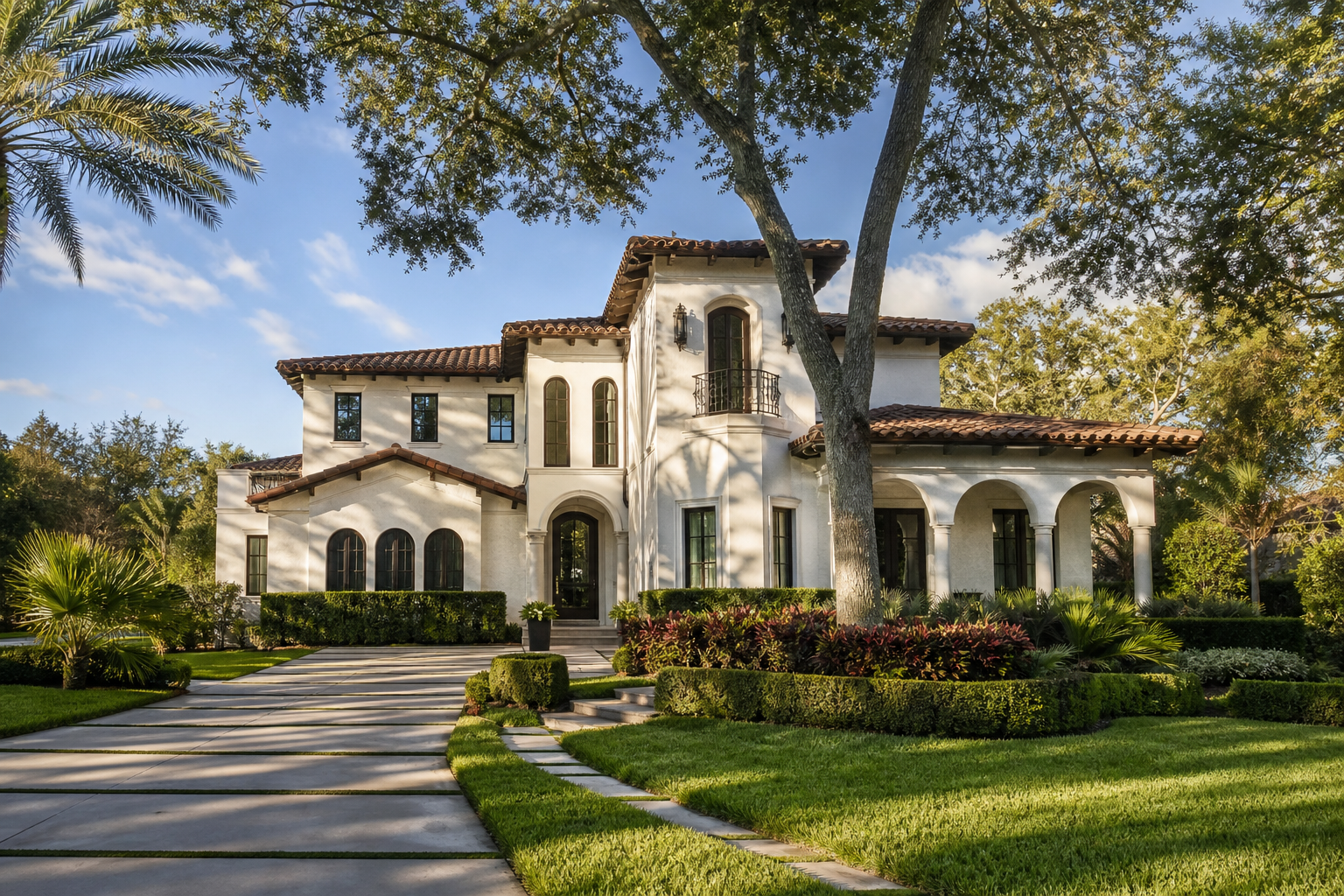
Selling in Tampa Bay in late 2026 can still make sense, but the data shows a more balanced market than the 2021-2022 boom. Median prices are roughly flat, days on market have stretched to 45-64 days, and inventory sits near 5 months, meaning well-priced, well-prepared homes sell while overpriced ones stall.
Is now a good time to sell a house in Tampa Bay?
Selling in Tampa Bay in late 2026 can still work in your favor, but the data tells a more nuanced story than it did a few years ago. Median prices are roughly flat year-over-year, homes are taking 45–64 days to sell on average, and inventory has climbed to around 5 months of supply, conditions that reward well-priced, well-prepared sellers and punish everyone else.
Key Takeaways
- The Tampa Bay metro median sale price was approximately $443,000 as of May 2026, roughly flat compared to the prior year, according to iBuyer.com's August 2026 analysis.
- Active listings are up roughly mid-teens to mid-twenties percent year-over-year, giving buyers more choices and more negotiating leverage than at any point in the past four years.
- Tampa Bay's inventory sat at approximately 5.4 months of supply as of March 2026, near the upper edge of what analysts consider a balanced market, per Digital Towns market data.
- Well-maintained homes with newer roofs and accurate pricing are still selling in 25–30 days even in this slower environment, per NOW Tampa Bay's 2026 housing overview.
- Overpriced listings face a compounding penalty, extra weeks on market, eventual price cuts, and buyers who assume something is wrong with the home.
What does the 2026 Tampa Bay market data actually show?
The short version: Tampa Bay is no longer the frenzied seller's market it was in 2021 and 2022. It hasn't collapsed either. What we have is a market that has normalized, and that distinction matters a lot depending on your situation.
Here's what the data shows heading into fall 2026.
Prices are flat, not falling
According to iBuyer.com's August 2026 Tampa Bay housing analysis, the metro median sale price was around $443,000 based on the three months ending May 2026, with homes averaging roughly 45–64 days on market depending on the segment. A separate mid-year snapshot from portal data puts the median sale price closer to $383,333 for May 2026, with a median list price around $415,500 in June 2026, a gap that tells you buyers are negotiating, not just accepting ask price.
Digital Towns' March 2026 market trends data pegged the Tampa median around $433,000, with days on market ranging from 44 to 98 days depending on the submarket and price tier. That wide range is the story: this isn't one market, it's several.
The takeaway for sellers: modest price appreciation is possible, but counting on it to bail out an overpriced listing is a losing strategy right now.
Inventory has shifted the balance of power
During the pandemic boom, Tampa Bay routinely had one to two months of supply. Buyers had almost no leverage. That's changed significantly.
As of March 2026, Digital Towns reported Tampa at approximately 5.4 months of inventory, above the national average of roughly 3.8 months at the time, and squarely in the range most analysts call balanced. NOW Tampa Bay's 2026 Florida housing overview puts the single-family range at 4.3–5.4 months of supply through mid-2026, consistent with that reading.
More inventory means buyers have options. They're comparing your home to several others, not scrambling to beat out five other offers. That doesn't mean you can't sell, it means the homes that sell are the ones that stand out on price, condition, and presentation.
I walk every seller I work with through what the active competition looks like before we set a price. In a market with this much supply, that step isn't optional.
Days on market have lengthened, recalibrate your expectations
This is the biggest mindset shift sellers need to make in 2026. If you sold a home in 2021 or 2022 and remember offers rolling in within 48 hours, that experience is no longer the baseline.
The August 2026 analysis shows homes averaging 45–64 days on market across the metro. A September 2026 snapshot suggests the range has been running 41–56 days depending on the segment, longer than spring 2026's pace but not dramatically so. Thirty to sixty days on market is now normal, and two months on the market isn't automatically a red flag if the home is priced and positioned correctly.
The exception: well-priced homes with key updates like newer roofs are still moving in 25–30 days. That's a meaningful gap from the 55+ day average, and it's entirely within a seller's control.
Here's the area-level breakdown from trailing data across several Tampa Bay submarkets, based on recent closed sales:
| Area | Median Sale Price | Median Days on Market |
|---|---|---|
| South Tampa | $415,250 | 38 |
| Harbour Island | $650,000 | 53 |
| Ybor City | $230,000 | 55 |
| Seminole Heights | $365,000 | 31 |
| New Tampa | $426,000 | 52 |
These are area-level medians, your home's value depends on its condition, street, and the specific comps around it. But the pattern is clear: inner-ring neighborhoods like Seminole Heights and South Tampa are moving faster than higher-priced or more outlying areas. That's useful context when you're deciding whether to list now or wait.
Should you sell now or wait until 2027?
This is the question I get most often, and the honest answer is: it depends on your goals and your property. The data doesn't give a universal yes or no, it gives you the conditions you'd be selling into, and then you decide whether those conditions work for you.
The case for selling now
Selling in late 2026 makes the most sense if:
- Your home is well-maintained and move-in ready, particularly if you have a newer roof, that's the single biggest differentiator in the current market.
- You can price within the current comp range, not above it, and still meet your financial goals.
- You're planning to buy in the same market. A more balanced market cuts both ways, you'll have more time and more choices on the buy side than you would have had in 2022.
- You're in a high-demand submarket like Seminole Heights or South Tampa, where days on market are running below the metro average.
For sellers who are also buyers, the current environment actually has an underappreciated upside. More inventory, longer timelines, and less competition on the purchase side means you're not giving up the leverage you gain on the sell side. That's a real advantage worth factoring in.
The case for waiting
Waiting might make more sense if:
- You're counting on significant price appreciation before you sell. The data doesn't support that right now, year-over-year gains are flat to slightly negative in some indices, per Digital Towns and the NOW Tampa Bay overview.
- Your property has deferred maintenance, an aging roof, or insurance complications. In this market, those issues show up as longer days on market and steeper price reductions, not the kind of outcome you want. Addressing them first almost always pays off.
- You're in a Pinellas coastal submarket with elevated flood or insurance exposure. Buyer caution around insurance costs has been a real factor in those areas, and it can lengthen your timeline or require sharper pricing to compensate.
For a deeper look at how pricing strategy plays out specifically in South Tampa's competitive price tiers, I've written about it at Home Pricing in South Tampa's Competitive Market, the dynamics there are worth understanding before you set a number.
The submarket picture matters more than the metro average
Tampa Bay isn't one market. Hillsborough, Pinellas, and Pasco each have their own dynamics in 2026.
Inner-ring Hillsborough neighborhoods, South Tampa, Seminole Heights, parts of Ybor City, tend to move faster when priced correctly, partly because of proximity to employment and walkability, and partly because the buyer pool is deeper. Pinellas coastal areas are dealing with heightened insurance sensitivity, which adds friction to the buyer side and can push days on market higher or force pricing adjustments. Pasco is more affordability-driven and rate-sensitive, demand is there, but buyers in that market are watching mortgage rates closely and have more new-construction competition to weigh.
The Florida Realtors monthly market data reports break out the Tampa–St. Petersburg–Clearwater MSA by property type and include county-level detail, that's the most authoritative local data feed for tracking how these submarkets diverge month to month.
If you want to understand where your specific property sits within all of this, an accurate, data-driven home valuation is the place to start, not a Zestimate, but a real comp-based analysis that accounts for your street, condition, and the active competition you'd be going up against.
FAQ
Is late 2026 a good time to sell in Tampa Bay, or should I wait until 2027?
Late 2026 can be a solid time to sell if your home is in good condition and priced within the current comp range. The market is balanced rather than strongly seller-favored, so well-prepared homes are still selling, but sellers who need rapid appreciation or have significant deferred maintenance may find waiting and addressing those issues first produces a better outcome. There's no reliable data suggesting 2027 will be dramatically stronger, so the decision comes down to your specific property and goals more than market timing.
How long are homes taking to sell in Tampa Bay compared to last year?
Homes across the Tampa Bay metro are averaging roughly 45–64 days on market in 2026, up meaningfully from the sub-30-day pace of the 2021–2022 market. Well-priced, updated homes, particularly those with newer roofs, are still moving in 25–30 days, while overpriced or deferred-maintenance properties are sitting well past the 60-day mark. Thirty to sixty days on market is now a normal, healthy outcome, not a warning sign.
Are Tampa Bay home prices going up or down in 2026?
Prices are essentially flat year-over-year, with some indices showing modest gains and others showing slight declines depending on the data source and submarket. The metro median sale price has been running in the $383,000–$443,000 range depending on the segment and month, per mid-2026 portal and MLS-derived data. Sellers should plan for modest or no appreciation in their pricing strategy rather than counting on the market to cover an aggressive ask.
How much inventory is on the market in Tampa Bay, and does it favor buyers or sellers?
Tampa Bay's single-family inventory was running at approximately 4.3–5.4 months of supply through mid-2026, which puts it near or slightly above what most analysts call a balanced market (typically 5–6 months). Active listings are up roughly mid-teens to mid-twenties percent year-over-year, giving buyers more options and more negotiating leverage than at any point since the pandemic. It's not a buyer's market outright, but sellers no longer hold the overwhelming advantage they did in 2021–2022.
How important is pricing strategy now that Tampa Bay's market has cooled?
Pricing strategy is more important now than it has been in years. In 2021–2022, even overpriced homes often sold quickly because demand overwhelmed supply. Today, an overpriced listing sits, accumulates days on market, and eventually takes a price cut, which signals to buyers that something may be wrong and often produces a lower final sale price than correct pricing from day one would have. Getting the number right in the first week matters far more than chasing the market down later.
The data points to a market where selling makes sense, but only if you go in with accurate expectations and a pricing strategy that reflects what buyers are actually paying, not what you hoped the market might still be. Your specific situation, property condition, and submarket will determine whether now is the right move or whether a few months of preparation first puts more money in your pocket.
Start with a data-driven valuation of your home: get an instant home valuation here. From there, I can walk you through what the comps actually support and what your realistic timeline and net looks like in today's market.
Equal Housing Opportunity. Patrick Uhler is a licensed Broker Associate with Pineywoods Realty, regulated by the Florida Real Estate Commission. This article is general market information only, not legal, tax, or financial advice. Confirm your specific numbers with your closing agent, tax advisor, or lender. Broker fees and commissions are fully negotiable and not set by law or any standard rate.


