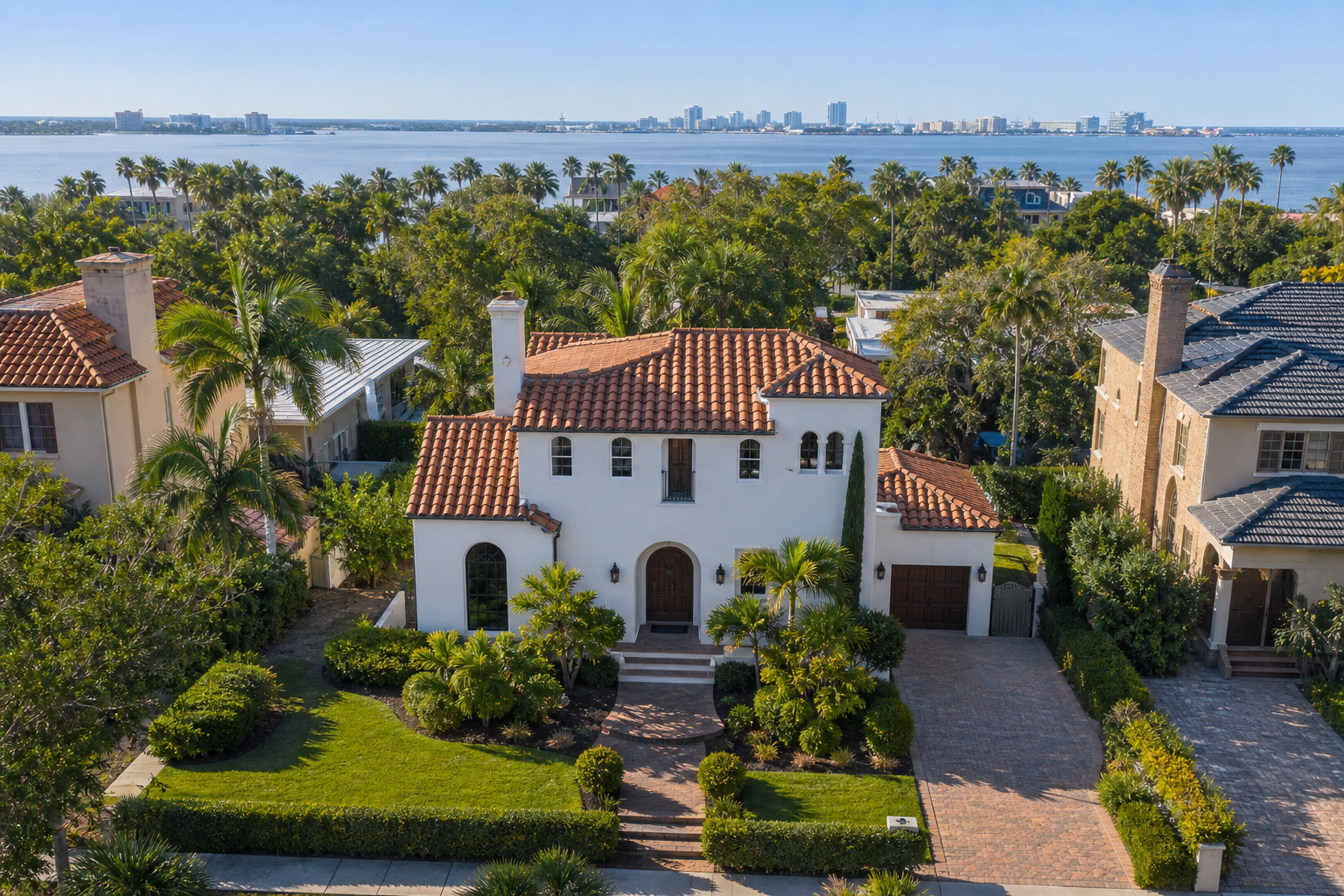
In Hillsborough County's balanced 2026 market, the right list price is built on neighborhood-level comparable sales, current supply, and property-specific adjustments, not county medians or online estimates. Homes priced correctly from day one sell faster and net more than those that chase the market down through repeated reductions.
How do you price a Hillsborough County home right the first time?
Pricing a Hillsborough County home correctly from day one means building your list price from neighborhood-level comparable sales, current supply data, and honest property-specific adjustments, not a county median or an online estimate. In 2026's balanced market, buyers have enough options to skip an overpriced home entirely, and the longer a listing sits, the more leverage shifts to the buyer.
Key Takeaways
- Recent local market data shows a median sale price of $595,000 and a median of 53 days on market in the Harbour Island area, but individual values vary significantly by condition, street, and timing.
- Across Hillsborough County submarkets, median sale prices range from $230,000 in Ybor City to $573,673 in Westchase, a county-wide average tells you almost nothing about your specific home's value.
- National research from the National Association of REALTORS® consistently finds that overpriced homes see more days on market and ultimately sell for less than correctly priced ones.
- In Hillsborough's current market, with roughly 3.5 to 4 months of supply, a home that sits 60 or more days is a warning sign, buyers and their agents treat it as leverage, not opportunity.
- A comparative market analysis built on recent, nearby comparable sales is the most reliable pricing tool available to a Hillsborough County seller.
Why does the first list price matter so much in Hillsborough's 2026 market?
The short answer: buyers see new listings fast, and they form an opinion even faster. NAR research and seller guidance consistently shows that the most serious buyers tour new listings within the first one to two weeks. If they perceive a home as overpriced relative to what else is available, they don't negotiate, they move on to the next option.
That dynamic matters more in 2026 than it did in 2021. Hillsborough County is no longer a "sell in a weekend" market. With months of supply sitting around 3.5 to 4.0, buyers have time to compare. A Tampa Bay Q2 2026 snapshot reported 1,612 new single-family listings in Tampa against 1,492 homes sold, inventory is growing modestly and being absorbed, but buyers can afford to be selective. Price a home above what the comps support, and it simply doesn't make the first-weekend tour list.
What happens next is the part sellers hate. The listing sits. Days on market tick up. Buyers and agents start asking, "What's wrong with it?" even when the only thing wrong is the price. NAR data identifies incorrect initial pricing as one of the leading causes of expired listings and repeated price reductions. By the time a seller drops to where they should have started, they've often lost their best buyers and their negotiating position.
Pricing correctly the first week matters more than chasing the market down later. I've seen it play out too many times: a well-priced home generates early showings, real feedback, and offers. A reach price generates silence, then a slow bleed of small reductions that signal desperation to every buyer watching.
What does "normal" timing look like in Hillsborough right now?
Local pros use days on market as a real-time report card on pricing. In Hillsborough's current balanced market, 10 to 14 days to contract is a strong sign the price was right or even slightly aggressive. Thirty to 45 days is broadly acceptable. Sixty or more days is a signal to revisit the price, the marketing, or both.
Recent local market data puts the median days on market at 53 days in the Harbour Island area. Across the county's major submarkets, the picture varies considerably:
| Area | Median Sale Price | Median Days on Market |
|---|---|---|
| South Tampa | $550,000 | 59 |
| Ybor City | $230,000 | 49 |
| Seminole Heights | $390,371 | 47 |
| Westchase | $573,673 | 39 |
| New Tampa | $432,500 | 48 |
These are area-level medians from aggregated public listing data trailing roughly 90 days as of September 2026. An individual home's value depends on condition, street, build year, and timing, these figures are context, not a pricing decision. But they do illustrate the point clearly: the "right" price in Westchase looks nothing like the right price in Ybor City, even though both are Hillsborough County.
How do you actually build the right list price for your home?
A comparative market analysis, a CMA, is the foundation. Florida Realtors and NAR both emphasize that the most reliable way to set a list price is to analyze recent comparable sales (similar size, age, condition, and location), active competition, and pending sales, not countywide averages and not portal estimates.
Here's what a solid CMA for a Hillsborough home actually looks at:
- Recent closed sales: Ideally three to five homes that sold in the last 90 days, within a close radius, with similar square footage, lot size, age, and condition. These are your anchors.
- Active competition: What are buyers comparing your home to right now? If three similar homes are sitting at $50,000 less than where you want to price, that's your market.
- Pending sales: Homes under contract tell you where the market is heading, not just where it's been.
- Adjustments for condition and upgrades: A renovated kitchen, a new roof, or a dated HVAC system each shift the number. Buyers will price these in, better to price them in first.
- Price brackets and search filters: Pricing at $504,900 instead of $499,900 can push your listing past buyers who set a hard $500,000 filter on portals. These search brackets are real, and they affect traffic.
What local factors shift pricing inside Hillsborough County?
Hillsborough is a large, diverse county, and the factors that move price vary significantly by location. A few I walk every seller through:
Flood zones and insurance costs. Homes near Tampa Bay, the Hillsborough River, or low-lying areas may sit in FEMA-mapped flood zones. Flood insurance premiums have risen meaningfully in recent years, and buyers factor total monthly costs into their offers. A flood-zone home needs to be priced against other flood-zone comps, not non-flood-zone ones, or the appraisal and the negotiation will force the correction anyway.
HOA fees and CDD assessments. Many newer communities in New Tampa, Riverview, and similar areas carry HOA fees and Community Development District assessments. Buyers compare total monthly cost of ownership. Homes with higher carrying costs may need a sharper list price to compete with lower-fee alternatives nearby.
Condition and deferred maintenance. Tampa Bay's housing stock spans 1950s block homes to brand-new construction. Dated roofs, older AC units, and original kitchens show up in inspection reports and buyer repair requests. Experienced agents price these in upfront rather than waiting for a buyer to come back with a repair credit demand after contract.
Appraisal risk. The CFPB is clear on this: lenders base the loan amount on the lower of the purchase price or the appraised value. If your home doesn't appraise at the contract price, the buyer has to bring more cash, you have to reduce the price, or the deal falls apart. In a stabilizing market where appraisers are using current comps, not 2021 peak numbers, pricing significantly above comparable sales creates real appraisal gap risk. Hillsborough has a large share of FHA and VA buyers, especially below the county median, and those loan types come with stricter appraisal and condition standards. Pricing at or near the likely appraised value broadens your buyer pool and reduces fall-through risk.
For sellers in specific submarkets, I've also written deeper dives on home pricing in South Tampa's competitive market and pricing your Seminole Heights home right in 2026, both areas where micro-location factors move the number more than the county average ever could.
What about the Zillow estimate?
Online automated valuations are a starting point for curiosity, not a pricing tool. They don't know your home's condition, your specific street, your flood zone status, your HOA fees, or whether your roof is three years old or twenty-three. Florida Realtors is consistent on this point: micro-location within a large county like Hillsborough can shift value significantly, and countywide or ZIP-code averages are a background reference, not a pricing decision. The real work happens at the neighborhood and property level.
Your specific number depends on your home's condition, location, flood zone, HOA situation, and what's sold nearby in the last 90 days. That's exactly the kind of analysis I run for every seller before we talk about a number.
Frequently Asked Questions
How do I know if my Hillsborough County home is priced too high?
The clearest signals are low showing activity in the first two weeks, consistent buyer feedback that the price is high compared to similar homes, and no offers after 30 or more days on market. In Hillsborough's current market, a well-priced home typically generates showings quickly and at least one offer within the first two to three weeks in most segments. If you're past that window without activity, price is usually the first thing to revisit.
Should I price my Tampa home above market and leave room to negotiate?
In most cases, no, and this is one of the most common mistakes I see in a balanced market. Buyers in 2026 don't "negotiate down" a home they perceive as overpriced; they skip it and move to the next option. NAR research consistently shows that homes priced correctly from the start sell faster and net more than homes that start high and require reductions. The "room to negotiate" strategy tends to produce fewer showings, longer days on market, and a lower final sale price than a realistic launch price would have.
How do recent sales in my Tampa neighborhood affect my list price?
They are the single most important input in your pricing decision. Lenders and appraisers use recent comparable sales to determine value, and buyers use them to decide whether your price is fair. A comparative market analysis built on three to five recent, nearby, similar-condition sales, adjusted for your home's specific upgrades, condition, and location, gives you a defensible price range that the market will actually support. County or ZIP-level medians provide context, but neighborhood-level comps set the price.
Do buyers in Hillsborough County still pay over asking, or is that mostly over?
Some correctly priced homes in high-demand pockets still attract multiple offers and sell at or above list, but the broad "everything sells over asking" environment of 2021 and 2022 is not the current reality in Hillsborough. With months of supply around 3.5 to 4.0 and inventory growing modestly, buyers have more options and more time. Over-asking outcomes happen when a home is priced right and generates early competition, not as a result of starting high.
What's the difference between a Zillow estimate and a REALTOR's CMA for my Hillsborough home?
A Zillow estimate is an automated calculation based on publicly available data, it doesn't account for your home's actual condition, recent updates, flood zone, HOA costs, or what's actively competing in your specific neighborhood. A comparative market analysis from a local agent uses recent closed sales, active listings, and pending contracts that are genuinely comparable to your home, adjusted for the factors that actually move price in your area. For a pricing decision, the CMA is the tool, the online estimate is background noise.
Getting the price right before you list is the highest-leverage decision in the entire selling process. If you're thinking about selling in Hillsborough County, the first step is an accurate, data-driven valuation built on what's actually happening in your neighborhood right now.
Get an instant home valuation here or reach out to me directly, I'll walk you through the comps, the local factors, and what a realistic list price looks like for your specific home.
Equal Housing Opportunity. Patrick Uhler is a Broker Associate with Pineywoods Realty, licensed in Florida (Florida Real Estate Commission). This article is general information only and does not constitute legal, tax, or financial advice. Confirm your specific costs and transaction details with your closing agent, tax advisor, or lender. Broker compensation is fully negotiable and not set by law.


