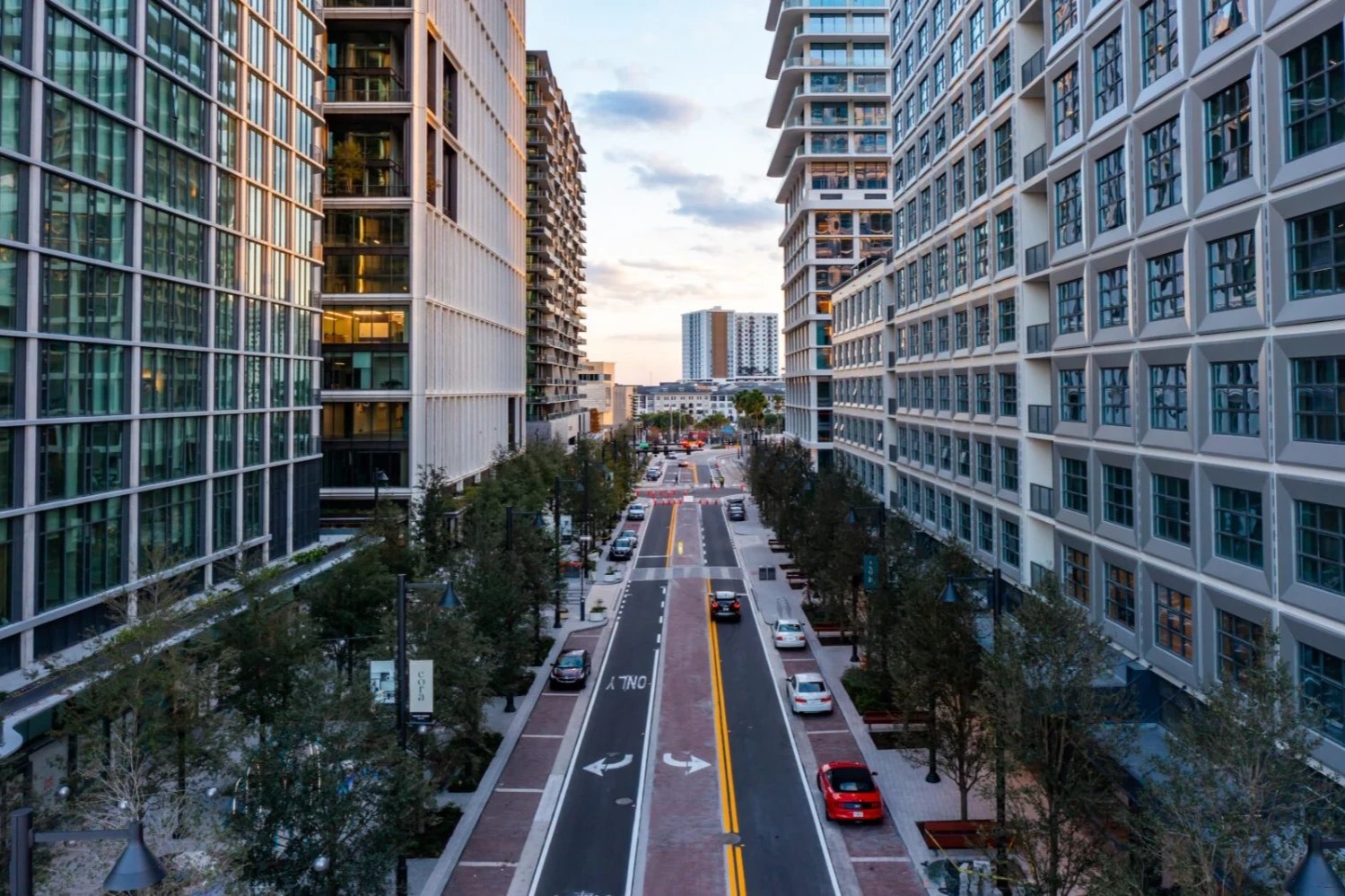
Water Street Tampa is a roughly 74-acre, mixed-use downtown waterfront district that is still adding phases. Before buying, confirm whether your building is finished or only proposed, then verify parking rights, association budget and assessments, insurance and flood details, and event-night noise exposure. Building-level comparables matter more than metro-wide statistics.
Water Street Tampa Development Buyers Should Check First
What should buyers know about the Water Street Tampa development?
The Water Street Tampa development is a large, mixed-use waterfront district in downtown Tampa, and it is still adding phases. The first thing to confirm is whether the building you're looking at is finished, under construction, or only proposed. After that, verify your parking rights, the association's finances, insurance and flood details, and how event-night activity will reach your unit.
Key Takeaways
- Recent local market data for South Tampa shows a $425,000 median sale price and 44 median days on market for homes that sold, but Water Street condos aren't broken out in that data, so you need building-level comparables.
- A 33-story, 452-residence tower filed in July 2026 is expected to start construction in spring 2027 and finish in late 2029, and those are forecasts, not delivery dates.
- The proposed entertainment district, with a 3,500-capacity venue and a 250-key hotel, was in city development review when announced in May 2026, so it is neither approved nor operating.
- Tampa-area median list price was down 6.6% year over year in September 2026, with price reductions on more than 27% of active listings, which points to more negotiating room across the metro.
- Parking allocation, association budget, insurance, and rental restrictions are written into the condominium documents, and those documents matter more than the district's marketing.
What is actually planned in the Water Street Tampa development?
Water Street is reported at about 74 acres with roughly $3.5 billion in overall investment, and the next phases include a residential tower, an entertainment district, and infrastructure work. Those figures come from Tampa Bay Business & Wealth's July 2026 reporting, so I'd treat them as reported numbers rather than a final project fact sheet.
Here's the pipeline as it was reported, and what I'd verify on each piece before you let it influence an offer.
| Piece of the district | Reported status | What to verify |
|---|---|---|
| Residential tower at Water Street and Cumberland Avenue | Plans filed July 2026 for about 400 feet, 33 stories, and 452 residences; construction expected spring 2027, completion projected late 2029 | Whether you're buying a finished unit or a future one, and what your contract says about timing |
| Entertainment district | Announced May 2026; had entered the City of Tampa's development-review process | Final approvals, final design, and what changes before anything opens |
| Subphase 3A infrastructure (7.9 acres) | Roadway, sidewalk, lighting, landscaping, water, wastewater, and stormwater work reported | Which pieces are complete and which still depend on agreements, permits, and construction schedules |
How big is the planned residential tower?
The planned tower is about 400 feet and 33 stories with 452 residences, roughly 37,000 square feet of ground-floor retail, and about 645 parking spaces, according to the July 2026 plans coverage. Reported amenities include a coworking space, demonstration kitchen, fitness center, resort-style pool and hot tub, sauna, cold plunge, media room, game room, pet spa, and dog run. Those are proposed features and can change through design, permitting, and construction.
If you're considering a unit in a building like this, the amenity list is a starting point. What matters is what's in the final documents.
What does the entertainment district mean for nearby owners?
The proposal includes a 3,500-capacity live-music venue, a 250-key hotel, about 80,000 square feet of entertainment-oriented retail, dining, and hospitality space, and more than 25,000 square feet of activated public space, per the developer's announcement. The plan also calls for roughly 1,000 parking spaces, a covered three-lane valet and rideshare area, and a central plaza facing Benchmark International Arena.
More destinations nearby can mean more convenience for you and for visitors. It can also mean event-night traffic, noise, and foot traffic. That second part is my read of how venues work, not a measured finding in the announcement, so weigh it by your own tolerance.
What about construction in the meantime?
Expect the possibility of multi-year construction activity near planned expansion areas. That can include shifting pedestrian and vehicle routes and temporary noise. The reported 7.9-acre subphase is generally bounded by Cumberland Avenue, Finley Street, Nebraska Avenue, and Meridian Avenue. Compare a listing's location with that footprint before you assume the surrounding streets will look the way they do in renderings.
I cover the district's broader lifestyle side in my Water Street Tampa urban living guide. This post stays focused on the buying decisions.
What should you check before buying a Water Street condo?
Check five things: the building's completion status, your exact parking rights, the association's budget and assessments, insurance and flood details for the specific address, and your unit's exposure to event activity. Specific Water Street condo prices, fees, insurance costs, and flood determinations vary by building and unit, so this is the list I walk my clients through before they write an offer.
How do you confirm parking?
Project announcements describe proposed parking totals. They don't tell you what you get. Ask whether your space is deeded or assigned, what guest parking looks like, whether there are electric-vehicle provisions, how valet works, and whether any parking carries a separate charge. Get the answers in writing from the condominium documents, not from a sales conversation.
What belongs in the association review?
Amenity-heavy buildings can come with real monthly obligations, so read the numbers before you fall for the pool deck. I'd have the following in front of me before making an offer:
- The current association budget and what monthly dues cover
- Reserve funding and any assessments, past or proposed
- Rental restrictions, which matter if you might lease the unit later
- Insurance carried by the association and what you'd need to carry yourself
- Minutes of recent association meetings
Your lender and closing agent can help you confirm what's required in your own transaction. I'd rather you ask these questions early than discover them after you're under contract.
Is Water Street vulnerable to flooding or storm disruption?
I can't answer that for a building without knowing the address. Flood zone status, elevation, and insurance costs are property-specific, and a waterfront-adjacent location in Tampa Bay deserves a real look at each one. Confirm the flood determination for the exact property, ask what flood and wind coverage the association carries, and get an insurance quote before your inspection or review period runs out.
How much will event nights affect your unit?
The planned venue is designed for 3,500 people and sits near Benchmark International Arena. If quiet matters to you, look at the unit's orientation, its distance from venue access points, window and balcony exposure, and likely event-night traffic. Walkability to restaurants and the waterfront is a real draw, but it comes with the same activity that makes those places lively.
If you'd like to see how this district has affected pricing at the top of the market, my post on Water Street Tampa's effect on luxury real estate prices goes deeper.
How does the current market affect your negotiating position?
The broader Tampa-area market is more negotiable than it was during the stronger seller-market period, but those numbers don't describe Water Street condos specifically. A September 2026 report put the Tampa-area median listing price at about $385,400, down 6.6% year over year. It also showed median time on market of 76 days and price reductions on more than 27% of active listings. The same report counted 17,965 active listings, down 3.8% from a year earlier.
That tells me buyers have more room to negotiate across the metro. It doesn't tell me what a unit in a specific Water Street building is worth, how quickly it will resell, or whether sellers there are cutting prices. Those answers come from building-level comparables, active and pending listings, closed sales, and the association's financials.
What do nearby area numbers show?
Water Street isn't broken out in the recent local market data I have, so use the table below as context for nearby areas and not as a Water Street price. Recent local market data for South Tampa shows 97 homes sold over about 90 days, 103 active listings, and 41 new listings in the last 30 days. Days on market counts homes that sold, not the time it took to go under contract.
| Area | Median Sale Price | Median Days on Market |
|---|---|---|
| South Tampa | $425,000 | 44 |
| Harbour Island | $600,000 | 59 |
| Ybor City | $220,000 | 62 |
| Seminole Heights | $361,900 | 51 |
| Westchase | $559,923 | 52 |
| New Tampa | $421,250 | 51 |
These are area-level medians. An individual home's value depends on condition, building, view, build year, and timing, and that's especially true for downtown condominiums. If you're also weighing the adjacent waterfront neighborhood, my post on Water Street's impact on Channelside is a useful companion.
How do you size up a specific building?
Start with the building's own sales history and its current listings, then layer in the association's financial health and the unit's position within the building. Every situation is different, and the only way to know what a unit is worth is to run building-level numbers with someone who knows this market. That's the work I do with my clients before they commit.
FAQ
What is Water Street Tampa, and what types of homes are available there?
Water Street Tampa is a mixed-use waterfront district in downtown Tampa, reported at roughly 74 acres. The residential side is high-rise living alongside retail, dining, and public space, and a 452-residence tower has been planned. Confirm each building's ownership structure and completion status before assuming what's available.
Will the proposed entertainment district affect noise, traffic, or parking?
It could, though the district was still in city development review when announced in May 2026, so nothing is final. The proposal includes a 3,500-capacity venue, about 1,000 parking spaces, and a covered valet and rideshare area. Evaluate a unit's orientation and distance from venue access points, and plan for possible event-night activity.
Is Water Street Tampa a good place to buy a condo?
It depends on what you're prioritizing and which building you're considering. The draw is a mixed-use district with dining, retail, and waterfront public space. The trade-offs are ongoing construction, event activity, and association obligations you need to read in full. I'd compare building-level sales and the association's finances before deciding.
What should buyers know about condo amenities and association fees in Water Street Tampa?
Amenities are part of what you pay for through the association, so review the budget, reserves, assessments, and rental restrictions before you commit. Reported plans for the new tower include a pool, fitness center, sauna, cold plunge, and pet spa, but those are proposed features. I don't quote fee figures here because they differ by building, so ask for the current documents on any property you're considering.
How does buying in Water Street Tampa compare with Harbour Island or Channelside?
Water Street is a phased, still-evolving district, while other nearby areas are further along. Recent local market data puts the Harbour Island median at $600,000 with 59 median days on market for sold homes, but that's an area-level figure and not a Water Street comparison. For a real side-by-side, I pull building-level comparables for each place you're weighing.
Where does that leave you?
The Water Street Tampa development offers a lot to like, but the details that protect you are in the specifics: completion status, parking rights, association finances, flood and insurance facts, and event exposure. With broader Tampa-area buyers holding more negotiating power, careful building-level work can pay off. If you want to know what a specific property is worth, get an instant home valuation and then talk to me about the building. You can also read my earlier take on what buyers and sellers should know about Water Street.
Equal Housing Opportunity. Patrick Uhler, Broker Associate, Pineywoods Realty, regulated by the Florida Real Estate Commission. This article is general information, not legal, tax, or financial advice; confirm your own numbers with your closing agent, tax advisor, or lender.