Tampa Real Estate and Community News

Aug. 28, 2026

Tampa First-Time Homebuyer Programs Guide

tampa-first-time-homebuyer-programs-guide


Tampa first-time buyers can access up to $50,000 in down payment assistance through the City of Tampa's DARE program, plus additional help from CRA district programs and statewide Florida Housing options. Eligibility depends on income relative to Area Median Income, and programs can be layered, but funding is finite and statuses change, so starting early matters.

What first-time homebuyer programs are available in Tampa, FL?

Tampa first-time buyers can access up to $50,000 in down payment assistance through the City of Tampa's "Dare to Own the Dream" (DARE) program, a 0% interest deferred loan with no monthly payment as long as the home stays your primary residence. Additional help is available through City of Tampa CRA district programs and statewide Florida Housing Finance Corporation options like Hometown Heroes. Programs can be layered, but funding is limited and availability changes mid-year, so starting the process early is critical.

If you're a first-time buyer in Tampa, the biggest obstacle is usually the same one: the down payment. The good news is that Tampa has one of the more robust local assistance ecosystems in Florida. The less-good news is that these programs have income limits, geographic restrictions, finite funding pools, and steps you have to complete in the right order. Get any of that wrong and you could miss out.

I walk my clients through this process before we even start touring homes. Here's what you need to know to navigate it.

The City of Tampa's DARE Program: How It Works and What It Pays

The flagship local program is the City of Tampa's "Dare to Own the Dream" (DARE) Homeownership Program. It provides down payment assistance as a deferred payment loan in second position behind your primary mortgage. The loan carries 0% interest and requires no monthly payment as long as the home remains your owner-occupied primary residence.

According to the most current DARE program flyer, updated August 2026, assistance is tiered by your household income relative to Area Median Income (AMI):

AMI Tier Maximum Assistance
50.01% – 80% AMI Up to $50,000
80.01% – 120% AMI Up to $40,000
120.01% – 140% AMI Up to $30,000
0% – 50% AMI Not eligible

These tiers have been effective since November 15, 2024, and remain the official structure as of August 28, 2026. AMI figures themselves are updated annually, so the actual dollar income limit tied to each tier needs to be confirmed with the program at the time you apply.

One thing worth understanding about the DARE loan: it's described as a "silent second" precisely because you don't feel it month-to-month. But it is a lien on your property. According to a June 2026 City of Tampa news release, selling the home, converting it to a rental, or refinancing in a way that conflicts with program rules can trigger repayment. That's not a reason to avoid the program. It's a reason to understand it fully before signing.

Geographic eligibility: city limits matter

DARE only applies to properties within Tampa's municipal boundaries. A home with a Tampa mailing address in unincorporated Hillsborough County does not qualify. Before you fall in love with a house, verify the parcel is inside city limits. Your housing counselor or city staff can confirm this by address.

The funding reality: programs pause

This is the part most buyers don't find out until it's too late. A 2026 Tampa Bay mortgage guide notes that the City of Tampa temporarily paused new DARE reservation submissions as of January 7, 2026, due to limited funding. Applications already in the pipeline continued to be processed, but new reservations stopped until funding was replenished.

This isn't unusual. Tampa's assistance programs operate on finite annual or multi-year funding allocations. Once funds are committed, the program closes to new reservations. The practical implication: starting early in the calendar year, when new funding allocations are typically clearest, gives you the best shot at getting a reservation before the pool runs dry. Check Tampa.gov's housing programs page regularly and work with an approved counseling agency who tracks this in real time.

CRA Programs, Statewide Options, and Layering Assistance

City of Tampa CRA Down Payment Assistance

Beyond DARE, the City operates Community Redevelopment Area (CRA) Down Payment Assistance Programs targeting specific redevelopment districts, including the East Tampa CRA. These programs can also provide up to $50,000 in assistance to income-eligible first-time buyers, but the property must sit inside the designated CRA boundaries, which are mapped and managed by the City's Community Redevelopment department.

Don't assume a neighborhood is in a CRA just because it's in Tampa. You need to verify the specific parcel is inside the CRA map before counting on this assistance. Your housing counselor handles this verification as part of the intake process.

Florida Housing Finance Corporation statewide programs

The Florida Housing Finance Corporation (FHFC) administers statewide programs that Tampa buyers can layer on top of local assistance. Florida Housing offers first mortgage products designed for first-time buyers (conventional, FHA, VA, USDA) along with down payment assistance. One important note: Florida Housing's down payment assistance is only available when paired with a Florida Housing first mortgage. It's not offered as standalone help.

Florida Housing also runs the Hometown Heroes Program, which provides down payment assistance to eligible frontline community workers including teachers, nurses, and law enforcement. If your occupation qualifies, this can be a significant additional resource.

Layering programs: the real opportunity (and the real complexity)

The opportunity for Tampa first-time buyers is in combining these programs. Depending on your AMI tier, occupation, and the property's location, you could potentially layer city, county, and state assistance. One January 2026 explainer aimed at Tampa buyers suggested that some buyers, depending on program stacking, may access between $5,000 and $75,000 in total support across city, county, and state programs. That's illustrative context, not a guarantee, and the actual combination you qualify for depends on your specific income, the property address, and which programs have active funding at the time you apply.

The key rule: any layering has to be cleared with your primary lender and both program administrators. Not every combination is permitted, and the order of operations matters. This is exactly why working with a lender experienced in these programs, alongside an approved housing counselor, is non-negotiable.

For a deeper look at how down payment assistance works across the Tampa Bay area more broadly, I've put together a separate guide on down payment assistance for Tampa Bay first-time buyers that covers the wider regional landscape.

How Tampa home prices put these programs in context

A January 2026 market commentary noted median Tampa home prices around $376,000 at the start of the year. That's private market color, not an official MLS figure, but it gives useful context: a $50,000 DARE award represents a meaningful chunk of a conventional down payment on a home in that price range.

Recent local market data across several Tampa Bay areas shows where prices actually sit today. These are area-level medians from trailing 90-day activity as of August 2026. Individual home values vary by condition, street, and timing.

Area Median Sale Price Median Days on Market
South Tampa $576,250 59
Harbour Island $580,000 42
Ybor City $230,000 45
Westchase $559,923 29
New Tampa $430,000 49

Ybor City's median of $230,000 illustrates why DARE matters: at that price point, $50,000 in assistance covers a substantial portion of a down payment and can make the difference between qualifying for a loan and not. For buyers targeting New Tampa at $430,000, the math is tighter but the programs still move the needle.

How to Actually Start: The Steps That Matter

The biggest mistake I see first-time buyers make is starting the home search before they've started the program process. These programs require steps that take time, and you can't rush them retroactively once you're under contract.

Here's the sequence the City of Tampa's own materials outline:

  1. Contact an approved housing counseling agency first. For DARE and CRA programs, this is the entry point. Agencies like Housing & Education Alliance are listed in the official DARE program materials. They handle your intake, assess your eligibility, and guide you through the process. You can also find HUD-approved counseling agencies through the HUD housing counselor locator.
  2. Complete required homebuyer education and counseling. This is a program requirement, not optional. Budget time for it before you expect to be shopping.
  3. Get pre-approved with a program-approved lender. Not every lender participates in these programs. Your counselor can point you toward lenders who know the process. The Florida Housing Finance Corporation also maintains a list of participating lenders for its statewide programs.
  4. Identify an eligible property and submit your application package. The property must be within the correct geographic boundary (city limits for DARE, CRA map for CRA programs), and your lender, counselor, and the city all need to coordinate on timing. Local guides note that counseling and approval can take several weeks, so this process should be underway well before you're writing offers.

I always tell buyers exploring these programs to start the process before they start seriously shopping. Getting your counseling, education, and lender pre-approval lined up first means you know exactly what you're working with when the right home comes along. In a market where the right home can move quickly, having that foundation in place is a real advantage. If you want to know more about how to get ahead of listings before they hit the major portals, my post on early listing alerts in Tampa Bay covers that side of the equation.

Your specific eligibility, the programs you can stack, and the timeline you're working with all depend on details that are unique to your situation. That's the conversation I have with every first-time buyer before we start the search.

Frequently Asked Questions

How does Tampa's "Dare to Own the Dream" first-time homebuyer program actually work?

DARE is a down payment assistance loan administered by the City of Tampa's Housing and Community Development department. It sits in second position behind your primary mortgage, carries 0% interest, and requires no monthly payment as long as the home remains your owner-occupied primary residence. Assistance ranges from $30,000 to $50,000 depending on your household income relative to Area Median Income. You access it through an approved housing counseling agency, not directly through the city.

Is the City of Tampa down payment assistance still available in 2026, or is funding paused?

As of early 2026, the DARE program temporarily paused new reservations in January 2026 due to limited funding, though applications already in process continued. Program availability changes mid-year as funding cycles open and close, so current status needs to be verified directly with the city or an approved housing counseling agency. Checking Tampa.gov's mortgage assistance page and connecting with a counselor early in the year gives you the best shot at an open funding window.

What income limits do I have to meet to qualify for Tampa's DARE program?

DARE eligibility requires household income between 50.01% and 140% of Area Median Income (AMI). Buyers below 50% AMI are not eligible under current program rules. The dollar thresholds tied to each AMI tier change annually, so you'll need to confirm the current year's income limits with your housing counselor or the city directly. The 2026 DARE program flyer has the current tier structure.

What's the difference between the City of Tampa DARE program and the East Tampa CRA down payment assistance?

Both are City of Tampa programs offering up to $50,000 in down payment assistance, but they serve different geographic areas. DARE applies to properties anywhere within Tampa's municipal boundaries, while CRA programs like the East Tampa CRA assistance are restricted to properties inside specific Community Redevelopment Area boundaries. Some buyers whose property falls inside a CRA district may have access to the CRA program, but eligibility must be verified by address. Your housing counselor can confirm which program applies to a specific property.

Do I have to pay back the Tampa down payment assistance loan, and when does it get forgiven?

The DARE loan is structured as a Deferred Payment Loan that stays silent with no payments due as long as the home remains your owner-occupied primary residence. Repayment can be triggered by selling the home, converting it to a rental, or refinancing in a way that conflicts with program rules. The City of Tampa's program materials describe the conditions in detail, and your housing counselor should walk you through them before you close so you understand the long-term obligations.

Can I use Florida Hometown Heroes and Tampa's DARE program on the same home purchase?

Potentially, yes, but layering programs requires coordination between your primary lender and all program administrators to confirm the combination is permitted. Florida Housing's assistance, including Hometown Heroes, is only available when paired with a Florida Housing first mortgage, so the structure of your primary loan matters. A lender experienced with both programs can map out what combination works for your specific income, occupation, and the property's location. This is not something to figure out after you're under contract.

The Bottom Line

Tampa has real resources for first-time buyers, but they don't come to you. You have to navigate a process, meet income requirements, work within geographic limits, and move before funding runs out. The buyers who use these programs successfully are the ones who start early and get the right people in their corner.

If you're thinking about buying your first home in Tampa, I'd rather talk through your specific situation now than have you find out you missed a program after you're already under contract. Start with a home valuation or buyer consultation at uhlerrealestate.com and we'll map out what you actually qualify for.

About Patrick Uhler

Patrick Uhler is a Broker Associate with Pineywoods Realty who leads The Uhler Group, helping buyers and sellers across the Tampa Bay area find and sell homes and condos.

Pineywoods Realty · (813) 400-3373

Equal Housing Opportunity. Patrick Uhler is a Broker Associate with Pineywoods Realty, licensed in Florida and regulated by the Florida Real Estate Commission. This article is general information only and does not constitute legal, tax, or financial advice. Program availability, income limits, and eligibility requirements change; confirm current details with your housing counselor, closing agent, tax advisor, or lender before making any financial decision.
Posted in Buying a Home
Aug. 27, 2026

How Much Cash to Buy a Home in Tampa Bay 2026

how-much-cash-buy-home-tampa-bay-2026


Tampa Bay buyers in 2026 need cash for earnest money, inspections ($800–$1,200 for a typical package), an appraisal fee, and closing costs covering lender, title, and prepaid items. The exact total depends on price point, loan type, and what you negotiate, but budgeting well before you go under contract prevents surprises.

How much cash does a Tampa Bay buyer actually need to buy a home in 2026?

Tampa Bay buyers in 2026 need to set aside cash for several distinct buckets: earnest money (due shortly after your offer is accepted), inspection fees (typically $800–$1,200 for a complete package on a resale home), an appraisal fee collected by your lender when the appraisal is ordered, and closing costs covering lender fees, title and settlement charges, and prepaids like homeowner's insurance and property taxes. The exact total depends on your price point, loan type, and what you negotiate in the contract, but knowing the sequence and categories before you write an offer is how you avoid getting caught short.

The Cash You'll Spend Before Closing Day

Most buyers think about the down payment and forget that several other out-of-pocket costs hit your bank account weeks before you ever sit down at the closing table. Here's how the cash actually flows in a typical Hillsborough or Pinellas purchase.

Earnest Money: Your First Check

Earnest money is the deposit you put up to show the seller you're serious. In Tampa Bay, the amount is negotiated between the parties, there's no fixed rule. In practice, most offers in this market come in somewhere between 1% and 3% of the purchase price, though in more competitive neighborhoods or on higher-priced properties, sellers may expect more.

On a home near the South Tampa median, that's a meaningful check you need liquid and ready to wire quickly after acceptance. The funds are held by the closing agent in escrow until closing, at which point they're credited toward your down payment or closing costs. If the deal falls through within a properly written contingency window, you can generally get that money back, but the specifics depend entirely on your contract terms. This is one of those things I walk every buyer through before we write the offer, because the contingency language matters.

Inspections: Budget More Than You Think

Florida's climate and older housing stock make inspections a bigger line item here than in many other states. A general home inspection is the foundation, but most Tampa Bay buyers end up with a stack of reports.

According to a 2026 Florida home inspection guide from a Tampa Bay REALTOR®, buyers of a typical resale single-family home should budget $800–$1,200 for a complete inspection package, which generally includes:

  • General home inspection (structural, mechanical, roof, plumbing, electrical), typically $400–$600 depending on square footage and age
  • WDO/termite inspection, Florida's climate makes this standard, not optional
  • 4-point inspection, focuses on roof, electrical, plumbing, and HVAC; required by many insurers for older homes
  • Wind mitigation inspection, documents hurricane clips, impact windows, and roof-to-wall connections; can meaningfully reduce your insurance premium

Inspection fees scale with the size and age of the home. To give you a sense of how local companies price this, a 2026 aggregator of Tampa home inspectors shows general inspection ranges from roughly $250 to $700 across multiple local providers, with most clustered in the $300–$500 segment. Here's how a few Tampa Bay companies structure their pricing by square footage:

Inspector / Size Range General Inspection Fee
Neal Inspections, up to 1,800 sq ft $375
Pro-Sight Inspections, 1,001–1,500 sq ft $375
Pro-Sight Inspections, 1,501–2,000 sq ft $425
Sandpiper Home Inspections, 1,501–2,500 sq ft $430
Sandpiper Home Inspections, 2,501–3,500 sq ft $500

These are general inspection fees only. The WDO, 4-point, and wind mitigation reports add to that total, which is why the $800–$1,200 budget figure is realistic for a complete package.

If the property is older or has specific features, plan to add more. The same Tampa Bay inspection guide notes typical costs of $150–$350 for a sewer scope, $150–$300 for a pool inspection, and $300–$700 for a mold assessment. For a pre-1960s bungalow in Seminole Heights or a pool home in Westchase, it's common to layer two or three of those on top of the core package. Budget accordingly.

One thing buyers sometimes forget: inspection fees are paid directly to the inspector, usually at the time of service, not at closing. That cash needs to be available during your inspection period, not on closing day.

The Appraisal Fee

If you're financing the purchase, your lender will order an appraisal to confirm the home's value supports the loan amount. The appraisal fee is typically collected by the lender when the appraisal is ordered, often by card or ACH, and it will appear on your Loan Estimate. Ask your lender exactly when they collect it and how much it is, because it hits before closing and is generally not refundable if the deal falls apart afterward.

I tell every buyer to review their Loan Estimate from the CFPB's framework carefully, it itemizes the appraisal fee along with every other lender and third-party charge so there are no surprises on what's due and when.

Cash at Closing: The Bigger Number

Your down payment is the largest single piece, but closing costs add a meaningful layer on top of it. In Florida, closing costs for buyers typically include categories like:

  • Lender fees, origination, underwriting, processing
  • Title and settlement fees, title search, title insurance, closing agent fees
  • Recording fees, paid to the county clerk to record the deed and mortgage
  • Prepaid items, homeowner's insurance premium (often the first year upfront), property tax escrow, and prepaid mortgage interest
  • Documentary stamp taxes, Florida imposes documentary stamp taxes on the mortgage and on the deed; who pays what is negotiable between buyer and seller and should be confirmed in your contract

The allocation of costs between buyer and seller is negotiated in the contract and guided by local customs in Hillsborough and Pinellas, it is not fixed by county statute. The only reliable way to know your actual closing cost number is to review your Loan Estimate and, closer to closing, your Closing Disclosure. The CFPB's Closing Disclosure explainer walks through every line item so you know exactly what you're looking at.

Down payment assistance can change the cash picture significantly for qualifying buyers. Before assuming you need a large sum at closing, it's worth exploring what programs are available, I've seen buyers surprised by how much assistance is out there. You can read more about that in my post on down payment assistance for Tampa Bay first-time buyers.

Where Tampa Bay Prices Sit Right Now

Your cash needs scale with your purchase price, so it helps to know where the market actually is. Recent Zillow market data (trailing roughly 90 days, as of August 2026) shows area-level medians across Tampa Bay submarkets:

Area Median Sale Price Median Days on Market
South Tampa $602,500 58
Harbour Island $590,000 41
Ybor City $230,000 44
Seminole Heights $415,000 45
Westchase $535,000 51
New Tampa $430,000 51

These are area-level medians, an individual home's value depends on condition, street, build year, and timing. But they give you a realistic anchor for how to think about your earnest money and down payment at different price points across the metro. For a deeper look at how South Tampa and St. Pete compare from a buyer's perspective, my 2026 South Tampa vs. St. Petersburg buyer's guide breaks it down.

The National Association of Realtors research center tracks national buyer trends on down payments, loan types, and cash-to-close benchmarks, useful context if you want to see how Tampa Bay buyers compare to the national picture. And the FHFA House Price Index provides broader Florida price trend data that can help frame your timing decisions.

For buyers using a conventional loan, Fannie Mae's homebuyer resources and Freddie Mac's CreditSmart tools both walk through what to expect on cash-to-close by loan type. If you're considering an FHA loan, the HUD loan information page covers FHA requirements directly. Florida Housing Finance Corporation also administers state-level assistance programs, the Florida Housing homebuyer program overview is worth a look before you assume your only option is a full conventional down payment.

Your specific cash-to-close number depends on your price point, loan type, what you negotiate, and whether any seller concessions or assistance programs apply. That's exactly the kind of calculation I run through with buyers before we ever write an offer, because knowing the real number in advance is what keeps the process from stalling when it counts.

Frequently Asked Questions

How much earnest money do I really need in Tampa Bay in 2026?

Earnest money is negotiated between buyer and seller, there's no fixed amount required by Florida law. In Tampa Bay practice, most offers come in somewhere between 1% and 3% of the purchase price, though the right number depends on the competitiveness of the neighborhood and the specific seller's expectations. Your agent can advise on what's appropriate for the property you're targeting.

What inspections are standard for a Tampa Bay home purchase, and how much should I budget?

A typical Tampa Bay resale purchase involves a general home inspection, a WDO/termite inspection, a 4-point inspection (often required by insurers for older homes), and a wind mitigation inspection. According to a 2026 Florida home inspection guide, buyers should budget $800–$1,200 for that core package. Older homes or properties with pools, older plumbing, or potential mold concerns can push that higher with specialty inspections like sewer scope ($150–$350) or mold assessment ($300–$700).

Do I pay the appraiser directly in Florida, or is the appraisal fee rolled into closing costs?

In standard Florida mortgage practice, the appraisal fee is typically collected by your lender when the appraisal is ordered, often before closing, not at the table. It will appear on your Loan Estimate. Ask your lender exactly when they collect it, because it's usually a separate out-of-pocket payment that hits during the transaction, not at closing.

If my offer falls through, which up-front costs can I get back?

Earnest money is generally recoverable if the deal falls apart within a properly written contingency window (inspection, financing, appraisal), but the specifics depend entirely on your contract language. Inspection fees paid directly to inspectors are typically not refundable. Appraisal fees collected by your lender are generally not refundable either, regardless of why the deal ends. This is why understanding your contract contingencies before you write an offer matters.

How much total out-of-pocket cash will I spend before closing in Hillsborough or Pinellas?

Before closing, most Tampa Bay buyers spend on earnest money (held in escrow and credited back at closing), inspection fees ($800–$1,200 for a typical package, paid directly to inspectors during the inspection period), and an appraisal fee (collected by the lender when ordered). Your Loan Estimate will itemize what's due and when, reviewing it carefully with your lender is the best way to map out your cash flow before you're under contract.

Know Your Number Before You Write the Offer

The buyers who navigate this process smoothly are the ones who map out their cash needs before they're under contract, not after. Earnest money, inspections, the appraisal, and closing costs each hit at different points in the timeline, and the total picture looks different depending on your price point, loan type, and what you negotiate.

If you want to know exactly what to expect for a purchase in South Tampa, Westchase, New Tampa, or anywhere else across the Tampa Bay area, I'm happy to walk through it with you. Start with a home valuation or reach out directly, get your instant home valuation here or contact The Uhler Group to talk through your buying timeline.

About Patrick Uhler

Patrick Uhler is a Broker Associate with Pineywoods Realty who leads The Uhler Group, helping buyers and sellers across the Tampa Bay area find and sell homes and condos.

Pineywoods Realty · (813) 400-3373

Equal Housing Opportunity. Patrick Uhler is a Broker Associate with Pineywoods Realty, licensed in Florida and regulated by the Florida Real Estate Commission. This article is general information only and does not constitute legal, tax, or financial advice. Confirm your specific costs and figures with your closing agent, lender, and tax advisor.

Posted in Buying a Home
Aug. 26, 2026

Tampa Bay Sellers: Do You Have to Pay Buyer's Agent

tampa-bay-seller-buyers-agent-commission-negotiable


Tampa Bay sellers are not legally required to pay the buyer's agent commission. Since the August 2024 NAR settlement, buyer-agent compensation is fully negotiable and handled off-MLS through the purchase contract. Whether you offer it is a strategic choice that directly affects your net proceeds.

Do Tampa Bay sellers have to pay the buyer's agent commission?

No. Tampa Bay sellers have no automatic legal obligation to pay the buyer's agent commission. Since the August 17, 2024 NAR settlement, offers of buyer-broker compensation can no longer be made through the MLS. Whether a seller contributes anything toward the buyer's agent is now a fully negotiable term, documented in the purchase contract, not a default rule baked into Florida law or MLS practice.

What Actually Changed After the NAR Settlement

Before August 2024, it was common practice for listing brokers to post a blanket offer of buyer-broker compensation on the MLS. Sellers often assumed that paying both sides was just "how real estate works." That assumption no longer holds.

Here's what the landscape looks like for Tampa Bay sellers in 2026:

  • MLS offers of compensation are gone. Under the NAR settlement terms, listing brokers cannot make blanket offers of buyer-broker compensation through the MLS. Any compensation a seller chooses to offer a buyer's agent must be handled off-MLS.
  • Buyers now sign written buyer-broker agreements. Before touring homes, buyers are required to sign a written agreement with their agent that spells out how that agent will be paid. This means the buyer's agent compensation is an explicit, documented term, not something that silently flows from the seller by default.
  • The purchase contract is where it lands. If a seller agrees to contribute toward the buyer's agent fee, that agreement shows up as a line item or concession in the purchase-and-sale contract, not as a pre-set MLS field.

Florida REALTORS® and brokerage guidance updated through mid-2026 consistently describe this as a shift from an implicit custom to an explicit negotiation. The question isn't "does the seller pay?" anymore, it's "what will this seller agree to pay, and under what terms?"

The three common structures in Tampa Bay transactions today

Based on how Florida commission practice has evolved since the settlement, most Tampa Bay transactions in 2026 fall into one of three patterns:

  1. Buyer pays their own agent. The buyer and their broker agree on a fee in the buyer-broker agreement, and the buyer covers it directly, either out of pocket or, depending on their loan program, potentially rolled into financing.
  2. Seller agrees to pay some or all of the buyer-agent compensation. This is documented in the offer as a seller concession or a specific line item, not as an MLS blanket offer. Many sellers still choose this route because it can attract more represented buyers.
  3. A hybrid: price adjustment or partial contribution. The buyer offers a higher price with a seller concession directed toward their agent's fee, or the parties split the cost. This is increasingly common in negotiations, though it has to work within the buyer's loan program concession limits, more on that below.

None of these structures is mandated. Your listing agreement and the purchase contract you ultimately sign are the documents that determine what you owe, to whom, and when.

How This Affects Your Net Proceeds

This is the part that matters most to sellers: any compensation you agree to pay a buyer's agent comes directly out of your proceeds at closing. It reduces what you walk away with, dollar for dollar.

I walk every seller I work with through a scenario-based net sheet before we go to market. The scenarios typically look like this in concept:

  • Scenario A: You pay only your listing broker. The buyer covers their own agent. Your net proceeds are higher, but your pool of buyers may narrow if some buyer's agents deprioritize your home.
  • Scenario B: You pay your listing broker plus a buyer-broker contribution. Your net proceeds are lower, but you may attract more represented buyers and stronger offers.
  • Scenario C: You agree to a partial contribution, with the buyer covering the rest. A middle path that's increasingly common in Tampa Bay's current market.

The right answer depends on your home's condition, your price point, your neighborhood's current inventory, and your timeline. That's exactly the kind of analysis I run before we ever set a list price.

One important loan constraint sellers should know

When a buyer asks you to cover their agent's fee through a seller concession, that contribution counts toward the total seller concessions allowed under their loan program. Conventional, FHA, and VA loans all cap total seller concessions as a percentage of the purchase price. In a market where appraisers are scrutinizing values, pushing the price up just to cover commissions can create appraisal risk.

This doesn't make seller-paid buyer-agent compensation a bad idea, in many cases it's the cleaner path. But it's a variable that has to be modeled against your specific offer terms and loan type, not assumed away.

Commissions vs. costs you actually have to pay

It helps to draw a clear line between costs that are negotiable and costs that are set by law. Broker fees, both your listing-side fee and any buyer-agent contribution, are fully negotiable and not set by any Florida statute. There is no standard or customary rate. What you pay is what you agree to in your listing agreement and purchase contract, nothing more.

Contrast that with Hillsborough County's documentary stamp tax on deeds, which follows Florida's fixed statutory rate of $0.70 per $100 of consideration, as confirmed by the Hillsborough County Tax Collector. That's a mandatory tax tied to the deed transfer, it doesn't move based on negotiation. Title and lien search fees, recording fees, and prorated property taxes are similarly governed by statute or close-date math, not brokerage custom.

The practical takeaway: when you're building a picture of what you'll net, separate the non-negotiables from the negotiables. Commissions sit firmly in the negotiable column.

Tampa Bay Market Context: Does It Change the Calculus?

Whether you can comfortably decline to pay a buyer's agent depends heavily on where your home sits in the Tampa Bay market right now.

Recent Zillow market data for several Tampa Bay submarkets (trailing approximately 90 days as of August 2026) shows meaningful variation in both price and pace:

Area Median Sale Price Median Days on Market
South Tampa $497,550 46
Harbour Island $590,000 40
Ybor City $230,000 44
Seminole Heights $417,500 41
Westchase $535,000 50
New Tampa $430,000 50

These are area-level medians, your specific home's value depends on condition, street, build year, and timing. But the pattern is telling: tighter submarkets like Harbour Island are moving in 40 days; outlying areas like Westchase and New Tampa are sitting closer to 50. According to a Tampa Bay area housing update from mid-2026, active listings across the MSA are up roughly 15-25% year over year, and a February 2026 Tampa Bay trends report noted that approximately 51,751 homes sold in the Tampa Bay area in 2025, a 4.6% drop from 2024.

More supply and longer marketing times generally shift leverage toward buyers. In that environment, offering buyer-agent compensation can be a meaningful tool to stand out, especially in suburban Hillsborough, Pasco, and areas where new construction is adding inventory. In high-demand in-town neighborhoods where homes still move in under six weeks, sellers may have more room to hold firm.

Pricing a home correctly from day one matters more than any single concession decision. A well-priced listing in the right condition generates the competition that makes these negotiation questions easier to answer on your terms. I've seen sellers in South Tampa and Seminole Heights get strong offers without offering buyer-agent compensation, and I've seen sellers in New Tampa sit for two months before adjusting their approach. The difference usually comes down to how accurately the home was priced at launch, not just what was on the concession table. For a deeper look at how pricing strategy works in this market, see my post on home pricing in South Tampa's competitive market.

The Greater Tampa REALTORS® and the Pinellas REALTOR® Organization have both implemented the NAR settlement changes in their MLS systems, though off-MLS compensation practices continue to evolve at the brokerage level. Sellers should review their specific listing agreement carefully rather than assuming a single "standard" approach.

Every situation is different, and the only way to know what approach makes sense for your home is to run the numbers with someone who knows this market. That's what I do before we ever talk about a list price.

Frequently Asked Questions

After the NAR settlement, who pays the buyer's agent in Florida, me as the seller, or the buyer?

There's no automatic answer anymore. Since August 2024, seller-paid buyer-agent compensation is no longer a default rule, it's a negotiated term in the purchase contract. The buyer's broker agreement spells out how the buyer's agent expects to be paid, and whether you as the seller contribute anything is something you agree to (or don't) when you accept an offer. Many Tampa Bay sellers still choose to offer buyer-agent compensation as a strategic incentive; many others do not. Neither is legally required.

Can I list my Tampa home and only pay my listing agent, not the buyer's agent?

Yes. You can list your home and agree to pay only your listing broker. If a buyer's agent brings an offer that includes a request for seller-paid compensation, you can negotiate that term, accept it, counter it, or decline it, just like any other contract term. Some buyer's agents may deprioritize homes that offer no compensation, particularly for buyers who can't pay their agent separately, so it's worth discussing the trade-offs with your listing agent before you decide.

If I don't offer a buyer's agent commission, will fewer buyers look at my Tampa house?

Potentially, yes, though it depends on your submarket and price point. In tighter Tampa Bay markets like Harbour Island or parts of South Tampa, demand may be strong enough that buyers and their agents will pursue your home regardless. In higher-inventory areas like New Tampa or Westchase, where buyers currently have more options and days on market are running longer, not offering any buyer-agent incentive can slow your showing activity. It's a strategic decision, not a legal one.

Can we negotiate the buyer's agent fee into the purchase price or seller concessions in Tampa Bay?

Yes, and this is increasingly common. A buyer may offer a higher price with a seller concession directed toward their agent's fee, effectively rolling the cost into the transaction. The catch is that conventional, FHA, and VA loans cap total seller concessions as a percentage of the purchase price, so there's a ceiling on how much can flow this way. Your closing agent can help you understand how a specific offer's concession structure affects your net proceeds and whether it fits within the buyer's loan limits.

What's the difference between Florida closing costs I have to pay and negotiable commissions?

Florida law sets certain seller costs at fixed rates, the documentary stamp tax on the deed in Hillsborough County runs at $0.70 per $100 of consideration, per the Hillsborough County Tax Collector, and that's not negotiable. Title and lien search fees, recording fees, and prorated property taxes are similarly determined by statute or close date. Broker commissions, both your listing-side fee and any buyer-agent contribution, are entirely contractual. No Florida statute sets a rate, and no rate is standard or customary. What you pay is what you agree to in writing.

The Bottom Line for Tampa Bay Sellers

You are not required to pay the buyer's agent commission. What you choose to offer, if anything, is a strategic decision that should be made with a clear picture of your net proceeds, your submarket's current inventory, and how your home is positioned against the competition.

If you're thinking about selling in Tampa Bay, I'll walk you through exactly what the numbers look like for your home and your neighborhood before you commit to anything. Start with an instant home valuation to see where your home stands today.

About Patrick Uhler

Patrick Uhler is a Broker Associate with Pineywoods Realty who leads The Uhler Group, helping buyers and sellers across the Tampa Bay area find and sell homes and condos.

Pineywoods Realty · (813) 400-3373

This article is general information only and does not constitute legal, tax, or financial advice. Broker fees and commissions are fully negotiable and not set by law, no standard or customary rate exists. Confirm your specific costs and contract terms with your closing agent, tax advisor, or lender. Patrick Uhler is a Broker Associate with Pineywoods Realty, licensed in Florida and regulated by the Florida Real Estate Commission. Equal Housing Opportunity.

Posted in Selling Your Home
Aug. 25, 2026

Cost to Sell a House in Tampa Bay (2026)

cost-to-sell-house-tampa-bay


Selling a home in Tampa Bay involves several cost categories beyond commission: Florida's documentary stamp tax on the deed, owner's title insurance, recording fees, prorated property taxes, HOA adjustments, and any buyer concessions you agree to. Every line item affects your net proceeds, and most are negotiable except the statutory doc stamp rate.

How much does it cost to sell a house in Tampa Bay?

Selling a home in Tampa Bay typically involves Florida's documentary stamp tax on the deed, owner's title insurance, recording fees, prorated property taxes, real estate commission, and any seller concessions negotiated during the contract. These costs are deducted from your sale price before you receive the remainder, and while some rates are set by Florida statute, most line items are negotiable between buyer and seller in the contract.

Here's the honest answer most sellers don't hear until they're sitting at the closing table: the gap between your sale price and the check you walk away with is almost always larger than people expect. I walk every seller I work with through a preliminary net sheet before we list, because surprises at closing are avoidable.

Let me break down exactly what drives that gap for Tampa Bay sellers in 2026.

The Full Tampa Bay Seller Cost Stack

Think of your net proceeds as a waterfall. You start with the contract price, then each cost category takes a slice. Here's how each layer works.

Florida Documentary Stamp Tax on the Deed

This is Florida's version of a transfer tax, and it applies to every home sale in Tampa Bay. Under Chapter 201 of the Florida Statutes, the documentary stamp tax on deeds is assessed at 70 cents per $100 of consideration (or fraction thereof). The Florida Department of Revenue confirms this rate applies in all 67 Florida counties except Miami-Dade, which uses a different rate structure. Hillsborough, Pinellas, Pasco, and Manatee counties all use the standard $0.70 per $100 rate.

The tax is due when the deed is recorded, typically handled by your closing agent. The rate itself is fixed by law. Who pays it is not. In Tampa Bay, local custom often assigns the deed doc stamp to the seller, but your contract terms govern, and this is negotiable.

Owner's Title Insurance

Florida uses state-promulgated rates for owner's title insurance, meaning the base premium for a given coverage amount is standardized by state regulation rather than set freely by each company. This makes it one of the more predictable line items, but it's also one of the largest.

In Tampa Bay, some closing-cost guides describe the seller as customarily paying the owner's title policy, while others describe buyers covering it in Hillsborough and Pinellas. These sources genuinely conflict, which tells you something important: this is a negotiated item, not a legal requirement. Depending on how your contract reads, the title insurance obligation can shift either direction and meaningfully change what you net.

Settlement Fees, Title Search, and Recording

Your closing agent charges a settlement or closing fee for conducting the closing, and the county clerk charges recording fees to record the deed and any related documents. Per the Florida Department of Revenue's documentary stamp tax overview, doc stamp tax on the deed is collected by the county clerk or recording official at the time of recording. Recording fees are set by county clerk schedules and are relatively modest compared to taxes and title premiums, but they appear on your closing statement and reduce net proceeds.

A title search is also typically required to confirm clean title before the policy is issued. Like settlement fees, responsibility for these charges is driven by contract and local custom, not statute.

Real Estate Commission

Commission is negotiated between you and your listing broker. There is no Florida statute that sets a standard or minimum rate, and broker fees are fully negotiable. The listing-side compensation is agreed in your listing agreement. Any compensation a seller chooses to offer a buyer's agent is optional and separately negotiable. Commission is paid from your proceeds by the closing agent and is one of the largest single line items on your settlement statement.

If you're evaluating what it costs to sell, this is the number worth having a direct conversation about with your listing agent before you sign anything.

Prorated Property Taxes and HOA Dues

Florida property taxes are paid in arrears, meaning at closing you'll owe a credit to the buyer for the portion of the year you owned the home. If your tax bill hasn't been paid yet when you close, that proration comes out of your proceeds. This adjustment can be meaningful, especially if you close mid-year.

HOA dues, condo fees, special assessments, and utility balances are also typically prorated to the closing date. These aren't fees in the traditional sense, but they reduce your net the same way. Your closing agent handles the math, but you should know they're coming.

Seller Concessions and Repair Credits

This is the category that surprises sellers most. Buyer closing cost credits, post-inspection repair allowances, and seller-paid home warranties are all negotiated items that show up as deductions on your settlement statement. They're not mandated by law, but in today's market they're common. A buyer asking for a $10,000 closing cost credit at a $595,000 sale price has the same effect on your net as a $10,000 price reduction, but it doesn't look that way in the headline number.

This is exactly why I tell every seller I work with: highest offer price is not always highest net. Two offers at the same price with different concession structures can produce meaningfully different checks at closing.

Tampa Bay Market Context: What Sellers Are Working With

Understanding your cost stack matters more when you know what price range you're working in. According to recent Zillow market data (trailing approximately 90 days as of August 2026), here's where median sale prices and pace stand across the Tampa Bay areas I work in:

Area Median Sale Price Median Days on Market
South Tampa $595,000 60
Harbour Island $590,000 39
Ybor City $230,000 43
Seminole Heights $415,000 47
Westchase $534,000 49
New Tampa $430,000 50

These are area-level medians. Your home's actual value depends on condition, street, build year, and timing. But the range illustrates why understanding costs matters: the doc stamp tax, title premium, and prorations at a $595,000 South Tampa closing look very different from the same line items on a $230,000 Ybor City transaction.

With homes in South Tampa sitting on the market a median of 60 days before closing, pricing and cost structure both matter to your final outcome. For a deeper look at how pricing strategy plays into what you net, see my post on home pricing in South Tampa's competitive market.

Negotiable vs. Fixed: Knowing the Difference

One of the most practical things I can tell a Tampa Bay seller is which costs are truly fixed and which ones are on the table.

Largely fixed by statute or promulgated rate:

  • Documentary stamp tax rate on the deed (set by Chapter 201, Florida Statutes)
  • Recording fees (set by county clerk schedules)
  • Owner's title insurance base premium (promulgated by Florida regulation)

Negotiable by contract:

  • Which party pays doc stamps, title insurance, and settlement fees
  • Commission structure and total broker compensation
  • Buyer closing cost credits and concessions
  • Repair allowances and home warranties
  • HOA transfer fee responsibility

Here's the leverage point most sellers miss: even though the doc stamp rate and title premium rate are fixed, who pays them is not. Shifting responsibility for those items through contract negotiation can change your net proceeds without changing the sale price at all. According to guidance from the Florida Department of Revenue and Florida-specific closing practice resources, responsibility for doc stamps and title costs is set by contract terms and local custom, not state law.

The Consumer Financial Protection Bureau's closing disclosure explainer is a useful reference for understanding how these line items appear on your settlement statement, though Florida-specific costs like doc stamps require local knowledge to interpret correctly.

If you're comparing two offers and want to understand which one actually nets you more, that's a conversation worth having before you sign. Every situation is different, and the only way to know for sure is to run the numbers with someone who knows this market. If you'd like a data-driven look at where your home stands today, you can get an instant home valuation here as a starting point.

Frequently Asked Questions

What closing costs does the seller usually pay when selling a house in Tampa Bay?

In Tampa Bay, sellers commonly pay the documentary stamp tax on the deed, owner's title insurance, title search, recording fees, real estate commission, prorated property taxes, and any HOA or condo fee adjustments. Some guides also list settlement fees as a seller cost in certain counties. These are customary allocations, not legal mandates, and all of them are negotiable in your contract.

In Hillsborough and Pinellas County, who pays the Florida documentary stamp tax on the deed?

The documentary stamp tax on the deed is set at 70 cents per $100 of consideration under Chapter 201 of the Florida Statutes and applies in both Hillsborough and Pinellas counties. Local custom in Tampa Bay often assigns this tax to the seller, but the Florida Department of Revenue confirms that responsibility is determined by contract, not statute. Your purchase agreement governs who pays.

Are seller closing costs in Tampa Bay negotiable, or are they set by Florida law?

The rates for certain costs are fixed (the doc stamp tax rate, recording fees, and the promulgated title insurance premium), but which party pays those fixed-rate items is negotiable in the contract. Commission, concessions, repair credits, and HOA transfer fees are fully negotiable. This means two sellers closing at the same price can net very different amounts depending on how their contracts are structured.

How do prorated property taxes and HOA dues show up on my closing statement?

Florida property taxes are paid in arrears, so at closing you'll owe the buyer a credit for the portion of the year you owned the home but the tax bill hasn't yet been paid. HOA dues and condo fees are typically prorated to the closing date as well. These adjustments appear on your closing disclosure as credits to the buyer and reductions to your net proceeds, handled by your closing agent.

What's the difference between my Tampa home's sale price and the cash I'll walk away with?

Your net proceeds equal the sale price minus your mortgage payoff, doc stamp taxes, title and recording fees, commission, prorated taxes and HOA dues, and any buyer concessions you agreed to. In Tampa Bay, where doc stamp tax and title insurance are significant line items and median prices range from roughly $230,000 in Ybor City to nearly $600,000 in South Tampa, the gap between headline price and actual check can be substantial. A preliminary net sheet from your listing agent before you list is the best way to avoid surprises.

Does the standard Florida documentary stamp tax rate apply to all Tampa Bay home sales in 2026?

Yes. As confirmed by the Florida Department of Revenue, the $0.70 per $100 rate applies to deed transfers in all Florida counties except Miami-Dade. Hillsborough, Pinellas, Pasco, and Manatee counties all use this standard rate, and it remains in effect as of August 2026.

The Bottom Line for Tampa Bay Sellers

Your net proceeds are shaped by far more than commission alone. Florida's doc stamp tax, title insurance, prorations, and concessions all take a real bite, and which party absorbs each one is often negotiable. The sellers who come out ahead are the ones who understand the full cost stack before they accept an offer, not after.

I build a preliminary net sheet for every seller I work with before we go to market, so you're never guessing. Start with an instant home valuation to see where your home stands, and then let's run the real numbers together.

About Patrick Uhler

Patrick Uhler is a Broker Associate with Pineywoods Realty who leads The Uhler Group, helping buyers and sellers across the Tampa Bay area find and sell homes and condos.

Pineywoods Realty · (813) 400-3373

Equal Housing Opportunity. Patrick Uhler is a Broker Associate with Pineywoods Realty, licensed in Florida and regulated by the Florida Real Estate Commission. This article is general information only and does not constitute legal, tax, or financial advice. Confirm your specific costs and obligations with your closing agent, tax advisor, or lender.

Posted in Selling Your Home
Aug. 24, 2026

Seminole Heights Homes: Tampa Buyer's Guide 2026


Seminole Heights blends early 20th-century Craftsman bungalows with modern new construction across several distinct sub-neighborhoods. As of mid-2026, the median sale price sits around $415,000, homes are taking roughly 48 days to sell, and the market remains competitive enough that most homes close near asking price.

What is the Seminole Heights housing market like for buyers in 2026?

Seminole Heights is one of Tampa's most distinctive neighborhoods, built around a core of historic Craftsman bungalows and steadily layered with modern renovations and new construction. As of mid-2026, recent Zillow market data puts the median sale price at $415,000 with a median of 48 days on market, and most homes are closing within a few percent of list price, making it a neighborhood where preparation and timing still matter.

Historic Bones, Modern Appeal: What You'll Actually Find Here

Seminole Heights is not one neighborhood, it's a cluster of related sub-areas, each with its own character. Old Seminole Heights, South Seminole Heights, and North Seminole Heights each attract a slightly different buyer, and the housing stock varies enough between them that treating the whole area as a single market can lead you to the wrong expectations.

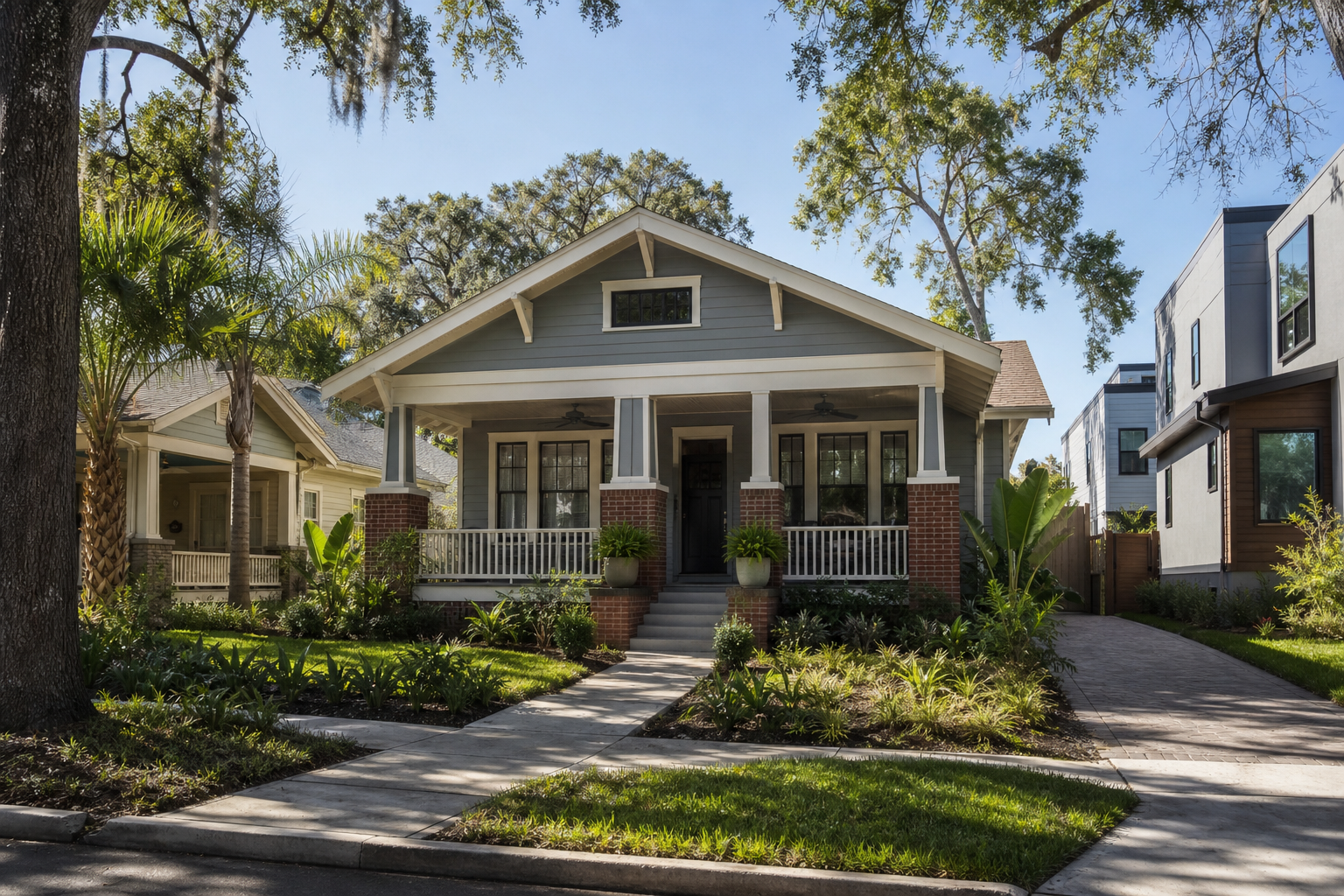
What ties them together is the architecture. The neighborhood's signature look is the early 20th-century Craftsman bungalow, front porches, exposed rafter tails, low-pitched roofs, and lots that often give you real yard space by Tampa standards. Many of these homes have been renovated thoughtfully, keeping the character while adding updated kitchens, open floor plans, and modern systems.

Alongside the historic stock, you'll find new construction from builders like Domain Homes and Mobley Homes, contemporary designs on infill lots that appeal to buyers who want the neighborhood's walkable, close-in energy without taking on a renovation project.

The Three Price Tiers Worth Knowing

Based on local brokerage analysis updated through June 2026, the Seminole Heights market generally breaks into three product tiers:

  • Move-in-ready bungalows and renovated historic homes, typically in the mid-$400,000s to mid-$600,000s range, depending on size, updates, and lot
  • Larger historic restorations and pool homes on oversized lots, generally mid-$600,000s up toward $900,000
  • Luxury new construction from production builders, frequently upper-$700,000s to $1.2 million and above

Earlier in 2026, a February 2026 Redfin snapshot put the Seminole Heights median sale price at $483,000 with a median price per square foot of $353, both up year-over-year. By May 2026, Realtor.com's neighborhood dashboard showed a median listing price of $480,000 and median days on market of 62, with a sales-to-list-price ratio near 99%. The most current area-level figure I'm working from is recent Zillow market data showing a median sale price of $415,000 and 48 days on market, these are area-level medians, and your specific home's value will vary by street, condition, build year, and timing.

How Seminole Heights Compares to Nearby Areas

Here's how Seminole Heights stacks up against several other Tampa Bay areas based on recent Zillow market data (trailing approximately 90 days, as of August 2026):

Area Median Sale Price Median Days on Market
South Tampa $415,500 28
Harbour Island $570,000 39
Ybor City $230,000 42
Seminole Heights $415,000 48
New Tampa $430,000 49

Seminole Heights is priced in line with South Tampa at the area-level median, but it's spending more days on market, which tells you something useful. Buyers here have a bit more time to make decisions than they would in South Tampa's faster-moving corridors, but that doesn't mean well-priced homes sit. The right home, priced correctly, still moves.

For context, Zillow's citywide Tampa dashboard through July 31, 2026 puts the typical home value at about $380,300, with a 1-year value change of -1.3% and a median sale price around $403,833. Seminole Heights, and South Seminole Heights in particular, where the same data set shows a typical home value around $411,337, is trading above the Tampa city average. That premium reflects the neighborhood's proximity to downtown, its walkable commercial strips, and the relative scarcity of its housing type.

What Buyers Need to Know Before Making an Offer

Historic District Designation: What It Means in Practice

Properties within the Old Seminole Heights Historic District are frequently marketed with that designation front and center, you'll see it in listing descriptions, as with homes near North Bay Street in the 33603 ZIP. That's a selling point for character, but it also means buyers planning significant exterior changes or additions should consult City of Tampa historic preservation guidelines before assuming any renovation is straightforward. The review process for exterior work in a historic district is a real step, I walk buyers through what to expect before they commit to a project scope.

Property Taxes and the Hillsborough County Property Appraiser

For any home you're seriously considering, the Hillsborough County Property Appraiser's property search tool is your first stop. It shows market value, assessed value, any exemptions (including homestead), and taxable value for each parcel. This matters because the assessed value on a home that hasn't changed hands recently can be significantly lower than what you'll pay, and your tax bill will reset based on your purchase price.

The HCPA's main site is also where you'll find information on the homestead exemption application process, which is worth doing promptly after closing if this will be your primary residence. The most recent adopted millage schedule I can reference is the Final 2025 millage rate document, that's for tax year 2025, and actual 2026 rates may differ. Verify current millage with the HCPA or your closing officer before finalizing your budget.

Getting in Front of Inventory Early

With roughly 10 active listings showing on Realtor.com's May 2026 snapshot, Seminole Heights has a thin inventory at any given moment. That means the homes worth buying go fast, and buyers who are waiting for a property to hit Zillow are often already a step behind. I set my clients up with early listing alerts so they're seeing homes before they're widely syndicated. If Seminole Heights is on your list, that setup matters. You can read more about how that works in my post on early listing alerts for Tampa Bay buyers.

It's also worth comparing Seminole Heights to nearby options before you decide. My South Tampa vs. St. Petersburg buyer's guide gives you a useful framework for thinking through the tradeoffs across Tampa Bay's most active markets.

Investors and the Rental Picture

Seminole Heights has attracted investor interest for years, and that hasn't changed in 2026. The neighborhood's walkable commercial corridors, proximity to downtown Tampa, and mix of single-family and small multifamily properties make it a logical target for rental strategies. Renovated bungalows and ADU-friendly lots come up regularly in investor conversations I have. If you're evaluating a purchase for rental income, the numbers depend heavily on the specific property, its condition, and current zoning, those are conversations worth having before you're under contract, not after.

According to NAR's 2026 research, investor activity in close-in urban neighborhoods with historic character has remained steady even as broader market conditions have shifted, which tracks with what I'm seeing in Seminole Heights specifically.

Frequently Asked Questions

Is Seminole Heights mostly historic bungalows, or are there a lot of modern new builds?

It's genuinely both. The neighborhood's identity is built on early 20th-century Craftsman bungalows, and many of the most sought-after homes are either original or thoughtfully renovated versions of those. But infill new construction has been active here for several years, with builders putting up contemporary homes on lots throughout the area. Buyers who want historic character and buyers who want new construction can both find what they're looking for, sometimes on the same block.

How does the Seminole Heights market compare to the rest of Tampa in 2026?

Seminole Heights is trading above the Tampa city average. Recent Zillow market data puts the Seminole Heights area median sale price at $415,000, while the citywide Tampa typical home value as of July 31, 2026 sits around $380,300 with a 1-year change of -1.3%. South Seminole Heights specifically shows a typical home value around $411,337, reinforcing the neighborhood's premium over the broader Tampa baseline. The trade-off is slightly longer days on market, about 48 days in Seminole Heights versus a citywide median days-to-pending of around 29.

What's the difference between Old Seminole Heights, South Seminole Heights, and North Seminole Heights?

Each sub-neighborhood has its own character and price dynamics, and the data doesn't move in lockstep across all three. Old Seminole Heights carries the formal historic district designation, which affects how exterior renovations are reviewed. South Seminole Heights trends slightly higher in typical home values compared to the Tampa average. North Seminole Heights generally offers more entry-level price points. When I'm working with buyers focused on this area, I look at each sub-neighborhood separately rather than treating Seminole Heights as a single uniform market.

How fast are homes selling in Seminole Heights right now, and is it a buyer's or seller's market?

Based on May 2026 data from Realtor.com, the median days on market for Seminole Heights listings was 62 days, with most homes closing around 1% below asking price, a sales-to-list ratio near 99%. Recent Zillow area data puts median days on market at 48. The variation between data sources reflects differences in methodology and sub-neighborhood dynamics, so the honest answer is: it depends on the specific property and sub-area. Well-priced, move-in-ready homes still attract strong interest; overpriced homes are sitting longer.

What should I know about buying in the Old Seminole Heights Historic District?

The historic district designation is a real consideration if you're planning renovations, particularly exterior changes or additions. Buyers should consult City of Tampa historic preservation guidelines before assuming any project is straightforward, there's a review process for exterior work that can affect your timeline and scope. On the tax side, use the Hillsborough County Property Appraiser's property search tool to understand the assessed value and any existing exemptions on a property before you make an offer, since your tax bill will be recalculated based on your purchase price.

Is Seminole Heights a good area for investors looking at rentals or ADUs?

The neighborhood has consistent investor interest, driven by its walkability, proximity to downtown Tampa, and mix of property types. Renovated bungalows and small multifamily properties are common targets. ADU potential depends on the specific lot and current City of Tampa zoning, that's something to verify directly with the city's zoning office rather than assume, since regulations can change and vary by parcel. The investment case is real, but it needs to be underwritten on the specific property, not on general neighborhood reputation.

The Bottom Line on Seminole Heights

Seminole Heights offers something genuinely rare in Tampa: a neighborhood with authentic historic character, a real walkable commercial scene, and enough variety in its housing stock to work for buyers at multiple price points. The market is active, inventory is thin, and the homes worth buying don't stay available long.

If you're thinking seriously about Seminole Heights, the first step is understanding what your budget actually gets you in each sub-neighborhood, and that requires a real conversation, not just a Zillow search. I'm happy to walk you through the current inventory and help you figure out where you fit. Start with a home valuation or buyer consultation and we'll go from there.

About Patrick Uhler

Patrick Uhler is a Broker Associate with Pineywoods Realty who leads The Uhler Group, helping buyers and sellers across the Tampa Bay area find and sell homes and condos, including in Seminole Heights, South Tampa, Davis Islands, and dozens of other Tampa Bay neighborhoods.

Pineywoods Realty · (813) 400-3373

Equal Housing Opportunity. Patrick Uhler is a Broker Associate with Pineywoods Realty, licensed in Florida and regulated by the Florida Real Estate Commission. This article is general information only and does not constitute legal, tax, or financial advice. Confirm all market data, tax figures, zoning rules, and transaction costs with your attorney, tax advisor, lender, or closing officer before making any real estate decision.

Posted in Buying a Home
Aug. 21, 2026

Harbour Island Luxury Waterfront Homes: Tampa Buyer's Guide

Is Harbour Island in Tampa a good place to buy a luxury waterfront home?

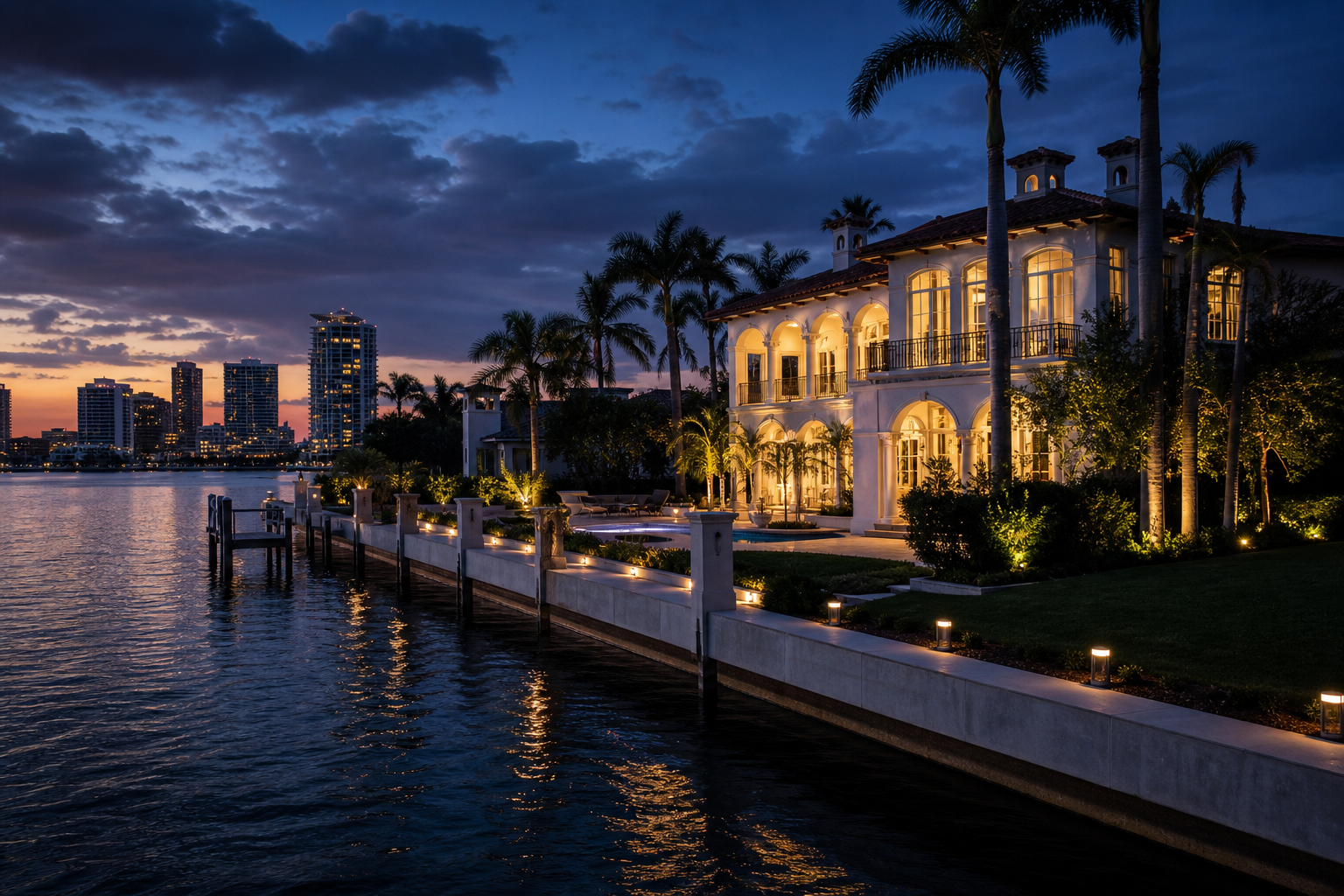
Harbour Island is one of Tampa's most distinctive luxury enclaves: a gated, master-planned island community sitting directly adjacent to Downtown Tampa, with waterfront condos, canal-facing townhomes, and a walkable connection to the Riverwalk, Amalie Arena, Sparkman Wharf, and Water Street Tampa. Recent Zillow market data shows a median sale price of $570,000 and a median 36 days on market, with most homes closing at or slightly below asking price, a market that rewards prepared, informed buyers.

What Makes Harbour Island Different from Other Tampa Luxury Neighborhoods

I work across a lot of Tampa Bay submarkets, and Harbour Island has a character that genuinely stands apart. It's not a beach community. It's not a traditional South Tampa neighborhood of historic bungalows or new-construction single-family homes. It's an urban waterfront island, and that distinction matters when you're deciding where to put serious money.

The product mix here skews heavily toward high-rise and mid-rise condominiums, with a smaller number of townhomes and a handful of true single-family waterfront properties. Buildings like The GrandView, a 20-story tower completed in 2003, are representative of the island's development wave: full or partial bay views, covered parking, resort-style amenities, and a location that puts you within walking distance of downtown employment and nightlife. You can be at your desk at Water Street Tampa or in your seat at Amalie Arena in minutes, then come home to a quiet, gated island. That contrast is the core of Harbour Island's appeal.

For buyers who want marina access and boating, Harbour Island delivers. Many listings include proximity to boat slips, either on the island itself or at adjacent marinas, with direct access to Tampa Bay. That's a meaningful lifestyle feature you won't find in Hyde Park or Channelside.

How Harbour Island Compares to Nearby Tampa Markets

Here's how Harbour Island stacks up against a few other areas I cover regularly, based on recent Zillow sales data through August 2026:

Area Median Sale Price Median Days on Market
South Tampa $634,000 50
Harbour Island $570,000 36
Seminole Heights $420,000 46
Westchase $529,000 51

A few things stand out in that comparison. Harbour Island's 36-day median is the fastest in this group, which tells you that well-priced listings here move. South Tampa's higher median reflects its mix of large single-family homes and new construction. Harbour Island's number is pulled toward the mid-range by its condo inventory, but the upper end of the market, particularly four-bedroom waterfront units and penthouse-level condos, sits in a distinctly different price tier. Trulia's neighborhood breakdown shows the spread clearly: while the area-level median hovers around $553,000 to $570,000, larger homes on the island skew significantly higher.

For broader Tampa Bay context, Realtor.com's Tampa overview for June 2026 shows homes across the city selling at roughly a 98% sale-to-list ratio, with most closing slightly below asking. Harbour Island tracks closely with that pattern, which I'll cover in more detail below.

What Buyers Need to Know Before Making an Offer

The Negotiation Reality

Luxury buyers on Harbour Island tend to move more deliberately than first-time buyers in the suburbs. Listings can sit for a couple of months, especially at the upper end of the price spectrum. The most recent data I work from shows sale-to-list ratios running in the 96-98% range, meaning most buyers do negotiate something off the asking price. That said, well-priced units with strong views, updated finishes, or rare floor plans in marquee buildings can still attract competitive offers.

As of August 2026, recent Zillow market data shows 43 active listings and 6 new listings in the past 30 days, with 35 homes closed in the trailing 90 days. That's a pace that gives buyers real options without the frantic multiple-offer pressure you'd see in some suburban markets. If you're serious about Harbour Island, getting in front of listings before they hit the broader portals gives you a real edge.

Condo Due Diligence: The Details That Matter Most

High-rise condo purchases require a layer of due diligence that single-family transactions don't. Here's what I walk every Harbour Island condo buyer through:

  • HOA and condo association documents. Harbour Island's high-rise buildings typically carry substantial monthly fees given their amenities: security, pools, fitness centers, elevators, and building insurance. The specific amounts vary widely by building and unit type. Review the budget, reserve fund status, and any pending special assessments carefully, ideally with your attorney before you commit.
  • Rental and pet rules. Some buildings allow short-term or long-term rentals; others restrict them significantly. If you're buying with any investment or flexibility intent, this is a non-negotiable research item.
  • Parking and storage. In a high-rise, the number of assigned spaces, EV charging availability, and whether a storage cage conveys with the unit are major differentiators between otherwise comparable listings.
  • Flood insurance and elevation. Waterfront and near-water properties carry flood risk considerations that can affect insurance costs meaningfully, particularly for first-floor or townhouse units. I always recommend buyers consult an insurance professional and review the association's master policy coverage before closing. FEMA's flood map service is a useful starting point for understanding a property's flood zone designation.
  • View protection. Downtown Tampa and the surrounding districts are actively developing. Savvy buyers ask about approved or planned projects near the island that could affect sightlines or noise levels down the road.

Harbour Island vs. Other Tampa Bay Luxury Options

Buyers who come to me asking about Harbour Island are often also considering Davis Islands, Hyde Park, or even Gulf-front options in Clearwater Beach or St. Pete. Here's the honest comparison:

  • Davis Islands offers more single-family waterfront homes, a yacht club, and a residential feel, but less walkability to downtown employment and nightlife.
  • Hyde Park and Bayshore deliver historic character and walkable retail, but waterfront access is limited to the boulevard itself, not private boat slips or bay-facing balconies.
  • Clearwater Beach and Sand Key give you true Gulf-front resort living, but you're 45-plus minutes from downtown Tampa and the urban amenities that draw most Harbour Island buyers.

Harbour Island is the right answer for buyers who want a lock-and-leave condo lifestyle within walking distance of downtown Tampa, combined with water views and boating access. It's a specific fit, not a universal one, and knowing that before you start touring saves everyone time.

According to SoFi's Tampa housing market overview, Harbour Island is characterized as a somewhat competitive market where buyers typically have room to negotiate but well-positioned listings still attract real interest. That tracks with what I see on the ground. The Realtor.com Harbour Island dashboard from early 2026 also noted inventory up roughly 22% year-over-year, which has given buyers more options than they had during the tighter 2021-2022 window.

For broader market context heading into the second half of 2026, the Zillow home values page for Harbour Island and the Redfin Harbour Island market snapshot are both worth reviewing as you track conditions. Your specific situation, the building, unit floor, view orientation, and timing, will determine where your offer lands relative to these area-level numbers. That's exactly the kind of analysis I run for every buyer I work with here.

Frequently Asked Questions About Harbour Island Luxury Homes

Is Harbour Island in Tampa a good place to buy a luxury waterfront condo right now?

As of August 2026, Harbour Island is a somewhat competitive market with more inventory than buyers saw a few years ago, giving serious buyers real negotiating room. Recent Zillow market data shows a median 36 days on market and a sale-to-list ratio running near 98%, meaning most homes close slightly below asking. For buyers who want urban waterfront living adjacent to Downtown Tampa, the current conditions are favorable compared to the tighter market of 2021 and 2022.

What is the average price per square foot for condos on Harbour Island in 2026?

Price per square foot on Harbour Island has varied across data sources in 2025 and 2026, with figures from aggregators ranging roughly from the mid-$300s to mid-$400s per square foot depending on the building, floor, and view. Higher floors with direct bay views and updated finishes command premiums at the top of that range. The area-level median sale price from recent Zillow data sits at $570,000, but individual unit values vary significantly by condition and location within the island.

Are Harbour Island homes selling above or below asking price?

Most Harbour Island homes are currently closing slightly below asking price, consistent with the broader Tampa market's roughly 98% sale-to-list ratio as reported by Realtor.com for June 2026. That said, well-priced units with strong views or rare floor plans in sought-after buildings can still generate competitive offers. The key is understanding which listings are priced correctly versus which are sitting because they're overpriced.

How long do luxury homes on Harbour Island typically stay on the market?

Recent Zillow market data for Harbour Island shows a median 36 days on market as of August 2026, which is actually faster than several comparable South Tampa submarkets. That said, the upper end of the price spectrum, particularly larger units and penthouses, can sit for two months or more. Luxury buyers here tend to be deliberate, and sellers who price accurately from day one see meaningfully shorter timelines than those who start high and reduce.

Is Harbour Island more of a primary-residence community or an investment and rental market?

It's genuinely both, and the mix varies by building. Some Harbour Island high-rises have owner-occupant majorities with strict rental restrictions, while others allow rentals and attract investors serving the corporate relocation and short-term luxury rental market. Before you buy with any investment or flexibility intent, reviewing the specific building's rental rules and the percentage of owner-occupied units is critical. I walk every buyer through those documents before they make an offer.

How do HOA and condo fees on Harbour Island compare to other Tampa Bay luxury communities?

High-rise buildings on Harbour Island typically carry substantial monthly association fees given the amenities they maintain: security, pools, fitness centers, elevators, and building insurance. The exact amounts vary widely by building, unit size, and what's included in the master policy. Buyers should review the full condo documents, reserve fund health, and any pending special assessments carefully, and I recommend doing that review with a real estate attorney before committing. Comparing fees across buildings is part of the analysis I run for every Harbour Island buyer I represent.

If you're seriously considering Harbour Island, the best next step is a conversation about which buildings and units match your lifestyle, budget, and timeline. I know this market well, and I can put you in front of listings before they hit the broader portals.

Get a current picture of what your budget buys on Harbour Island: Start with an instant home valuation at uhlerrealestate.com, or reach out directly to talk through what you're looking for.

About Patrick Uhler

Patrick Uhler is a Broker Associate with Pineywoods Realty and leads The Uhler Group, helping buyers and sellers across the Tampa Bay area find and sell homes and condos, from Harbour Island and South Tampa to Wesley Chapel and Riverview.

Pineywoods Realty · (813) 400-3373

This article is general information only and does not constitute legal, tax, or financial advice. Readers should confirm their own numbers and circumstances with a licensed attorney, tax advisor, lender, or closing officer. Broker fees and commissions are fully negotiable and not set by law. Patrick Uhler is a Broker Associate with Pineywoods Realty, licensed by the Florida Real Estate Commission. Equal Housing Opportunity.

Posted in Buying a Home
Aug. 20, 2026

Why a Tampa Bay Realtor Gives You the Edge

Why does working with a Tampa Bay realtor give buyers and sellers a real advantage?

A local Tampa Bay realtor brings submarket-specific pricing knowledge, negotiation strategy, and market-timing insight that online tools simply can't match. In a metro where median sale prices range from $230,000 in Ybor City to $570,000 on Harbour Island, the difference between a good outcome and a great one often comes down to who's guiding you through the data.

I get this question from buyers and sellers all the time: "Can't I just use Zillow and figure it out myself?" The honest answer is: you can get a starting point from a portal. But a starting point is not a strategy.

Here's what I mean. In July 2026, Zillow reported a typical home value of $380,300 for Tampa, with a median sale price of $403,833 and a median list price of $431,792. Meanwhile, FRED's Tampa-St. Petersburg-Clearwater median listing price series showed $397,450 in July 2026, down slightly from $400,000 in May. Those numbers are not interchangeable. They use different methodologies, cover different geographies, and tell you different things. Knowing which figure applies to your specific situation, and how to use it, is exactly what a local agent does.

What the market actually looks like across Tampa Bay submarkets

The Tampa Bay metro is not one market. It's a collection of submarkets that behave very differently from each other, sometimes within a few miles. That gap is where local knowledge pays off.

Recent Zillow market data (trailing roughly 90 days as of August 2026) shows how much pricing and pace vary across the areas I work in:

Area Median Sale Price Median Days on Market
South Tampa $550,000 57
Harbour Island $570,000 42
Ybor City $230,000 39
Seminole Heights $417,500 50
Westchase $531,000 51
New Tampa $430,000 51

These are area-level medians. An individual home's value shifts based on condition, street, build year, and timing. But even at this level, the spread is striking. Harbour Island homes are moving faster than South Tampa homes despite a higher median price. Ybor City has the quickest pace in this group. A buyer or seller treating "Tampa" as a single number is working with a blurred picture.

A Tampa Bay market report from early 2026 reinforced this, showing meaningful variation in average days on market across submarkets including South Tampa, Wesley Chapel, Brandon, Clearwater, St. Petersburg, and New Port Richey/Pasco. That variation is not noise. It's negotiating leverage, if you know how to read it.

According to Homes.com's June 2026 Tampa housing market report, just over 20,000 homes were on the market in Tampa that month, down 9% year over year, with a median sale price of $390,000, up 1.7% year over year. Tighter inventory with rising prices is the kind of environment where an agent's pricing and offer strategy matters most.

What a Tampa Bay realtor actually does for you

Let me break down where a local agent earns their keep, whether you're buying or selling.

For sellers: pricing accuracy from day one

Pricing a home right in the first week matters more than most sellers realize. A home that sits because it launched too high will follow the market down, and buyers notice the days-on-market clock. In South Tampa, where recent data shows a median of 57 days on market, the difference between a well-priced listing and an overpriced one can be the difference between a competitive offer in week two or a price reduction in week six.

I walk every seller through a data-driven comparative market analysis before we set a number. That analysis pulls actual closed sales in their specific neighborhood, not metro-wide medians, and factors in condition, updates, and current competition. That's a different exercise than typing an address into an online estimator.

Broker fees and commissions are fully negotiable and not set by any law or standard rate. The listing fee is agreed in your listing agreement, and any compensation a seller chooses to offer a buyer's agent is optional and separately negotiated. If you want to understand what that looks like for your situation, that's a conversation to have directly with me.

For buyers: offer strategy in a market with real variation

Buyers who understand the local pace have a real edge. If you know Harbour Island is moving in 42 days and you're competing there, you approach an offer differently than you would in a submarket where homes are sitting for 57 days. That context shapes your offer price, your contingency structure, and how quickly you need to move.

According to Realtor.com's Hillsborough County/Tampa market page, active listings, median listing prices, and days on market are all shifting in small increments month over month. Those shifts are moving targets. Your agent's job is to read those signals in real time and translate them into a strategy for your specific offer.

If you're a buyer still figuring out the financing side, it's also worth knowing that there are more down payment assistance options available than most people assume. I always point buyers toward those resources early in the process, before they've decided what they can or can't afford. You can read more about today's down payment programs on our blog.

Access, relationships, and local intelligence

Beyond the data, a local agent brings a network. That means knowing which listings are coming before they hit the portals, which neighborhoods have HOA complications that don't show up in the listing, and which title companies and lenders move quickly in Hillsborough County. None of that is on Zillow.

The National Association of Realtors consistently shows that buyers and sellers who work with an agent report better outcomes on price, timeline, and overall satisfaction than those who go it alone. Local knowledge is the variable that makes the difference.

Your specific outcome depends on your home's condition, your timeline, and the submarket you're in. That's exactly the kind of question I work through with every client before we make a move.

Frequently Asked Questions

Is Tampa Bay currently a buyer's market or seller's market?

As of mid-2026, Tampa Bay is a nuanced market. Homes.com reported in June 2026 that inventory was down 9% year over year while the median sale price was up 1.7%, which signals continued seller strength. That said, with South Tampa showing a median of 57 days on market, buyers have more room to negotiate than they did in the peak years. The answer depends on the specific submarket and price point.

How much inventory is there in Tampa Bay right now?

According to Homes.com's June 2026 report, just over 20,000 homes were listed in Tampa, down 9% from the prior year. At the submarket level, recent Zillow data shows South Tampa with 102 active listings and 30 new listings in the last 30 days, giving buyers a meaningful but not overwhelming set of options to work with.

Which Tampa Bay neighborhoods are moving the fastest in 2026?

Based on recent Zillow market data (trailing roughly 90 days as of August 2026), Ybor City and Harbour Island are among the faster-moving areas, with median days on market of 39 and 42 respectively. Westchase, New Tampa, and Seminole Heights are all in the 50-day range, while South Tampa is sitting at 57 days. Faster-moving areas typically require a sharper offer strategy and quicker decision-making.

How can a Tampa realtor help me price my home competitively?

A local agent builds a comparative market analysis using actual closed sales in your specific neighborhood, not metro-level averages. That analysis accounts for your home's condition, updates, and current competition on the market. In a metro where the median sale price ranges from $230,000 in Ybor City to $570,000 on Harbour Island, the right price is a neighborhood-specific number, not a regional one.

What should buyers know about negotiations in Tampa Bay?

Days on market is one of the most useful negotiating signals in this market. A home that's been sitting for 50-plus days is in a very different negotiating position than one that just listed. Understanding which areas are moving quickly, which are slower, and why a specific home has sat longer than its neighbors gives a buyer real leverage. That context comes from working with someone who tracks the market at the submarket level, not just the metro average.


The Tampa Bay market rewards preparation and local knowledge. Whether you're buying or selling, the best move you can make is working with someone who tracks these submarkets every day and knows how to translate that data into a strategy that works for your situation.

If you're ready to see what your home is worth or want to talk through your buying strategy, get an instant home valuation or reach out to The Uhler Group here.

About Patrick Uhler

Patrick Uhler is a Broker Associate with Pineywoods Realty who leads The Uhler Group, helping buyers and sellers across the Tampa Bay area find and sell homes and condos in neighborhoods from South Tampa and Davis Islands to Wesley Chapel, Riverview, and beyond.

Pineywoods Realty · (813) 400-3373

Equal Housing Opportunity. Patrick Uhler is a Broker Associate with Pineywoods Realty, licensed in Florida and regulated by the Florida Real Estate Commission. This article is general information only and does not constitute legal, tax, or financial advice. Confirm your specific numbers and situation with your attorney, tax advisor, lender, or closing officer.

Aug. 19, 2026

Living Near Busch Gardens Tampa: What to Know

living-near-busch-gardens-tampa-real-estate

What is it really like to live near Busch Gardens Tampa Bay?

Living near Busch Gardens Tampa Bay means having a major regional theme park as your neighbor, with all the entertainment, seasonal energy, and occasional weekend traffic that comes with it. The surrounding neighborhoods (Temple Terrace, Temple Crest, Terrace Park, and the North Tampa/USF corridor) sit in a mid-priced housing band that's more accessible than South Tampa or Davis Islands, and the area has a distinct, established character that a lot of buyers genuinely love once they understand the rhythm of living there.

The Neighborhood Landscape Around Busch Gardens

Busch Gardens Tampa Bay sits in North Tampa, near the University of South Florida. The neighborhoods that ring it range from older, modest housing stock to more established suburban streets, and the price spectrum reflects that variety.

Temple Terrace is its own incorporated city, not just a Tampa neighborhood. It has riverfront areas, established residential streets, and a quieter suburban feel that tends to appeal to buyers who want proximity to the park and USF without being in the middle of tourist traffic. According to Zillow's data through April 30, 2026, the average Temple Terrace home value sits at about $325,344, with homes typically going pending in around 28 days. That's a brisk pace for a market that's seen a modest year-over-year pullback of about 3.4%, a reflection of broader Tampa Bay cooling after several years of rapid gains, not anything specific to the park.

Within that market, sub-neighborhoods vary. Zillow's neighborhood-level data places Terrace Park around $299,416, Temple Crest around $289,871, and River Grove around $319,719, putting most of the areas directly adjacent to the park in the high-$200k to low-$300k band as of spring 2026.

For a real-world data point: a single-family home at 5214 Serena Dr in Temple Terrace was listed in July 2026 at $360,000, with an estimated market value around $355,600 and a price per square foot near $230. That's a reasonable benchmark for what a typical move-in-ready Temple Terrace home is trading for right now.

For context on how this area compares to other parts of the Tampa Bay market I cover, here's a snapshot of recent sales data across a few areas (Zillow, trailing ~90 days, as of August 2026):

Area Median Sale Price Median Days on Market
Harbour Island $570,000 41
Ybor City $230,000 39
New Tampa $430,000 44

Temple Terrace and the North Tampa/USF corridor sit below New Tampa and well below Harbour Island in price, which is exactly why this submarket draws buyers who want to stay inside Tampa proper without stretching their budget to the waterfront.

A note I always share with buyers exploring this area: check the FEMA flood maps, especially for river-adjacent streets in Temple Crest and parts of Temple Terrace. The riverfront character is a genuine selling point, but it comes with due-diligence items worth addressing before you make an offer. I walk my clients through that process so there are no surprises at closing.

North Tampa and the USF Corridor

If Temple Terrace feels a step above your budget, the North Tampa/USF corridor offers entry points in roughly the $280k–$350k range, according to a 2026 affordability analysis of Tampa neighborhoods. This pocket attracts buyers who want easy access to both the park and the university, and it tends to have more inventory than tighter submarkets closer to downtown.

The tradeoff is that the housing stock is older and more varied in condition. That's where working with someone who knows the specific streets matters, not all blocks in this corridor are equal.

Understanding the Park's Calendar (and What It Means for Your Daily Life)

The biggest question I hear from buyers considering this area is some version of: "Will I be sitting in theme-park traffic every weekend?" The honest answer is: it depends on the time of year, and it's more manageable than most people assume, if you know the patterns.

According to Ride Ready's 2026 crowd calendar for Busch Gardens Tampa, May and August are among the lightest months of the year, averaging around 2.7 out of 10 on their crowd scale. The park's busiest stretch runs late fall through the holidays, with November and December averaging 5.9–6.9 out of 10. That pattern matters a lot if you're commuting to downtown Tampa or USF, your daily routine will feel different in December than it does in August.

Here's how the 2026 event calendar breaks down, per Parks Radar's 2026 Busch Gardens event listing:

  • Summer Nights: May 22 – August 9, 2026 (extended evening operations)
  • Bier Fest: July 25 – August 30, 2026 (weekend crowds with evening entertainment)
  • Howl-O-Scream / Halloween Spooktacular: September 4 – November 1, 2026 (nighttime scare events, select Fridays and Saturdays)
  • Christmas Town: November 13 – December 31, 2026 (holiday operations, among the busiest crowd levels of the year)

The practical impact on neighbors: Howl-O-Scream runs primarily on Friday and Saturday nights, so weekday mornings are largely unaffected. Christmas Town brings more consistent evening traffic through December. Queue-time data from 2026 shows that specific Saturdays can hit crowd levels near 90–96%, while off-season weekdays sit in the light-to-moderate range. The pattern is seasonal and weekend-heavy, not a constant all-day grind.

Locals who've lived near the park learn the "Busch Gardens rush" windows quickly: opening times, closing times on event nights, and the arterial roads to avoid on peak Saturdays. It becomes second nature faster than you'd expect.

The Park as a Long-Term Anchor

One thing worth knowing if you're thinking about this as an investment: Theme Park Insider reported in February 2026 that United Parks and Resorts (Busch Gardens' parent company) saw portfolio-wide attendance of 21.2 million guests in 2025, down about 1.8% from 2024. And Blooloop noted Q1 2026 attendance of 3.2 million across the portfolio, down about 171,000 guests versus Q1 2025, attributed to weather and a dip in international visitation.

That's a modest softening, not a collapse. More importantly, Simply Wall St's June 2026 investor commentary highlights that the company has been making significant capital investments specifically in its Tampa properties. That combination, slightly softer short-term attendance alongside active reinvestment, suggests the park is being maintained as a long-term anchor, not wound down. For nearby homeowners, that matters.

What Buyers Should Know Before Making an Offer

A few things I consistently walk buyers through when they're looking in this submarket:

  • Flood zone verification is non-negotiable. River-adjacent streets in Temple Crest and parts of Temple Terrace can carry flood insurance requirements. Pull the FEMA map for any specific address before you fall in love with it.
  • School zone confirmation. Temple Terrace has its own school district boundaries. The listing at 5214 Serena Dr, for example, references Temple Terrace Elementary about 0.7 miles away. Confirm the zone for any specific address, don't assume based on neighborhood name alone.
  • Drive the routes at different times. A Saturday evening during Christmas Town and a Tuesday morning in August feel very different on the roads near the park. If you're commuting to downtown or USF, test both before you commit.
  • Understand what's driving the price softening. The 3.4% year-over-year dip in Temple Terrace values through April 2026 is consistent with broader Tampa Bay trends. It's not a signal that this submarket is broken, it's a reflection of the same correction happening across the metro after several years of outsized gains.

Your specific situation, home condition, street, proximity to the park's main entrance roads, flood zone, will shape your actual value and timeline more than any area-level median. That's exactly why a local market analysis matters before you make a move.


Frequently Asked Questions

What's it really like living in Temple Terrace or Terrace Park right next to Busch Gardens?

Temple Terrace functions as its own incorporated city with riverfront areas and established residential streets, it has a quieter, suburban feel that's distinct from the tourist corridor near the park entrance. Terrace Park and Temple Crest are older, more modestly priced neighborhoods with typical values in the high-$200k range as of spring 2026. Most residents describe the park as a background presence rather than a constant disruption, with the busiest periods concentrated on weekend evenings during seasonal events.

Does living near Busch Gardens Tampa increase my home's value or just mean more traffic?

The park functions as a long-term neighborhood anchor, United Parks and Resorts has been actively investing in its Tampa properties even as attendance softened slightly in 2025 and early 2026. That said, Temple Terrace home values were down about 3.4% year-over-year through April 2026, consistent with broader Tampa Bay market cooling rather than any park-specific drag. Proximity to a major employer and entertainment destination tends to support demand, but individual home value depends far more on condition, street, and flood zone than on park proximity alone.

How busy does Busch Gardens get during Howl-O-Scream and Christmas Town, and will that affect my daily routine?

Howl-O-Scream runs September 4 through November 1, 2026, primarily on Friday and Saturday nights, so weekday mornings are largely unaffected. Christmas Town (November 13 through December 31) brings more consistent evening crowds and, per the 2026 crowd calendar, some of the highest traffic levels of the year. If you're commuting to downtown Tampa or USF on weekday mornings, the impact is minimal. If you're heading out on a Saturday evening in December, plan your route accordingly.

Are Temple Terrace and the USF area still affordable in 2026 for buyers on a tighter budget?

Relative to South Tampa or Davis Islands, yes, meaningfully so. The North Tampa/USF corridor has median prices roughly in the $280k–$350k range, and Temple Crest sits around $289,871 in typical value as of spring 2026 data. These are some of the more accessible price points in the Tampa proper market. That said, "affordable" is relative to your financing situation, and I'd recommend exploring what you actually qualify for before anchoring to a price range, there are assistance programs worth knowing about before you assume a number.

How have home values around Busch Gardens changed over the past year?

According to Zillow data through April 30, 2026, the Temple Terrace home value index is down about 3.4% year-over-year, with sub-neighborhoods like Temple Crest (~$289,871) and Terrace Park (~$299,416) sitting in the high-$200k range. Homes are still going pending in around 28 days on average, which signals continued demand even as prices have pulled back modestly. This mirrors the broader Tampa Bay market correction after several years of rapid appreciation, not a signal specific to this submarket.


Living near Busch Gardens Tampa is genuinely a lifestyle decision as much as a real estate one, and getting the specifics right (flood zone, school zone, traffic patterns, and accurate pricing for your target street) is what separates a confident purchase from a stressful one. If you're exploring this submarket, I'm happy to walk you through what the data actually shows for the specific addresses you're considering.

Start with an instant home valuation, or reach out directly and we'll dig into the numbers together.

About Patrick Uhler

Patrick Uhler is a Broker Associate with Pineywoods Realty who leads The Uhler Group, helping buyers and sellers across the Tampa Bay area, including Temple Terrace, North Tampa, and neighborhoods throughout the metro, find and sell homes and condos.

Pineywoods Realty · (813) 400-3373

Equal Housing Opportunity. Patrick Uhler is a Broker Associate with Pineywoods Realty, licensed in Florida and regulated by the Florida Real Estate Commission. This article is general information only and does not constitute legal, tax, or financial advice, confirm your specific numbers with your attorney, tax advisor, lender, or closing officer.

Posted in Buying a Home
Aug. 18, 2026

Home Pricing in South Tampa's Competitive Market

home-pricing-south-tampa-competitive-market

Why does first-week pricing matter so much in South Tampa?

In South Tampa's 2026 market, pricing your home accurately in the first week is the single biggest factor determining how fast you sell and what you net. Homes priced in line with current, hyper-local data are going under contract in roughly a month, while overpriced listings drift toward 60-plus days and often sell for less after one or more visible price cuts. The difference between those two outcomes almost always comes down to the number you choose on day one.

Where South Tampa Stands Right Now

The Tampa Bay market in 2026 is competitive but no longer the frantic seller's market of 2021 and 2022. Buyers have more time to analyze their options, inventory has risen off pandemic-era lows, and pricing mistakes are more visible and more costly than they were a few years ago.

Recent Zillow market data for South Tampa (trailing roughly 90 days as of August 2026) shows a median sale price of $705,000 and a median of 47 days on market, with 105 active listings and 118 homes sold over the past three months. Those numbers tell a story: there's real demand, but buyers are being selective.

According to Federal Reserve Bank of St. Louis FRED data, median days on market for the Tampa-St. Petersburg-Clearwater metro ran from 85 days in January 2026 down to 67 days by April 2026, the most recent update available as of August 18, 2026. That's a meaningful spring acceleration, but it still reflects a market where homes sit far longer than the 11-day average seen at the 2022 peak.

The contrast between metro-wide and city-level data is where South Tampa sellers need to pay close attention. A 2026 FinExplained Tampa housing market study cites the City of Tampa at a median of 41 days on market for the three months ending May 2026, materially faster than the broader MSA. South Tampa, specifically, has been running even tighter than that city average, which means well-priced listings here can still generate strong activity in the first two to four weeks.

Meanwhile, Realtor.com's Tampa market snapshot (updated August 17, 2026) labels Tampa a "warm" market with a median of 64 days to sell, and a March 2026 Realtor.com local feature noted that Tampa homes were spending about 15 more days on market than a year earlier. Buyers have time to do their homework now, and they use it.

For broader metro context, Florida Realtors Q2 2026 data for the Tampa-St. Petersburg-Clearwater MSA shows 10,880 existing single-family closed sales, down 4.1% year-over-year, with a median sale price of $415,000, up 2.5%. Fewer sales at slightly higher prices tells you buyers are more selective, not less active. Pricing mistakes cost more in that environment.

How South Tampa Compares to Nearby Areas

South Tampa isn't the only submarket I work in, and seeing how it stacks up against nearby areas helps put the pricing stakes in perspective. Here's the most recent area-level data available as of August 2026:

Area Median Sale Price Median Days on Market
South Tampa $572,500 56
Harbour Island $570,000 43
Ybor City $230,000 38
Seminole Heights $395,000 29
Westchase $525,000 49
New Tampa $430,000 49

These are area-level medians from recent Zillow sales data. An individual home's value depends on condition, street, build year, flood zone, and timing. But the table makes one thing clear: South Tampa is a premium submarket, and buyers shopping here are comparing your listing against a specific set of expectations.

Why South Tampa Is Not One Market

Here's what I tell every seller who asks me about pricing in South Tampa: the zip code matters as much as the city name. South Tampa covers several distinct submarkets with very different pricing profiles and velocity patterns.

A March 2026 neighborhood-level snapshot illustrates this sharply. Hyde Park and Davis Islands (33606) showed a median sale price of $800,000 and 105 days on market. Palma Ceia and Virginia Park (33629) came in at a $1,215,000 median with days on market ranging from 43 to 79 days. Ballast Point and the Marina District (33611) ran $515,000 with a 62-day median.

Those numbers are from the same city, the same general area, and the same three-month window, and they're dramatically different. That variability is exactly why pricing your home based on a generic Tampa or even a generic South Tampa average is a mistake. The comps that matter are the ones on similar streets, in the same zip, with similar finishes and flood exposure.

The FinExplained Tampa market study describes South Tampa's Hyde Park and Palma Ceia submarkets specifically as premium, $700K-plus single-family territory with flat to strong pricing direction and low supply, while flagging coastal exposure and insurance considerations as trade-offs buyers weigh carefully. That buyer calculus should directly inform where you set your price.

How to Build a Data-Driven Pricing Strategy

Pricing a home right in week one isn't a guess. It's a hypothesis you build from several layers of current, verifiable data, and then test against what buyers are actually doing in the market right now.

Start with hyper-local comps, not metro averages

The foundation is sold comparables from the same zip code or neighborhood, within the last 60 to 90 days, adjusted for renovation level, lot size, and flood zone. Metro-wide figures from NowTB's Tampa Bay Real Estate Market Report 2026 or FRED are useful directional context, but they can't tell you what a buyer will pay for your specific house on your specific street. That's what neighborhood-level comps are for.

Use days-on-market bands to read buyer behavior

Once I have the comps, I look at velocity: how quickly did those homes go under contract? I look at homes that sold in under 14 days, 15 to 30 days, 31 to 60 days, and 60-plus days, then compare their original list prices against the comps. The pattern is consistent: homes that enter contract in the first two to four weeks are almost always priced at or just below current buyer expectations. Homes that drift past 60 days are usually the ones that started too high.

According to a WFTV mid-year 2026 Tampa housing market review, the city's median days on market was running at 47.6 days, up 3.6% year-over-year, with a median sale price of $381,436, up 2.6%. Even modest increases in days on market signal that the gap between correctly priced and overpriced listings is widening, not narrowing.

Treat portal estimates as guardrails, not gospel

Zillow's Tampa housing market page (updated July 31, 2026) shows an average Tampa home value of $380,300, down 1.3% year-over-year, with homes going to pending in around 29 days. That's useful context. But national portals aggregate broadly and often lag real-time shifts. They also can't account for block-level nuances like South Tampa flood zones, walkability premiums, or the difference between a renovated bungalow and an original-condition house two streets over.

I use portal data as a sanity check against MLS-based comps and current broker market reports. If the portal estimate and the comps are pointing in the same direction, that's a good sign. If they're far apart, it's worth understanding why before you commit to a number.

Account for what buyers know

This is the part sellers often underestimate. In 2026, buyers have time to research. They can see your original list price, your price history, and how long you've been on the market. A listing that sits for 90 days and then cuts its price twice is telling a story, and buyers read that story as negotiating room. The Realtor.com March 2026 Tampa feature noted that buyers were taking roughly 15 more days to commit than a year earlier, which means they have time to watch a listing age and draw conclusions.

Correct pricing in week one short-circuits that dynamic. You come out fresh, you attract buyers who are actively watching new listings, and you negotiate from a position of strength rather than from the defensive crouch of a price-reduced listing.

Your specific number depends on your home's condition, location, flood zone, and the exact timing of your listing relative to seasonal demand. That's where a data-driven local market analysis makes the difference between a strong first week and a long, frustrating campaign. If you're thinking about selling, that analysis is the right place to start.

Frequently Asked Questions

How fast are homes actually selling in South Tampa compared to the rest of Tampa Bay?

South Tampa has been moving materially faster than the broader metro. The Tampa-St. Petersburg-Clearwater MSA was running a median of 66 to 85 days on market in early 2026, while the City of Tampa was closer to 41 days for the three months ending May 2026, according to a FinExplained market study. South Tampa's trailing average has been running even tighter than the city median, meaning well-priced listings here can attract serious buyers in roughly a month, while the broader metro often takes twice that long.

Why is the first week on the market so important for a South Tampa listing?

Serious buyers watch new listings closely and often make their move within the first seven to fourteen days when the price looks aligned with current data. If you start too high, you miss that window, accumulate days on market, and get compared against other stale, price-reduced listings rather than fresh competition. In a market where buyers have time to research price history, a visible price cut signals that the original ask was a stretch, and that perception weakens your negotiating position for the rest of the campaign.

What data should my agent use to price my home in Hyde Park or Palma Ceia?

Your agent should be working from sold comparables within the same zip code and neighborhood, closed within the last 60 to 90 days, adjusted for condition, renovation level, lot size, and flood zone. A March 2026 snapshot showed a $800,000 median in 33606 (Hyde Park/Davis Islands) and a $1,215,000 median in 33629 (Palma Ceia/Virginia Park), with very different days-on-market figures in each. Metro-wide or city-wide averages are useful context but can't substitute for that neighborhood-level detail.

What happens if I overprice my South Tampa home and have to cut the price later?

Overpriced listings typically accumulate days on market and then require one or more visible price reductions. By that point, buyers have seen the price history and often interpret it as evidence that the home was overpriced to begin with, which gives them confidence to negotiate harder. Tampa Bay market reports for 2026 consistently describe list-to-sale ratios drifting down compared to the 2021 to 2022 era, meaning overpricing tends to produce deeper discounts later, not better net outcomes. The first-week price is almost always the strongest position you'll be in.

How has the Tampa housing market changed since the bidding wars of 2021 and 2022?

The shift has been significant. Average days on market in Tampa Bay went from roughly 11 days at the 2022 peak to around 63 days by July 2026, according to NowTB's Tampa Bay market report. Inventory has risen, buyers have more time to evaluate options, and bidding wars are far less common. Florida Realtors Q2 2026 data shows closed sales for the metro down 4.1% year-over-year, confirming that buyers are more selective. Prices are still growing modestly, but the market no longer forgives overpricing the way it did during the pandemic frenzy.

The Bottom Line

Pricing a home right in South Tampa's 2026 market isn't about picking a number and hoping. It's about building a case from current, hyper-local data and positioning your listing where serious buyers are actively looking. Get that right in week one, and you're competing in the fast-moving cohort. Miss it, and you're spending months explaining why the price keeps dropping.

I work with sellers across South Tampa, Davis Islands, Harbour Island, and the surrounding neighborhoods, and a data-driven pricing analysis is where every conversation starts. If you're thinking about listing, the right first step is knowing exactly where your home stands in today's market. Get an instant home valuation here and we'll take it from there.

About Patrick Uhler

Patrick Uhler is a Broker Associate with Pineywoods Realty who leads The Uhler Group, helping buyers and sellers across the Tampa Bay area find and sell homes and condos. He works with clients throughout South Tampa, Davis Islands, Harbour Island, Channelside, and surrounding communities.

Pineywoods Realty · (813) 400-3373

Equal Housing Opportunity. Patrick Uhler is a Broker Associate with Pineywoods Realty, licensed in Florida and regulated by the Florida Real Estate Commission. This article is general information only and does not constitute legal, tax, or financial advice. Confirm your specific numbers with your attorney, tax advisor, lender, or closing officer.

Posted in Selling Your Home
Aug. 17, 2026

South Tampa vs. St. Petersburg: 2026 Buyer's Guide

south-tampa-vs-st.petersburg-2026-buyers-guide

South Tampa vs. St. Petersburg: Which side of Tampa Bay is right for you?

South Tampa and St. Petersburg sit just miles apart across Tampa Bay, but they offer genuinely different lifestyles, price points, and neighborhood personalities. The right choice depends on your priorities for commute, walkability, water access, and budget. This guide breaks down what each side actually delivers so you can make a confident decision.

Two Markets, One Bay: Why This Comparison Matters

Buyers relocating to the Tampa Bay area almost always end up weighing these two options at some point. Both offer waterfront access, strong restaurant and arts scenes, and a mix of housing types ranging from historic bungalows to new construction. But the day-to-day experience of living in each place is more different than the map suggests.

South Tampa is a peninsula neighborhood within the City of Tampa, bordered by Hillsborough Bay to the east and Old Tampa Bay to the west. St. Petersburg sits on its own peninsula to the south, across the bay, connected to Tampa by the Howard Frankland Bridge (I-275), the Gandy Bridge, and the Courtney Campbell Causeway. Depending on where you work and how often you cross the bridge, that geography shapes everything.

South Tampa: Established Prestige, Urban Convenience

South Tampa has long been one of the most sought-after addresses in the region. Neighborhoods like Hyde Park, Palma Ceia, Davis Islands, Harbour Island, and Bayshore Boulevard carry a reputation built over decades. The housing stock reflects that: you'll find historic Craftsman bungalows, Mediterranean Revival estates, newer luxury infill construction, and high-rise condos along the waterfront, often within a few blocks of each other.

The lifestyle here leans urban-adjacent. Bayshore Boulevard offers one of the longest continuous sidewalks in the country, a genuine amenity for runners, cyclists, and walkers. Hyde Park Village puts boutique retail and restaurants within walking distance of many neighborhoods. And downtown Tampa, Channelside, and the Riverwalk are a short drive or rideshare away.

South Tampa also benefits from proximity to Tampa International Airport, one of the most consistently well-rated airports in the country for ease of access. For buyers who travel frequently for work, that convenience is a real factor in the decision.

What South Tampa real estate looks like right now

South Tampa is not an entry-level market. Recent Zillow data shows a median sale price around $550,000 for the broader South Tampa area, but premium streets and waterfront properties push well above that. Davis Islands and Harbour Island command some of the highest per-square-foot prices in the entire Tampa Bay region. Inventory moves at a steady pace, and well-priced homes in desirable pockets still attract competitive offers.

The trade-off is that your dollar buys less square footage here than in many comparable Florida markets, and flood insurance is a real cost consideration for properties close to the water. Buyers coming from out of state are sometimes surprised by how significantly insurance costs affect the total monthly payment on a waterfront or near-waterfront home.

St. Petersburg: Walkable, Artsy, and Increasingly in Demand

St. Petersburg has undergone a remarkable transformation over the past fifteen years. What was once overlooked in favor of its larger neighbor to the north is now a destination in its own right, with a thriving downtown, a nationally recognized arts district, and waterfront parks that rival anything in the region.

The neighborhoods closest to downtown St. Pete, including Old Northeast, Kenwood, Crescent Lake, and the Edge District, offer a walkability and neighborhood character that many buyers find immediately appealing. The Dali Museum, the St. Pete Pier, Central Avenue's restaurant and bar corridor, and Tropicana Field (currently being redeveloped) all anchor a downtown that feels genuinely alive on weekday evenings, not just weekends.

St. Petersburg also has direct Gulf beach access that South Tampa simply does not. St. Pete Beach, Pass-a-Grille, and Treasure Island are all reachable within 20 to 30 minutes from most St. Pete neighborhoods, a meaningful lifestyle difference for buyers who want sand and surf as part of their regular routine.

What St. Petersburg real estate looks like right now

St. Petersburg has seen significant price appreciation, but it still offers more variety across price points than South Tampa. Entry-level buyers can find bungalows and smaller homes in established neighborhoods at prices that would be difficult to match on the South Tampa peninsula. At the higher end, waterfront homes along Coffee Pot Bayou, Snell Isle, and Venetian Isles compete directly with South Tampa's premium tier.

One factor worth noting: parts of St. Petersburg experienced significant flooding during Hurricane Helene in 2024. That event has sharpened buyer awareness around flood zone designations, elevation certificates, and insurance costs throughout Pinellas County. It's not a reason to avoid the market, but it is a reason to do thorough due diligence on any specific property before making an offer.

Side-by-Side: Key Differences at a Glance

Factor South Tampa St. Petersburg
Median Sale Price (approx.) ~$550,000 ~$415,000
Gulf Beach Access No direct access 20-30 min to St. Pete Beach
Airport Proximity 15-20 min to TPA 30-45 min to TPA; PIE nearby
Downtown Walkability Car-dependent in most areas Walkable downtown core
Arts and Culture Strong (Tampa Museum, Straz) Very strong (Dali, MFAH, galleries)
Housing Variety Historic to luxury new build Broad range, more entry-level options
Flood Considerations Significant near waterfront Significant; Helene impact raised awareness

The Commute Question: It Matters More Than You Think

One of the most practical factors in this decision is where you work. If your office, clients, or daily obligations are in Tampa proper, South Tampa's location saves you from crossing a bridge every day. That might sound minor until you've sat on the Howard Frankland during a Friday afternoon backup.

If you work remotely, or if your professional life is centered in downtown St. Pete or the Pinellas County corridor, the equation flips. And if you split time between both cities, your specific home address within each market matters more than the city label itself.

I always ask buyers early in the process: where are you actually going on a Tuesday morning? That answer shapes the search more than almost anything else.

Which Side Is Right for You?

There's no universal answer, and anyone who tells you otherwise is oversimplifying. Here's a rough framework based on what I hear from buyers consistently:

  • Choose South Tampa if you work in Tampa, want to be close to TPA, prioritize established neighborhood prestige, and are comfortable with a higher price floor.
  • Choose St. Petersburg if you want Gulf beach proximity, a walkable downtown, more price flexibility, or a neighborhood with a strong arts and community identity.
  • Keep both in play if you work remotely and want to see what your budget actually buys on each side before committing.

The best way to get clarity is to walk both markets with someone who knows them. I work with buyers across the Tampa Bay area and can show you what your specific budget and priorities look like on the ground, on both sides of the bay.

Frequently Asked Questions

Is South Tampa or St. Petersburg more affordable for homebuyers?

St. Petersburg generally offers more entry points at lower price thresholds. South Tampa's median hovers around $550,000 and climbs sharply in premium neighborhoods like Davis Islands and Hyde Park. St. Petersburg has a broader range, with bungalows and smaller homes available well below South Tampa's floor, though waterfront and high-demand areas in St. Pete compete at similar price levels.

Which area has better access to Gulf beaches?

St. Petersburg wins this one clearly. St. Pete Beach, Pass-a-Grille, and Treasure Island are 20 to 30 minutes from most St. Pete neighborhoods. South Tampa has bay frontage and waterway access, but there are no Gulf beaches on the South Tampa peninsula itself. Pinellas County beaches require crossing a bridge from South Tampa, typically adding 30 to 45 minutes each way.

How does the commute compare between South Tampa and St. Petersburg for someone working in downtown Tampa?

South Tampa has a clear advantage for Tampa-based commuters. Most South Tampa neighborhoods are 10 to 20 minutes from downtown Tampa without a bridge crossing. From St. Petersburg, the commute to downtown Tampa typically runs 30 to 50 minutes depending on traffic and which bridge you take, and it can stretch longer during peak hours or after events.

Did Hurricane Helene affect home values or buyer interest in St. Petersburg?

Hurricane Helene in 2024 caused significant flooding in parts of St. Petersburg and broader Pinellas County. It raised buyer awareness around flood zones and insurance costs, and some properties in heavily affected areas have seen longer days on market as a result. It has not broadly suppressed St. Pete's appeal, but it has made thorough flood zone and insurance due diligence more important than ever for any waterfront or low-lying property purchase.

Can I find waterfront homes in both South Tampa and St. Petersburg?

Yes. Both markets offer genuine waterfront options, from canal-front homes with private docks to open bay frontage. South Tampa's waterfront is concentrated along Hillsborough Bay, Old Tampa Bay, and the various canals and islands off the peninsula. St. Petersburg has waterfront along Tampa Bay, Coffee Pot Bayou, Snell Isle, Venetian Isles, and the Intracoastal. The character and price points differ, but both deliver real water access for the right buyer.

Ready to Compare What Your Budget Buys on Both Sides?

The Tampa Bay market rewards buyers who do their homework before committing to one side of the bay. If you're weighing South Tampa against St. Petersburg, or just starting to map out what your priorities look like in real listings, I can help you get a clear picture fast.

Strat your home search here, and I'll walk you through exactly what both markets look like for your specific situation right now.

About Patrick Uhler

Patrick Uhler is a Broker Associate with Pineywoods Realty who leads The Uhler Group, helping buyers and sellers across the Tampa Bay area find and sell homes and condos, including properties throughout South Tampa, St. Petersburg, Davis Islands, Harbour Island, and the surrounding communities.

Pineywoods Realty · (813) 400-3373

Equal Housing Opportunity. Patrick Uhler is a Broker Associate with Pineywoods Realty, licensed in Florida and regulated by the Florida Real Estate Commission. This article is general information only and does not constitute legal, tax, or financial advice. Verify all figures, flood zone designations, insurance costs, and transaction specifics with your attorney, tax advisor, lender, or closing officer.

Posted in Buying a Home