Tampa Real Estate and Community News

Aug. 14, 2026

Tampa Airport Expansion: Real Estate Impacts

tampa-airport-expansion-real-estate-impact

How is Tampa International Airport's expansion affecting real estate?

Tampa International Airport's multi-phase expansion is injecting billions into the regional economy, creating jobs, and drawing corporate relocations that translate directly into housing demand. For buyers, that means neighborhoods near the airport corridor are increasingly competitive. For sellers, it adds a durable economic tailwind that supports pricing power well beyond a single season.

Big infrastructure projects don't move real estate overnight. But the patterns they create, job clusters, population growth, new commercial development, compound over years. Here's what I'm watching, and what it means if you're thinking about buying or selling in the Tampa Bay area right now.

The Expansion in Context: What's Actually Being Built

Tampa International Airport has been executing one of the most ambitious airport development programs in the Southeast. The Hillsborough County Aviation Authority, which operates TPA, has invested in a new rental car center, expanded people-mover connectivity, additional terminal gates, and a broader master plan that extends capacity well into the 2030s. The airport consistently ranks among the top airports in the country for passenger satisfaction, and its growth reflects the broader migration trend into the Tampa Bay metro.

According to the Bureau of Transportation Statistics, Tampa International handled over 24 million passengers in 2023, a figure that has climbed steadily as the region's population has grown. More passengers mean more airline service, more corporate travel, and more companies choosing Tampa as a hub, all of which feed housing demand.

The City of Tampa has also been coordinating land-use planning around the airport's growth corridors, including Westshore and the broader Rocky Point area, to accommodate the commercial and residential density that follows major aviation investment.

Job Growth Is the Real Driver

Airport expansions matter to real estate primarily because of the jobs they create and attract. The Enterprise Florida economic development framework has consistently pointed to TPA as a key asset in recruiting employers to the region. Logistics, aerospace, hospitality, and professional services companies all cite airport access when selecting locations.

When employers expand or relocate near a major airport, their employees need housing. That demand shows up first in neighborhoods with easy access to the airport corridor, Westchase, Carrollwood Village, Citrus Park, and parts of South Tampa, and then ripples outward into communities like Land O Lakes, Lutz, and Wesley Chapel as buyers trade commute time for more square footage.

Infrastructure Investment Signals Long-Term Stability

One thing I tell buyers who are weighing neighborhoods is to look at where public and private capital is flowing. A region that's expanding a major international airport, building new interchange access, and attracting corporate headquarters is a region that's betting on its own future. That kind of commitment to infrastructure is a stabilizing force for property values over a 5-to-10-year horizon.

The Florida Department of Transportation has ongoing projects improving highway access around the airport, including work on Veterans Expressway and the I-275 corridor. Better road connectivity doesn't just help commuters, it expands the practical radius of neighborhoods that benefit from airport-area job growth.

What This Means for Buyers and Sellers Today

Recent Zillow market data puts the median sale price in South Tampa at $550,000, with homes averaging 52 days on market. There are currently 104 active listings in the area, with 33 new listings added in the last 30 days and 117 homes sold in the trailing 90-day period. These are area-level figures, an individual home's value depends on condition, street, build year, and timing, but they reflect a market that is active and competitive, not stagnant.

Market Indicator South Tampa (Aug 2026)
Median Sale Price $550,000
Median Days on Market 52 days
Active Listings 104
New Listings (Last 30 Days) 33
Homes Sold (Last ~90 Days) 117

Source: Recent Zillow market data, trailing ~90 days as of August 2026. Area-level figures only.

For Buyers: Think About the Corridor, Not Just the Address

If you're buying in Tampa Bay and you're weighing neighborhoods, proximity to the airport corridor is worth factoring into your long-term calculus. Communities with direct access to Veterans Expressway, the Howard Frankland Bridge, or the Courtney Campbell Causeway are well-positioned relative to the employment centers that cluster around TPA.

Westchase and Citrus Park offer single-family inventory at a range of price points with strong expressway access. Carrollwood Village has established neighborhoods with mature landscaping and shorter drives to the airport than many buyers assume. Further out, Lutz and Land O Lakes are drawing buyers who work in the airport corridor but want more land and newer construction.

According to the National Association of Realtors, proximity to major employment hubs remains one of the most consistent drivers of long-term home value appreciation. Airport-adjacent job clusters fit that pattern precisely.

One thing worth doing before you make an offer: get a clear picture of what's planned for the parcels near any property you're seriously considering. The Hillsborough County property appraiser and planning commission both maintain public records on zoning, future land use, and permitted development. That context shapes how a neighborhood evolves over the life of your ownership.

For Sellers: The Economic Story Is Part of Your Value Proposition

If you're selling a home in Westchase, Carrollwood, Citrus Park, or anywhere with a reasonable commute to the airport corridor, the expansion is part of your listing's story. Buyers who are relocating for work, and there are many of them in this market, are specifically evaluating commute times and regional economic health. A neighborhood that sits inside a growing employment radius sells itself differently than one that doesn't.

Pricing a home accurately from the first week it hits the market matters more than most sellers realize. In a market with 52 median days on market, a home that's overpriced at launch tends to sit, accumulate days on market, and eventually sell for less than it would have at the right price from day one. The airport expansion adds a genuine economic tailwind, but it doesn't override the fundamentals of local pricing.

Your specific number depends on your home's condition, location, proximity to the corridor, and current comparable sales. That's exactly the kind of analysis I run for every seller before we talk about a list price.

The Florida Realtors association tracks statewide and metro-level market data that can help contextualize where Tampa Bay sits relative to other Florida markets, and the story there has been consistently strong for the Tampa Bay metro, in part because of the region's economic infrastructure, of which TPA is a central piece.

Noise, Flight Paths, and What Buyers Actually Ask

I'd be leaving something out if I didn't address the flip side. Some buyers ask about flight paths and noise, especially as TPA expands capacity and increases operations. The Federal Aviation Administration publishes flight path and noise contour data for all commercial airports, and the Hillsborough County Aviation Authority has community noise programs that are worth reviewing if you're looking at homes directly under approach corridors.

In my experience, most of the neighborhoods that benefit economically from airport proximity, Westchase, Carrollwood, Temple Terrace, parts of Citrus Park, are far enough from the primary flight paths that noise is not a material daily issue. But it's a legitimate question to ask, and I walk buyers through the FAA data when it's relevant to a specific address.

The U.S. Department of Housing and Urban Development also maintains guidance on noise disclosure requirements for federally assisted housing near airports, which gives buyers a framework for understanding what levels are considered significant.

Neighborhoods Worth Watching

Based on the airport's growth trajectory and the infrastructure investments surrounding it, here are the Tampa Bay communities I'd keep a close eye on for both buyers and sellers over the next several years:

  • Westchase: Master-planned community with direct Veterans Expressway access and strong resale history. Consistently draws corporate relocations.
  • Carrollwood Village: Established neighborhood with a mix of price points, close to the Veteran's Expressway interchange, and shorter to TPA than most buyers assume.
  • Citrus Park: Growing retail and residential corridor with easy expressway access. Attracting younger buyers priced out of closer-in neighborhoods.
  • Lutz and Land O Lakes: Outer-ring communities benefiting from remote and hybrid work patterns, while still maintaining viable commutes to the airport corridor on days that require it.
  • Temple Terrace: Often overlooked, but its position relative to I-75 and the broader Tampa employment base makes it worth attention as airport-area job growth continues.
  • Wesley Chapel: One of the fastest-growing communities in the Tampa Bay metro, drawing buyers who work in the airport corridor and want new construction at a lower entry price.

Every one of these communities has different inventory dynamics, HOA structures, flood zone considerations, and pricing. The only way to know which one fits your situation is to run the numbers with someone who works these neighborhoods every day.

If you want a data-driven look at how Tampa Bay's broader market has been trending, the housing market forecast I put together covers the structural factors shaping this region's trajectory.

Frequently Asked Questions

Does living near Tampa International Airport hurt home values?
Not categorically. Homes directly under primary flight paths can see some price sensitivity, but most neighborhoods that benefit from airport-area job growth are not under those corridors. The economic activity generated by a major airport expansion, jobs, corporate relocations, infrastructure investment, tends to support values in a wide radius around the facility. Location specifics matter, and I review FAA noise contour data with buyers when it's relevant to a particular address.

Which Tampa Bay neighborhoods are closest to Tampa International Airport?
Westshore and Rocky Point are the closest commercial and residential areas. Westchase, Carrollwood Village, and Citrus Park are among the residential communities with the most direct expressway access to TPA. South Tampa, Davis Islands, and Harbour Island are also within a short drive via the Howard Frankland Bridge or Courtney Campbell Causeway, making them practical choices for buyers who need regular airport access.

Is now a good time to buy near Tampa Airport given the expansion?
The expansion is a long-term economic signal, not a short-term price trigger. Buyers who are evaluating neighborhoods in the airport corridor should weigh their personal timeline, financing situation, and specific property fundamentals alongside the macro trend. In a market where the South Tampa median sits at $550,000 and homes are averaging 52 days on market, there's active inventory to work with. Whether a specific property is the right move depends on your numbers, not just the headline trend.

How does airport expansion affect commercial and mixed-use development near TPA?
Airport expansions typically catalyze commercial development in surrounding corridors, hotels, logistics facilities, office parks, and mixed-use projects that serve the airport workforce and business travelers. The Westshore Business District, already one of the largest office markets in Florida according to the Tampa Bay Economic Development Council, is directly adjacent to TPA and continues to attract corporate tenants. That commercial density supports residential demand in nearby neighborhoods.

What should sellers near Tampa Airport emphasize when listing?
Proximity to major employment centers, expressway access, and commute times to TPA and the Westshore Business District are all legitimate selling points for buyers who are relocating for work. Accurate pricing based on current comparable sales is still the most important factor, the economic story supports value, but it doesn't replace a well-priced, well-presented listing. I put together a current market analysis for every seller I work with before we set a price.

The Bottom Line

Tampa International Airport's expansion is one of the clearest long-term economic signals in the Tampa Bay market. It's creating jobs, attracting employers, and driving infrastructure investment that compounds over years. Whether you're buying in Westchase or selling in Carrollwood, understanding how that growth shapes your specific neighborhood's trajectory is part of making a confident decision.

If you want to know what your home is worth in today's market, or which neighborhoods make the most sense given your situation, start with an accurate picture of where values actually stand. Get an instant home valuation here, or reach out and I'll walk you through what the data shows for your specific address.

About Patrick Uhler

Patrick Uhler is a Broker Associate with Pineywoods Realty who leads The Uhler Group, helping buyers and sellers across the Tampa Bay area find and sell homes and condos. He works with clients throughout Tampa, Temple Terrace, New Tampa, Westchase, Carrollwood, Wesley Chapel, and the broader Tampa Bay metro.

Pineywoods Realty · (813) 400-3373

Equal Housing Opportunity. Patrick Uhler is a Broker Associate with Pineywoods Realty, licensed in Florida and regulated by the Florida Real Estate Commission. This article is general information only and does not constitute legal, tax, or financial advice. Confirm all costs, tax obligations, and transaction details with your attorney, tax advisor, lender, or closing officer. Broker compensation is fully negotiable and not set by law.
Posted in Community News
Aug. 13, 2026

Water Street Tampa: Urban Living Guide 2026

water-street-tampa-urban-living-guide

Is Water Street Tampa a good place to live in 2026?

Water Street Tampa is one of the most complete urban neighborhoods in the Tampa Bay area, combining new-construction residential buildings, walkable retail and dining, waterfront access, and proximity to downtown Tampa's employment core. For buyers and renters who want a true urban lifestyle without leaving Florida, it is one of the most compelling options available right now.

I get asked about Water Street constantly. Buyers who've been watching it from the outside for a few years are now ready to make a move, and they want to know: is it actually worth it? Here's my honest take after working with clients in this district and watching it take shape block by block.

What Water Street Tampa Actually Is

Water Street Tampa is a 56-acre mixed-use development led by Strategic Property Partners in the heart of downtown Tampa, directly adjacent to the waterfront and Amalie Arena. It's not a single building or a condo tower, it's an entirely new urban neighborhood designed from the ground up with walkability, sustainability, and density as core principles.

The district sits roughly six miles from Tampa International Airport, which matters more than people realize. Frequent travelers and business professionals who need easy airport access can live here without fighting traffic from the suburbs. That's a real quality-of-life difference.

According to the U.S. Census Bureau's 2024 population estimates, Tampa's city population reached 409,001, and Hillsborough County hit 1,511,853. That growth pressure is exactly why a development like Water Street exists, and why demand for urban, walkable housing in the downtown core keeps climbing.

The residential mix

Water Street Tampa includes several residential components at different price points and ownership structures. Here's how the main residential options break down:

Residential Component Type Key Features
Thousand& Residential Luxury apartments (rental) High-end finishes, rooftop amenities, walkable ground-floor retail below
Virage Bayshore (adjacent) Luxury condos (for sale) Bayshore frontage, concierge services, water views
Cora at Water Street Apartments (rental) Mid-tier urban rental, proximity to office and retail
New construction condos For-sale ownership Varies by building; some offer short-term rental flexibility

If you're a buyer specifically looking for a new-construction condo you can own outright, the inventory picture changes frequently. This is one of those situations where getting in front of the right listings early makes a real difference, by the time a unit hits the major portals, the best-positioned ones are often already under contract.

Walkability and the urban core

Water Street Tampa was designed to be one of the most walkable neighborhoods in the entire state. The district targets WELL certification at the neighborhood scale, which means the built environment is designed around pedestrian movement, green space, and air quality, not just aesthetics. Residents can walk to Amalie Arena, the Tampa Riverwalk, the Channel District, and Harbour Island without getting in a car.

Compare that to most of Tampa's suburban neighborhoods, where a car is non-negotiable for nearly everything. For clients who've relocated from walkable cities like Chicago, Boston, or New York, Water Street is often the first Tampa neighborhood that genuinely competes with what they left behind.

What Buyers and Renters Need to Know Before They Move

The development is still active in 2026. Several phases are complete and occupied, but Water Street Tampa is not finished, additional office, hotel, retail, and residential components are either under construction or in the pipeline. That's actually a feature for some buyers (you're getting in before the neighborhood reaches its full value), and a real consideration for others (construction noise and activity are part of daily life for now).

Here's what I walk every client through before they decide whether Water Street is right for them:

  • HOA and condo fee structures in urban high-rises tend to be higher than in suburban communities. The amenities, rooftop pools, concierge, fitness centers, valet, come with a monthly cost. Budget for it.
  • Parking is structured differently here than in a traditional Tampa neighborhood. Some buildings include parking; others treat it as a separate purchase or monthly fee. Confirm this before you fall in love with a unit.
  • Rental restrictions vary by building. If you're buying as an investment or want flexibility to rent short-term, verify the specific building's rules before you make an offer.
  • Closing costs in Florida include the state's documentary stamp tax on deeds, which the Florida Department of Revenue confirms applies to deed transfers. The actual amount depends on the recorded consideration and whether the county's discretionary surtax applies. This is worth reviewing with your closing attorney or title company, not something to estimate off a blog post.

The broader South Tampa market context is useful here too. Recent Zillow market data shows the South Tampa area carrying a median sale price of $572,500, with homes averaging about 52 days on market. That's the surrounding market context, individual Water Street condos and new construction units operate in their own pricing tier, and the only way to know what a specific unit is worth is a current, data-driven analysis of comparable sales in the building and district.

Every situation is different. The right unit, the right building, and the right price point depend on your lifestyle, your financing, and your timeline. That's exactly the kind of conversation I have with clients before we ever set foot in a showing.

Why Water Street Tampa Stands Out in the Tampa Bay Market

Tampa Bay has a lot of neighborhoods worth considering. South Tampa, Davis Islands, Harbour Island, Channelside, I work across all of them. But Water Street occupies a category of its own because it was purpose-built as a neighborhood, not assembled over decades of piecemeal development.

That intentionality shows in the details: activated ground-floor retail, wide pedestrian pathways, consistent architectural standards, and a genuine mix of uses that means you're not just buying a condo, you're buying into a functioning urban district. The Federal Reserve Bank of Atlanta's Wage Growth Tracker provides useful macro context here: wage growth relative to inflation affects what buyers can realistically afford in a premium urban district, and it's worth factoring into your longer-term financial picture alongside your lender's guidance.

For buyers who want new construction, walkability, and a downtown Tampa address, there is no direct competitor to Water Street in the current market. The question isn't whether the neighborhood is desirable, it is. The question is whether a specific unit, at a specific price, in a specific building, is the right fit for you.

That's where I come in.


Frequently Asked Questions About Water Street Tampa

Is Water Street Tampa still under development in 2026?

Yes. Multiple phases are complete and occupied, but Water Street Tampa remains an active development with additional residential, office, hotel, and retail components in various stages of construction or planning. Buyers should expect ongoing construction activity in parts of the district while the longer-term buildout continues.

What kinds of condos and apartments are in Water Street Tampa?

Water Street Tampa includes both for-sale condos and rental apartments across several buildings, ranging from mid-tier urban rentals to luxury high-rise units with concierge services and premium amenities. Some buildings are rental-only; others offer ownership. Inventory changes frequently, so working with a local agent who tracks the district closely is the most reliable way to see what's currently available.

How walkable is Water Street Tampa compared with other Tampa neighborhoods?

Water Street Tampa is among the most walkable neighborhoods in the entire Tampa Bay area. It was designed with WELL neighborhood-level certification goals, prioritizing pedestrian infrastructure, green space, and access to retail, dining, and transit. Most of Tampa's suburban neighborhoods require a car for daily errands; Water Street is built so residents can genuinely live car-optional.

How close is Water Street Tampa to the waterfront and downtown?

Water Street Tampa is part of the downtown Tampa core, directly adjacent to the Tampa Riverwalk and Hillsborough Bay. Residents can walk to the waterfront, Amalie Arena, Harbour Island, and the Channel District. Tampa International Airport is approximately six miles away, according to Tampa International Airport, making it a practical location for frequent travelers.

What amenities do residents get in Water Street Tampa?

Amenities vary by building but typically include rooftop pools and terraces, fitness centers, concierge or front-desk services, structured parking (sometimes as a separate cost), and direct access to the district's ground-floor retail, restaurants, and green spaces. The shared public amenities of the district, the Riverwalk, waterfront access, and walkable retail, are available to all residents regardless of building.


Water Street Tampa represents something genuinely new for Tampa Bay: a walkable, mixed-use urban district built to a standard the market hasn't seen before. If you're thinking about buying or renting there, the details matter, building by building, unit by unit. I'd rather walk you through the real picture than let you fall in love with a floor plan without knowing the full story.

Start with a current look at what's available and what comparable units have actually sold for. Start your search here or reach out directly and let's talk through what Water Street could look like for you.

About Patrick Uhler

Patrick Uhler is a Broker Associate with Pineywoods Realty who leads The Uhler Group, helping buyers and sellers across the Tampa Bay area find and sell homes and condos, including new construction and urban properties in Water Street Tampa, Channelside, Harbour Island, and South Tampa.

Pineywoods Realty · (813) 400-3373

Equal Housing Opportunity. Patrick Uhler is a Broker Associate with Pineywoods Realty, licensed in Florida and regulated by the Florida Real Estate Commission. This article is general information only and is not legal, tax, or financial advice. Confirm your specific costs, tax obligations, and transaction details with your attorney, tax advisor, lender, or closing officer.

Posted in Real Estate News
Aug. 12, 2026

USF Expansion: Tampa Bay Real Estate Impact

usf-expansion-tampa-bay-real-estate-impact

How is USF's expansion affecting Tampa Bay real estate?

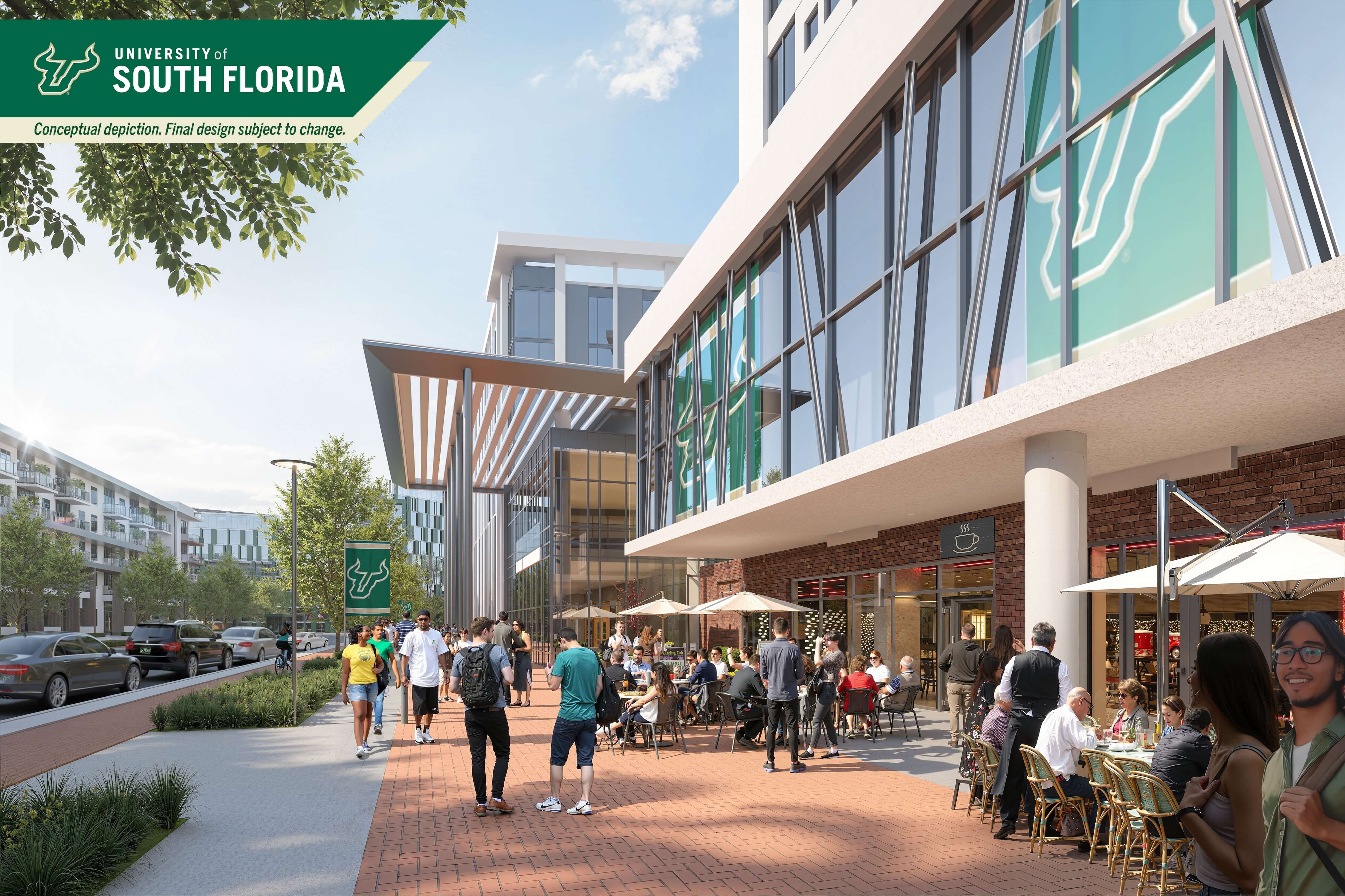
USF's continued growth as one of Florida's largest public universities, with a systemwide enrollment of more than 50,000 students, is creating sustained housing demand across Tampa Bay's north and east Hillsborough neighborhoods. Buyers, investors, faculty, and staff are all competing for homes close to campus, and proximity to USF is increasingly showing up as a pricing factor in neighborhoods like Temple Terrace, the University area, and parts of Seminole Heights.

Why USF's Footprint Changes the Housing Equation

A university the size of USF is not just a school. It is one of the largest employment and economic anchors in the Tampa Bay region. When a campus this size grows, whether through new academic buildings, research facilities, or expanded student services, the surrounding housing market feels it.

More students need housing. More faculty and staff get hired. More contractors, researchers, and support workers relocate to the area. That steady inflow of demand does not evaporate when the broader market softens, which is part of what makes campus-adjacent neighborhoods worth paying attention to as a buyer or seller right now.

According to USF's institutional profile, the university's Tampa campus is the main anchor of a three-campus system and one of the largest public research universities in the Southeast. That scale matters. A campus community of this size generates the kind of consistent, year-round housing demand that more isolated suburban submarkets simply do not have.

The Neighborhoods That Benefit Most

Not every Tampa Bay ZIP code benefits equally from USF's growth. The submarkets that tend to see the most direct impact are the ones with fast, practical access to campus:

  • University area (33612, 33617): The closest neighborhoods to campus. High renter concentration, but also a growing number of first-time buyers drawn by relative affordability compared to South Tampa.
  • Temple Terrace: A city within Hillsborough County that borders USF's eastern edge. It attracts faculty, staff, and graduate students who want a quieter, more residential feel with short commutes.
  • Forest Hills and Lake Magdalene: Slightly farther out but still within a reasonable drive. These areas appeal to buyers who want more space without sacrificing access to the USF corridor.
  • Parts of Seminole Heights: A neighborhood I work in regularly. The USF connection is less direct here, but buyers who work at the university and want a walkable, established neighborhood do look here.

For context on the broader Tampa Bay market, Florida Realtors' monthly market statistics track Hillsborough County pricing and inventory trends, and the National Association of Realtors provides metro-level comparisons. Both are worth bookmarking if you are tracking this market over time.

What the South Tampa Numbers Tell Us About the Broader Market

To give you a sense of where the Tampa Bay market stands heading into the second half of 2026, here is a snapshot from recent Zillow market data for the South Tampa area. Keep in mind that South Tampa and the USF corridor are distinct submarkets, but these figures illustrate the kind of conditions buyers and sellers are navigating across the metro:

Market Indicator South Tampa (Recent Data)
Median sale price $572,500
Median days on market 54 days
Active listings 100
New listings (last 30 days) 29
Homes sold (last ~90 days) 122

South Tampa is one of the pricier pockets in the metro. The USF corridor typically offers more accessible price points, which is part of what draws first-time buyers and investors there. But the days-on-market figure is a useful signal: at 54 days for South Tampa, the broader market has slowed from the frenzied pace of a few years ago, and that dynamic plays out across submarkets, including near USF. Sellers need to be priced accurately. Buyers have a bit more room to breathe than they did in 2022, but well-positioned homes near major demand drivers like the university still move.

For the most current neighborhood-level data in the University area and Temple Terrace, the Hillsborough County Property Appraiser is a reliable public resource for sales history and assessed values by ZIP code.

What This Means If You Are Buying or Selling Near USF

For Buyers

If you are looking near USF, you are competing with a mix of investors buying rentals, parents buying for their college students, and professionals who work at the university or nearby medical facilities like Tampa General Hospital and the USF Health complex. That is a wide buyer pool, and it keeps demand from disappearing even when broader market conditions soften.

One thing I walk my clients through early is the full picture of what they qualify for before we start touring homes. If you have not already, it is worth exploring whether any down payment assistance programs apply to your situation, especially if you are a first-time buyer eyeing the University area or Temple Terrace. You can read more about today's down payment programs on our blog. Many buyers assume they need 20% down and rule themselves out of neighborhoods they could actually afford.

The CFPB's homebuying resource center is also a solid starting point for understanding what lenders will look at before you make an offer.

For Sellers

If you own near USF, you have a built-in demand story to tell. University proximity is a concrete, durable selling point, and it resonates with a specific buyer profile that is not going away. The key is making sure your pricing reflects actual comparable sales in your neighborhood, not just the general Tampa Bay narrative. A home in the University area and a home in South Tampa are operating in different markets, and pricing them the same way is a mistake I see sellers make when they rely on broad metro headlines instead of street-level data.

An accurate, data-driven valuation is where that conversation starts. Your specific number depends on your home's condition, location, and timing, and the only way to know it with confidence is to run a proper market analysis. That is something I do for every seller before we talk about list price.

The NAR's existing home sales data and Florida Realtors' county-level reports are the benchmarks I use alongside local MLS data when I build a comparative market analysis for a seller.

For Investors

The rental demand near USF is structural, not cyclical. A campus with 50,000-plus students does not stop generating renters because interest rates move or the economy slows. That said, the investment math still has to work, and it depends on purchase price, property condition, rental rates, and your financing structure. Every situation is different, and the only way to know if a specific property pencils out is to run the numbers with someone who knows this submarket. That is a conversation I have with investor clients regularly.

For broader context on where Tampa Bay's market is heading, our post on the housing market forecast covers the supply and demand dynamics shaping the region.


Frequently Asked Questions

Is buying near USF a good investment in Tampa Bay?

Proximity to a major university creates structural rental demand that tends to hold up better than purely residential submarkets during market slowdowns. The University area and Temple Terrace have historically attracted a steady mix of student renters, faculty buyers, and investors. Whether a specific purchase is a good investment depends on your price point, financing, and property condition, so it is worth running the numbers with a local agent before committing.

Which Tampa neighborhoods are closest to USF and still affordable?

Temple Terrace and the University area (ZIP codes 33612 and 33617) are the closest neighborhoods to USF's Tampa campus and generally offer lower price points than South Tampa or Davis Islands. Forest Hills and Lake Magdalene are slightly farther out but remain more accessible than the city's pricier west-side submarkets. Affordability is relative and changes with inventory, so a current market analysis is the most reliable way to compare your options.

Does USF expansion increase home values near campus?

Campus growth, whether through new buildings, expanded research facilities, or increased enrollment, tends to increase housing demand in the surrounding area, which puts upward pressure on prices over time. The effect is most direct in neighborhoods within a short commute of campus. That said, broader market conditions, interest rates, and local inventory also shape values, so university proximity is one factor among several, not a guarantee of appreciation.

Are there more renters or buyers near the USF area?

The University area has a high concentration of renters, driven by student demand, but Temple Terrace and adjacent neighborhoods attract a meaningful share of owner-occupants, particularly faculty, staff, and professionals who work at USF or the nearby medical facilities. The mix shifts depending on how close you are to campus, and it affects both the character of the neighborhood and the competitive landscape when you are buying or selling.

What neighborhoods do USF faculty and staff usually look at?

In my experience working with buyers who work at USF, Temple Terrace comes up most often because it borders campus and has established, single-family neighborhoods. Forest Hills, Lake Magdalene, and parts of New Tampa also attract faculty and staff who want more space. Some buyers willing to trade a longer commute for a different neighborhood feel look at Seminole Heights or even Wesley Chapel, where newer construction offers different trade-offs.


USF's scale as a Tampa Bay anchor is not going away, and neither is the housing demand it generates. Whether you are buying near campus for the first time, selling a property in the University corridor, or evaluating an investment, the key is working from accurate, neighborhood-specific data rather than metro-wide headlines. If you want to know what your home is worth near USF, or what you can realistically buy in Temple Terrace or the University area right now, get an instant home valuation or reach out to The Uhler Group directly. I will walk you through what the numbers actually say for your specific situation.

About Patrick Uhler

Patrick Uhler is a Broker Associate with Pineywoods Realty and leads The Uhler Group, helping buyers and sellers across the Tampa Bay area find and sell homes and condos in neighborhoods from South Tampa and Davis Islands to Temple Terrace, Wesley Chapel, and beyond.

Pineywoods Realty · (813) 400-3373

Equal Housing Opportunity. Patrick Uhler is a Broker Associate with Pineywoods Realty, licensed in Florida and regulated by the Florida Real Estate Commission. This article is general information only and does not constitute legal, tax, or financial advice. Broker compensation is fully negotiable and not set by law. Confirm all costs, tax obligations, and transaction details with your attorney, tax advisor, lender, or closing officer.
Posted in Real Estate News
Aug. 11, 2026

Down Payment Assistance for Tampa Bay First-Time Buyers

down-payment-assistance-tampa-bay-first-time-buyers

What down payment assistance programs are available to first-time buyers in Tampa Bay?

Tampa Bay first-time buyers have access to layered assistance through Florida Housing Finance Corporation, Hillsborough County's Down Payment Assistance Program, and Pinellas County's community development programs. Each program has its own income limits, purchase-price caps, and lender requirements, so the right combination depends on where you're buying and which mortgage you're using. A homebuyer education course is part of the process for most of these programs, not an optional extra.

One of the first things I tell buyers who come to me is this: don't assume you need 20% down. That number lives rent-free in a lot of people's heads, but federal mortgage rules don't require it, and there are real programs in this market designed to close that gap. The question isn't whether help exists. It's how to find what you actually qualify for.

The Programs You Should Know About in Tampa Bay

Florida Housing Finance Corporation

The Florida Housing Finance Corporation is the state agency that runs Florida's primary homebuyer assistance programs. Their First Time Homebuyer Program isn't a direct cash grant, it pairs a first mortgage with down payment and closing cost assistance. You apply through a participating lender, not directly through the state agency, which means your lender choice matters from day one.

Florida Housing sets eligibility based on income, purchase price, and property type. The assistance is tied to an approved mortgage product, so you'll go through a full application and lender review process. Expect it to take longer than a standard mortgage alone. That's normal, and it's worth it.

Hillsborough County

For buyers purchasing in Tampa, Brandon, Riverview, Wesley Chapel, or anywhere else in Hillsborough County, the county runs its own Down Payment Assistance Program through its housing services division. This is a local option that can sometimes be layered on top of state-level help, which is where the real value shows up for buyers in this part of the market.

County programs here are aimed at primary-residence purchases only. If you're buying an investment property or a second home, these programs won't apply. Occupancy rules are enforced, so that's something to sort out early.

Pinellas County

Buyers in St. Petersburg, Clearwater, and the rest of Pinellas County should check the county's own community development programs separately. A program available in Hillsborough may not be available in Pinellas, and vice versa. Tampa Bay is a multi-county market, and that detail trips up a lot of buyers who assume the same programs apply everywhere.

Layered Assistance

Here's something that often surprises buyers: you're not always limited to one program. Local municipalities and nonprofit partners in Tampa Bay sometimes offer additional assistance that stacks on top of county or state programs. That means a buyer working with the right lender, in the right location, applying to the right combination of programs, can end up with significantly more help than they expected. I walk my clients through this landscape before we start shopping so we know what's in play before they fall in love with a house.

For a deeper look at how today's assistance programs work nationally and what's changed recently, this post on what you need to know about today's down payment programs covers the broader picture well.

How the Process Actually Works

The practical sequence for most Tampa Bay buyers looks like this:

  1. Choose an approved lender. Florida Housing programs only work through participating lenders. Not every lender is approved, and not every approved lender handles every program. Ask upfront.
  2. Confirm your income and purchase-price limits. Both state and county programs cap eligibility. Those limits change, so verify the current numbers directly with the program or your lender, not a blog post.
  3. Complete the required homebuyer education course. Florida Housing requires this for most of its programs. It's an online course, it's not difficult, and it's a real requirement, not a suggestion.
  4. Apply through the program and your lender together. Because the assistance is tied to your mortgage, the two applications run in parallel. Your lender coordinates this, but you need to be responsive and organized.
  5. Confirm occupancy and property eligibility. The home has to be a primary residence, and some property types may not qualify. Confirm this before you make an offer, not after.

Program approval can add time to your timeline compared to a conventional purchase. Plan for it. In a market where recent Zillow market data shows homes in the South Tampa area selling at a median price of $572,500 and sitting on market a median of 53 days, there's usually enough runway to get your financing structure right before you make an offer, but you want to have your program approval in process before you're under contract, not after.

Program Administering Body Coverage Area Key Requirement
First Time Homebuyer Program Florida Housing Finance Corporation Statewide Approved lender, homebuyer education
Down Payment Assistance Program Hillsborough County Hillsborough County Primary residence, income limits
Community Development Assistance Pinellas County Pinellas County Primary residence, income limits
Municipal / Nonprofit Layered Programs Local city or nonprofit partners Varies by municipality Check city housing pages separately

Every situation is different. Your income, credit profile, loan type, and the county you're buying in all affect which programs you can access and how much assistance you can stack. The only way to get a real answer is to run through it with someone who knows these programs and this market.

Frequently Asked Questions

What down payment assistance programs are available in Tampa Bay for first-time buyers?

The main options are the Florida Housing Finance Corporation's First Time Homebuyer Program (statewide), the Hillsborough County Down Payment Assistance Program, and Pinellas County's community development programs. Some city and nonprofit programs can layer on top of these. Eligibility, funding, and lender participation vary by program and can change, so always verify current terms directly with the program or a participating lender.

Can you buy a house in Tampa Bay with no money down?

Possibly, depending on your loan type and the assistance programs you qualify for. VA loans and USDA loans can offer zero-down options for eligible buyers, and some assistance programs can cover the down payment entirely for qualifying borrowers. The CFPB's mortgage resource center is a good place to understand loan types and minimum down payment requirements by program. Your lender will confirm what's achievable for your specific profile.

Do Hillsborough County and Pinellas County have separate first-time homebuyer programs?

Yes, and they operate independently. Hillsborough County and Pinellas County each run their own housing assistance programs with their own eligibility rules, income limits, and funding. Because Tampa Bay spans multiple counties, buyers should check both the state and their specific county's housing pages before assuming one program covers the whole metro.

What credit score do you need for down payment assistance in Florida?

Minimum credit score requirements vary by program and by the underlying mortgage product. Florida Housing programs are tied to approved first mortgages, and those mortgages have their own credit requirements. Generally, a score in the mid-600s is a starting point for many programs, but the exact threshold depends on the loan type and lender. Confirm the current minimums directly with a participating lender, since these requirements can change.

Do you have to repay down payment assistance if you sell the home?

It depends on the program. Some assistance is structured as a forgivable loan that goes away after you've lived in the home for a required period. Others are deferred-payment loans that come due when you sell, refinance, or move out. The terms are program-specific, so read the repayment conditions carefully before you sign. A participating lender or the program administrator can walk you through exactly what repayment looks like for the program you're using.

Can down payment assistance be used with FHA loans in Tampa Bay?

In many cases, yes. Florida Housing's programs are designed to work with specific approved mortgage products, and FHA loans are commonly paired with assistance programs. Compatibility depends on the specific program and lender, so confirm early that your loan type is eligible before you count on a particular assistance source.

Your Next Step

Down payment assistance programs exist in Tampa Bay, they work, and they're worth exploring before you assume homeownership is out of reach. The catch is that eligibility, funding levels, and lender participation shift over time, so the best information is always current and specific to your situation.

I help buyers across Tampa Bay, from Tampa to Clearwater to Wesley Chapel and Land O Lakes, figure out exactly what they qualify for and how to structure their purchase to take full advantage of it. If you're thinking about buying your first home, start with a conversation and a real look at your numbers.


About Patrick Uhler

Patrick Uhler is a Broker Associate with Pineywoods Realty who leads The Uhler Group, helping buyers and sellers across the Tampa Bay area find and sell homes.

Pineywoods Realty · (813) 400-3373

Equal Housing Opportunity. Patrick Uhler is a Broker Associate with Pineywoods Realty, licensed in Florida and regulated by the Florida Real Estate Commission. This article is general information only and is not legal, tax, or financial advice. Program terms, eligibility, and funding availability change; confirm all details with a participating lender, the relevant program administrator, and your attorney or tax advisor before making any financial decisions.

Posted in Buying a Home
Aug. 10, 2026

Early Listing Alerts: Tampa Bay Buyer's Edge

early-listing-alerts-tampa-bay-buyers-edge

How Early Listing Alerts Give Tampa Bay Buyers a Real Advantage

If you're house hunting in Tampa Bay, you've probably felt it: a home you liked went pending before you even got a showing scheduled. That's not bad luck. It's timing.

Early listing alerts notify you the moment a home enters the MLS, sometimes before it's even open to the public, so you can schedule a showing and prepare an offer before most buyers know the property exists. In a market where South Tampa's median days on market sits at 52 and active inventory is thin, that head start can be the difference between getting into contract and getting outbid.

Here's why that matters, and how to make it work for you.

Why Timing Is Everything in Tampa Bay Right Now

Recent Zillow market data for South Tampa shows a median sale price of $595,000, with only 97 active listings and just 26 new listings added in the past 30 days. That's a narrow window, and when a desirable property hits the market, serious buyers are already lined up.

The problem with relying on Zillow, Realtor.com, or Redfin as your primary alert source: those portals don't receive listings the instant agents and MLS subscribers do. There's a lag, sometimes hours, sometimes longer, between when a listing is entered into the MLS and when it populates on a consumer site. In a market this tight, that lag costs buyers showings.

The Redfin Tampa housing market dashboard and the Realtor.com Tampa market overview both confirm the same underlying picture: supply stays constrained relative to demand, and homes move fast once they catch a buyer's eye. The bottom line is simple. If you're waiting for a Saturday-morning Zillow browse to find your next home, you're already behind.

What the South Tampa Numbers Tell You

Market Indicator South Tampa (Recent)
Median Sale Price $595,000
Median Days on Market 52 days
Active Listings 97
New Listings (Last 30 Days) 26
Homes Sold (Last ~90 Days) 121

Notice that more homes sold in the last 90 days than are currently active. Demand is absorbing inventory faster than new supply is entering the market, and that's the math that makes early alerts essential.

How Early Listing Alerts Actually Work

Not all alerts are created equal. The difference comes down to listing status, and where your alert is pulling from determines how early you actually see a home.

Coming Soon is the earliest stage. A seller's agent has entered the property into the MLS but hasn't opened it up for full public showings yet. Some MLS rules allow a brief coming-soon window so sellers can prepare. Buyers who catch this status can get on a showing list the moment the home goes active.

Active means the home is fully listed and available for showings. This is when the clock starts, and when the competition heats up. Buyers with direct MLS-connected alerts get notified here faster than portal users.

Pending means a contract is already in place. If you're seeing a home go from active to pending before you've had a chance to tour it, your alert system is too slow.

Tampa-area buyers should monitor coming soon, newly listed, and price-reduced alerts separately, since portals don't always publish them on the same schedule. Setting up separate saved searches for each status, through your agent's MLS-connected system, keeps you ahead of buyers relying on one general search.

Where Your Alert Comes From Matters

The Tampa Bay region isn't a single unified feed from every buyer's perspective. What you see, and when you see it, depends on whether the property entered the system as coming soon, active, or was delayed before MLS activation.

A buyer working directly with a local agent who has full MLS access, and who has set up custom, criteria-matched alerts, will consistently see listings before buyers browsing consumer portals. This is exactly why I set up direct MLS alerts for my clients the moment we start working together: your criteria, your neighborhoods, your price range, pushed to you the instant a matching property hits the system.

Being Ready to Move Is Part of the Strategy

An early alert only converts into a home if you can act on it. A few things need to be in place before the right listing appears:

  • Pre-approval in hand. A seller in South Tampa or Davis Islands isn't waiting for you to start your lender conversation after seeing a listing. Your pre-approval letter needs to be current and ready to attach to an offer.
  • Your must-haves defined. The faster you need to move, the less time you have to debate. Know your non-negotiables before the alert fires.
  • A showing request ready to go. When I get a client an early alert on a property that fits their criteria, we're scheduling a showing that same day, not the following weekend.
  • An offer framework in mind. You don't need every number locked in advance, but understanding your offer strategy ahead of time means you're not starting from scratch under pressure.

Under Florida Statute § 725.01, a real estate purchase must be in a valid written contract to be enforceable. An early alert only becomes a real edge when you can move quickly from notification to showing, offer, and executed contract. Seeing the home first doesn't help if you're not positioned to make a clean offer.

What to Do Before You Make an Offer

Speed matters, but not at the expense of due diligence. Here's what I walk my clients through before submitting an offer on a home they found through an early alert.

Check the property's history. The Hillsborough County Property Appraiser is a free public resource that tells you whether a home is homesteaded, how long the current owner has held it, and what the assessed value looks like. A seller who's owned a home for two years and priced it aggressively is a different situation than one who's owned it for 20 years and is downsizing, and that context can inform your offer strategy.

Understand Florida's disclosure rules. Under Florida Statute § 689.25, sellers must disclose known facts that materially affect the value of residential property and aren't readily observable to a buyer. In practice, that means a seller isn't required to advertise every issue upfront, but once you're in contract, they're required to tell you about known latent material defects. For buyers acting on early alerts, this makes a prompt inspection and a clear disclosure request especially important once you've identified a property.

The National Association of Realtors consistently reports that buyers who skip or rush inspections in competitive markets face higher rates of post-closing surprises. Moving fast doesn't mean skipping steps. It means having a team that can execute those steps quickly.

Every situation is different, and the right offer strategy depends on your home's condition, the competition in that specific neighborhood, and your financing. That's where having a local agent in your corner, not just an alert system, makes the real difference.

Frequently Asked Questions

How do early listing alerts work in Tampa Bay? Early listing alerts are automated notifications sent to buyers when a property matching their saved search criteria enters the MLS. Buyers working with a local agent who has direct MLS access receive these alerts faster than buyers relying on consumer portals like Zillow or Realtor.com, which have a data lag. In Tampa Bay's tight market, that timing gap matters.

Are "coming soon" homes in Tampa Bay worth pursuing? Yes. A coming soon status is the earliest public signal that a home is about to hit the market. It gives you time to research the property, line up financing, and request a showing the moment it goes active.

Do Tampa Bay buyers ever see listings before they hit Zillow or Realtor.com? Yes. Buyers working directly with an agent who has MLS access receive listing notifications before most consumer portals update. The delay between MLS entry and portal syndication can range from hours to longer, depending on how the listing is entered and the portal's refresh cycle.

What's the difference between active, coming soon, and pending in Florida listings? Coming soon means the property is in the MLS but not yet available for showings. Active means it's fully listed and showings are open. Pending means a contract is already signed and the home is off the table for most buyers.

Can I tour a Tampa home before it officially lists? In some cases, yes. A seller's agent may allow pre-listing showings during a coming soon period, depending on MLS rules and the seller's preference. This is one of the advantages of working with a local agent who has relationships in the market: they can sometimes arrange early access, or at least get you on the showing list the moment a home goes active.

In Tampa Bay's market, the buyers who consistently win aren't necessarily the ones with the highest budgets. They're the ones who see the right home first and are ready to move.

If you're ready to get set up with real-time MLS alerts for Tampa Bay, set up your custom alert with The Uhler Group here.


About Patrick Uhler Patrick Uhler is a Broker Associate with Pineywoods Realty who leads The Uhler Group, helping buyers and sellers across the Tampa Bay area find and sell homes and condos.

Pineywoods Realty · (813) 400-3373


Equal Housing Opportunity. Patrick Uhler is a Broker Associate with Pineywoods Realty, licensed in Florida and regulated by the Florida Real Estate Commission. This article is general information only, not legal, tax, or financial advice. Confirm your specific situation with your attorney, tax advisor, lender, or closing officer.

Posted in Buying a Home