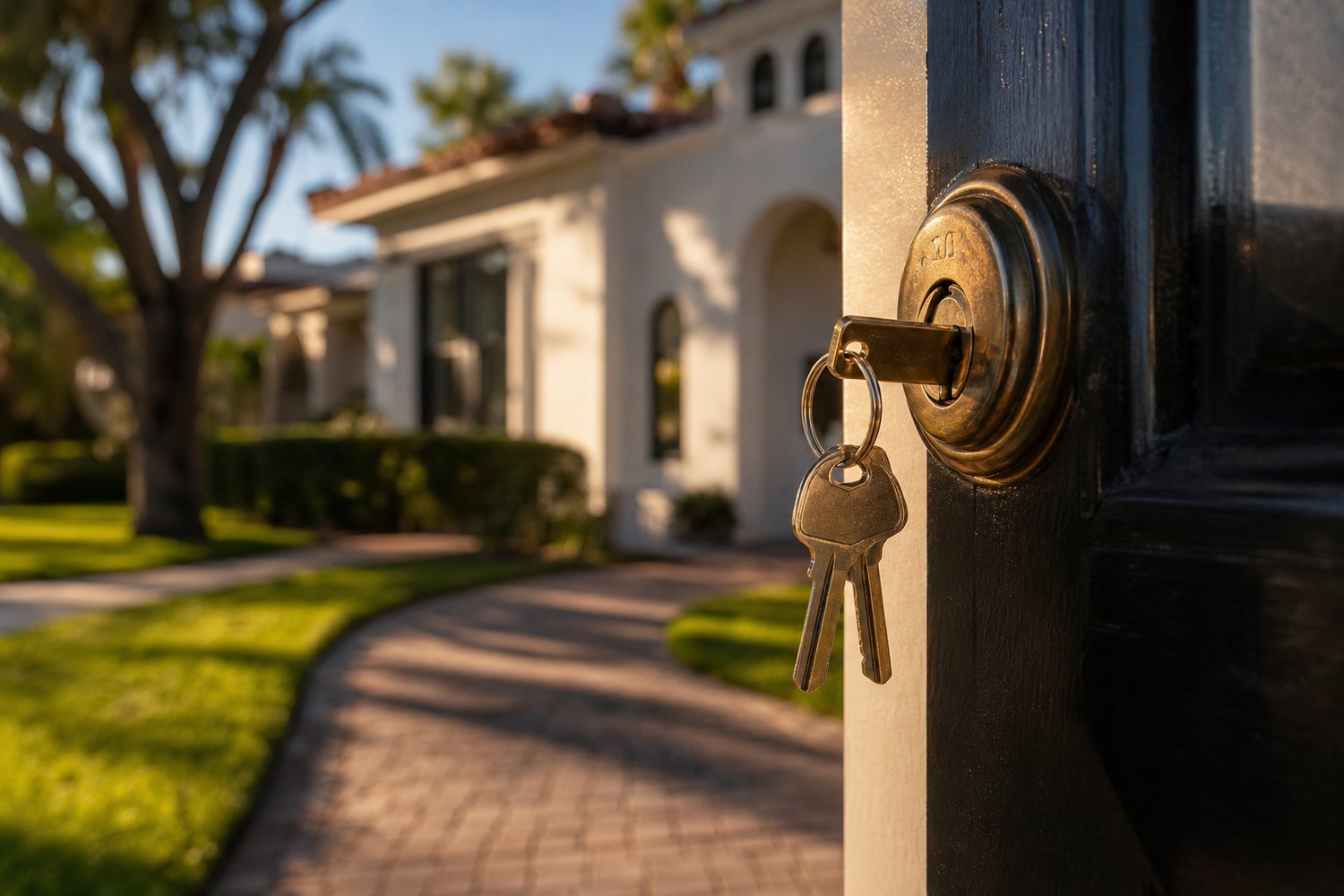
The date that matters is January 1, not December 31. To get homestead savings for 2027, you need to own the home and live in it as your permanent residence on that day, then file with your county property appraiser by March 1. Closing early in December without those pieces in place saves nothing.
Buying a Tampa Home Before Year-End and Your Tax Bill
Does Buying a Tampa Home Before December 31 Cut Your Taxes?
Not by itself. Buying a Tampa home before year-end only lowers your property tax bill if you own it and have made it your permanent residence on January 1, and then file your homestead application on time. Florida assesses property based on its status on January 1 under the Department of Revenue's homestead guidance, so a December 5 closing and a December 30 closing produce the same exemption result.
Key Takeaways
- Florida homestead eligibility is set on January 1, so a buyer who closes in December 2026 and lives in the home as a permanent residence on January 1, 2027 may qualify for the 2027 tax year.
- The homestead application is due to the property appraiser in the home's county by March 1 of the tax year, and the exemption is not automatic.
- The exemption reduces assessed value by up to $50,000, but your actual bill reduction depends on the millage rates of the taxing authorities where the home sits.
- A change of ownership resets the assessment to just value on the following January 1, so the seller's old tax bill is not a reliable guide to yours.
- Recent local market data shows a median sale price of $435,500 for South Tampa homes sold over roughly the last 90 days, an area-level figure that says little about any one home's assessment.
Black Friday teaches everyone to chase a deadline for a discount. Year-end home shopping gets the same treatment: "close by December 31 and save on taxes." It sounds logical, and it's mostly wrong in the way people expect. Here's how the timing really works, so you don't rush a purchase for a benefit that depends on something else.
Does the closing date or January 1 decide your homestead exemption?
January 1 decides it. To qualify, you generally need Florida residency, you must own the property, and you must make it your permanent residence (or the permanent residence of a legal or natural dependent) on that date, according to the Florida Department of Revenue's homestead application form. Signing a contract or closing late in the year doesn't create the benefit on its own.
When I talk with clients about buying a Tampa home in the last weeks of the year, this is the first thing I clear up. The December 31 deadline isn't the finish line. Owning and occupying the home on January 1 is.
What does a year-end timeline look like?
Say you close in December 2026 and the home is your permanent Florida residence on January 1, 2027. If you meet the other requirements, you can apply for the 2027 exemption by March 1, 2027. If you close after January 1 instead, you generally shouldn't assume you qualify for that tax year, and you should confirm your situation with the property appraiser.
That's also why a tight closing schedule matters. If a December closing slips into January, the homestead benefit can slip a full tax year with it. Build in cushion with your lender and closing agent.
Which dates matter in the Florida property tax calendar?
These are annual tax-administration dates from the Florida Department of Revenue's property tax page for taxpayers. They show the rhythm of the year, not a promise that a December closing saves money.
| Date | What happens | Why it matters to a buyer |
|---|---|---|
| January 1 | Assessment date for property status and ownership | You need to own the home and have made it your permanent residence by this date |
| March 1 | Homestead exemption application deadline | File with the property appraiser in the county where the home is located |
| August (generally) | Proposed tax notices mailed | Your first look at how the year's taxes are shaping up |
| November (generally) | Final tax bills sent | The bill reflects that year's assessment and exemptions |
One more point on the current year. The final 2026 bills are going out around now, and they reflect the January 1, 2026 status of the property, not your purchase. How that bill is divided between you and the seller is handled in your contract and at closing, so confirm the details with your closing agent.
How much can the homestead exemption actually save a Tampa Bay buyer?
It reduces assessed value by up to $50,000, but the dollar savings on your bill depend on the millage rates where the home sits. The first $25,000 applies to all property taxes, including school-district taxes. The additional exemption applies to assessed value over $50,000 and excludes school-district taxes, per the Florida Department of Revenue's property tax overview.
Don't treat the full exemption amount as money in your pocket. The reduction in your bill comes from applying county, municipal, school-board, and other millage rates to the lower taxable value, and those rates differ across Tampa Bay. A buyer in Brandon or Riverview, a buyer in Wesley Chapel or Land O Lakes, and a buyer in South Tampa can each see a different result. I'll help you pin down what applies to the specific address you're considering.
Does buying before December 31 stop the home from being reassessed?
No. Florida's Save Our Homes limitation caps later annual increases in assessed value at the lower of 3% or the change in the Consumer Price Index, but only after the home first receives homestead and is assessed at just value, according to the Department of Revenue's Save Our Homes and portability guidance. A change in ownership causes the property to be assessed at just value on the following January 1.
In practice, the seller's tax bill may look low because of years of capped increases, and yours may not match it. Recent local market data shows a median sale price of $435,500 for South Tampa homes sold over roughly the last 90 days, with 97 homes for sale and 33 new listings in the past 30 days. That's an area-level number. What a specific home is worth depends on its condition, street, build year, and timing, and that is what the property appraiser looks at, not a neighborhood median.
Budget for your own taxes, not the seller's. I covered the county side of this in more detail in Tampa Bay Buyers and Hillsborough County Property Taxes, and the broader upfront picture in How Much Cash to Buy a Home in Tampa Bay 2026.
What should you verify before counting on a year-end closing for tax savings?
Verify five things before you let a tax benefit drive your closing date. Every situation is different, and the only way to know for sure is to run your facts with someone who knows this market.
- Your closing date. Confirm it's firm and leaves room for delays, so you own the home on January 1.
- Your residency plan. The home must be your permanent residence (or a dependent's) on January 1, not a second home or a rental.
- Other homestead claims. Check whether you already hold a homestead exemption on another property.
- Portability. If you're moving from a Florida homestead, find out whether you can carry over some of your Save Our Homes benefit.
- Your county's filing process. Use the property appraiser's office for the county where the home is located.
Can you transfer your old Florida homestead benefit to a new Tampa Bay home?
Partly, through portability. The prior exemption itself doesn't move, but you may be able to transfer some or all of the Save Our Homes assessment difference from your prior homestead. You file the portability form along with the new homestead application, as explained in the Department of Revenue's portability FAQ.
There's a separate clock too. The new homestead must generally be established within three years of January 1 of the year you abandoned the former homestead, and the portability application is due March 1, per the same Department of Revenue guidance. If you're selling one Florida home to buy another, this is worth planning before you set a closing date.
Which county office do you file with?
File with the property appraiser in the county where the property sits, not the City of Tampa. South Tampa, Westchase, Brandon, and Riverview fall in Hillsborough County, Wesley Chapel and Land O Lakes are in Pasco County, and some Tampa Bay addresses are in Pinellas. Check the county for your specific address, then confirm that office's filing method before March 1. The Department of Revenue's taxpayer page is a good starting point for the statewide framework.
Buying a Tampa home is a big enough decision without adding a tax-timing mistake to it. If you're also selling a home before you buy, our piece on why home valuation matters before selling in Tampa will help you line up both sides.
Curious how past clients rate working with me? You can read my reviews on Zillow.
FAQ
If I close on a Tampa home in December 2026, can I claim the Florida homestead exemption for 2027?
Possibly, if you also meet the other requirements. You need to own the home and make it your permanent residence on January 1, 2027, then apply by March 1, 2027. The December closing alone doesn't qualify you, per the Florida Department of Revenue's application form.
Do I have to live in the home on January 1 to qualify?
Yes, the home must be your permanent residence, or the permanent residence of a legal or natural dependent, on January 1. Owning it on that date without making it your permanent residence generally doesn't meet the requirement. If your move-in timing is uncertain, confirm with the property appraiser before you rely on the exemption.
What is the homestead filing deadline in Hillsborough, Pinellas, or Pasco County?
The statewide application deadline is March 1 of the tax year. For a home you intend to qualify in 2027, that's March 1, 2027. File with the property appraiser in the county where the home is located, and check that office for its current filing method.
Does the seller's homestead exemption carry over to me?
No. The exemption is tied to an owner who qualifies, so you have to apply for your own. The sale also triggers a change of ownership, which causes the property to be assessed at just value on the following January 1, so your taxable value may differ from what the seller paid.
What is Florida homestead portability, and when do I apply?
Portability lets you transfer some or all of the Save Our Homes assessment difference from a prior Florida homestead to a new one. You file the portability form with your new homestead application by March 1, and the new homestead must generally be established within three years of January 1 of the year you abandoned the old one.
The bottom line: closing before December 31 only helps if you also own and occupy the home on January 1 and file by March 1. If you want to check your timing, your county, and whether portability applies to your move, I walk my clients through exactly this before they write an offer. You can get an instant home valuation if you're also selling, or request a free home evaluation and we'll map out your year-end plan together.
Equal Housing Opportunity. Patrick Uhler, Broker Associate, Pineywoods Realty, regulated by the Florida Real Estate Commission. This article is general information, not legal, tax, or financial advice; confirm your own numbers with your closing agent, tax advisor, or lender.