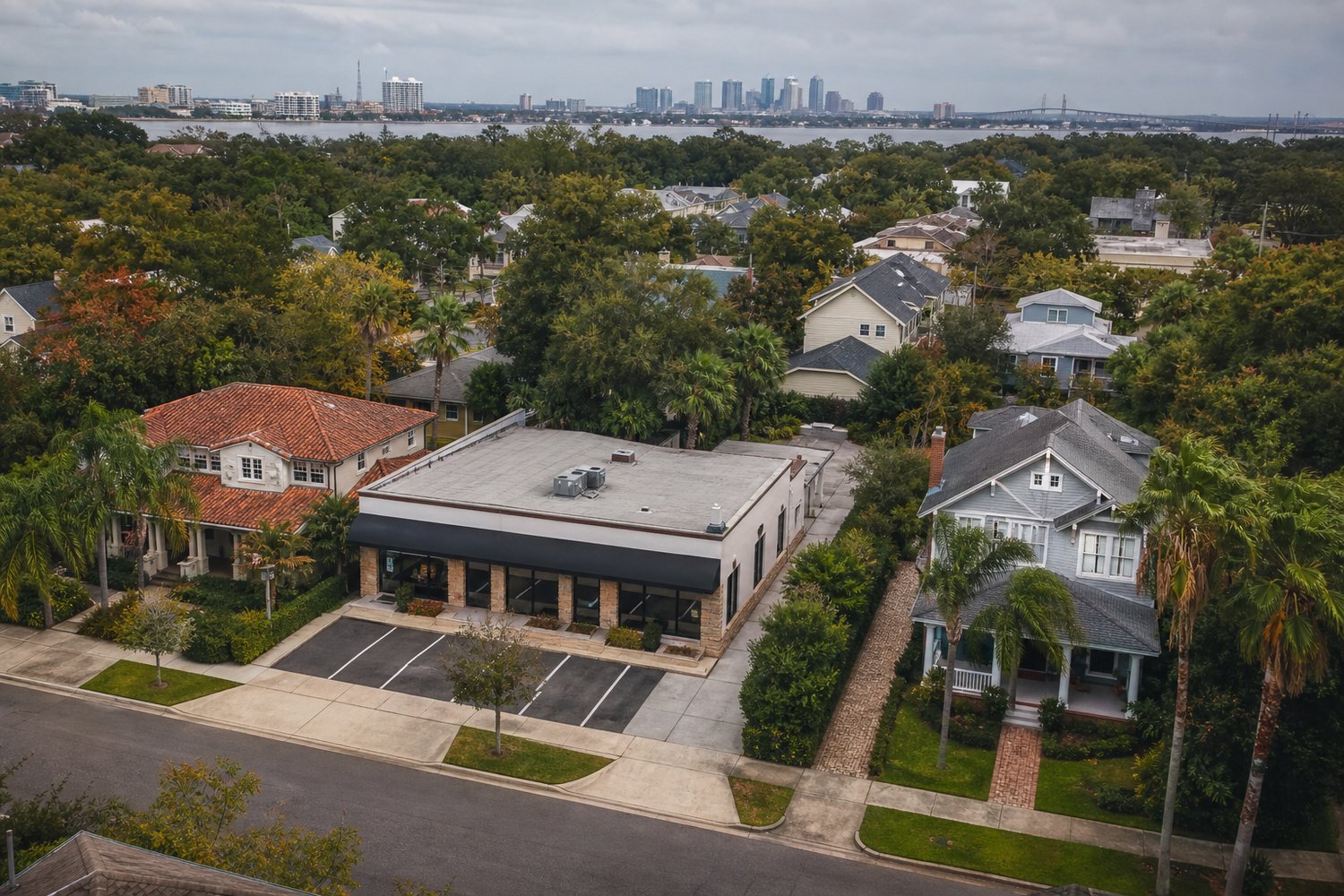
Order the general inspection first, then a roof evaluation, a four-point report, and a wind-mitigation report, and pull the full permit history from the right building department. Send everything to an insurance agent while your inspection period is still running, because insurability, not just condition, decides what the house really costs you.
What should I check before buying an older Tampa Bay home?
Start with the roof, electrical, plumbing, and HVAC condition through a four-point inspection, add a wind-mitigation inspection, and pull the complete permit history for the address. Insurers can request these reports on an older Tampa Bay home, and the buyer pays for them, so you want the results and an insurance indication before your inspection period ends.
Key Takeaways
- A four-point inspection covers four systems (roof, electrical wiring, plumbing, and heating/air-conditioning), and Florida consumer guidance says insurers may require one for an older home, paid for by the applicant.
- For a roof 15 years old or older, Florida insurers must allow an authorized inspection before requiring replacement, and they cannot refuse coverage solely because of roof age if the inspection documents at least five years of remaining life.
- Recent local market data shows 51 homes for sale now in Tampa Bay and 11 new listings in the last 30 days, which is limited choice, but that is no reason to shorten the time you need for roof, four-point, and wind-mitigation reports.
- An open or expired permit is a closing issue to resolve before you commit, and a permit number on a website does not prove the work passed final inspection.
- Get an insurance indication using the real reports while your inspection period is still running, not after it expires.
What inspections does an older Tampa Bay home need before you buy?
Beyond a general home inspection, an older Tampa Bay home usually calls for a roof evaluation, a four-point inspection, and a wind-mitigation inspection, plus targeted checks wherever the general inspector finds a problem. The reason is insurance. Florida's consumer guidance says insurers may require a four-point inspection for older homes, and the insured or applicant pays for it.
Underwriting can also look at the electrical-panel brand, wiring, plumbing materials, roof age and type, construction type, and HVAC age, according to the state's Homeowners' Insurance Toolkit. Any one of those can decide whether a house qualifies for coverage. That is why I treat inspections on these homes as an insurance question as much as a condition question.
What does a four-point inspection cover?
A four-point inspection evaluates the roof, electrical wiring, plumbing, and heating and air-conditioning equipment. The state's Four Point Inspection Guide says insurers commonly want documentation of at least five years of remaining roof life when a shingle roof is older than 15 years or a tile or metal roof is older than 20 years.
The insurer decides what report age it will accept. The guide says reports are generally expected to be dated within 30 days before the insurance application, so timing matters. Order it too early and you may have to pay for it twice.
How old can a roof be before insurance gets difficult?
There is no single cutoff, but 15 years is where Florida's rules change the conversation. Under the state's current property insurance guidance, an insurer cannot refuse to write or renew a policy solely because a roof is less than 15 years old. For a roof 15 years old or older, the insurer must let the homeowner get an inspection by an authorized inspector before requiring replacement. If that inspection documents at least five years of remaining useful life, the insurer cannot refuse coverage solely because of roof age. The homeowner pays for the inspection.
That rule does not guarantee every insurer will accept every roof, or overlook other hazards in the house. Roof discounts also vary: state guidance says they depend on age, condition, and material, and typically may apply to roofs less than 10 years old. So ask for the roof's installation date and the invoices or permit that support it, not just the seller's best guess.
Is a wind-mitigation inspection worth getting?
Yes, because it documents the features an insurer may credit, and it tells you what the house actually has. The inspection can record roof shape, roof-to-wall connections, secondary water resistance, and opening protection. The state says it must be done by a qualified inspector (a licensed general, building, or residential contractor, a licensed professional engineer or architect, or a certified building-code inspector) who records the features on the Uniform Mitigation Verification Inspection Form.
The same state source identifies the roof as a major source of storm-related damage and insurance claims. On an older Tampa Bay home, I want the inspector looking past the shingles or tile. Check flashing, penetrations, roof-to-wall connections, and attic evidence of old leaks, and ask whether any repairs look consistent with permitted work. That checklist is practical buyer guidance, not a state requirement.
What about the electrical, plumbing, and HVAC systems?
Have the inspector identify each system in writing: the electrical panel's make, the wiring type, the supply and drain pipe material, and the age of the HVAC equipment. Then take those details to your insurance agent and ask which, if any, the company will not write. Don't guess from the outside. An older house can look beautifully updated and still have original wiring behind the walls.
If the general inspector flags a concern, add the specialist: an electrician, a plumber with a camera scope of the sewer line, an HVAC technician, or a structural evaluation. Skipping the inspection to look more competitive on an older house is a trade I rarely recommend, and I explain why in my breakdown of whether to waive the inspection on a Tampa Bay home.
How do you verify permits and storm repairs on an older house?
Request the full permit history from the building department that covers the address, not only open permits, then match each permit to what is physically on the house. Seller disclosures help (I cover what Tampa Bay sellers must disclose), but they don't replace the records.
Which building department holds the records?
It depends on where the house sits. Tampa Bay spans Hillsborough, Pinellas, Pasco, and Hernando counties, plus cities such as Tampa, St. Petersburg, Clearwater, Largo, and New Port Richey. A South Tampa address and a Wesley Chapel address are in different counties with different building departments, and an address inside a city, like Temple Terrace, may be handled by the city rather than the county. If the property is inside a municipality, search both the city and the county so nothing slips through.
What permits should you ask for?
Ask for the complete history, including permits for:
- Original construction, additions, and structural work
- Roof replacements and re-roofing
- Electrical-panel work and rewiring
- Plumbing repipes
- HVAC replacement
- Windows, shutters, and other openings
- Post-storm repairs
For each one, keep the application, approved scope, inspection results, corrections, and final or closed status. Then walk the house with that list. Compare the permit scope with the actual roof type and age, the electrical service and panel, the visible plumbing, the HVAC equipment, and any enclosed porch, converted garage, or addition. Unpermitted work can cause insurance, financing, valuation, and future-sale problems even when it looks sound.
What if a permit is open or expired?
Treat it as a closing issue to resolve before you commit. Ask the building department what it takes to close the permit, and have the seller obtain written confirmation of final approval. A permit number on an online record does not establish that the work passed final inspection.
How do you confirm a storm repair was done correctly?
Ask for the paper trail. That means before-and-after photographs, contractor proposals and invoices, engineering reports, adjuster estimates, insurance payments, permit records, final inspections, mold-remediation records, and any transferable warranties. For a roof, confirm whether the work was a repair, a partial replacement, or a full replacement, and whether the installation date on record is supported by invoices and permits.
Florida's Disaster Assistance Guide advises confirming that permits were obtained before repair work begins and warns against paying the full repair price upfront. As a buyer, you apply that after the fact: do the permit history, invoices, and final approvals line up with the repairs you can see?
One more detail to look for in roof paperwork. The state says residential roof-repair and replacement contracts must include a notice that the contractor may not offer a rebate, gift, gift card, cash, coupon, deductible waiver, or anything of value in exchange for permitting a roof inspection or making an insurance claim. A contract missing that language is worth a question.
How do you get an insurance answer before your inspection period ends?
Send the roof installation date, roof inspection, four-point report, wind-mitigation report, and permit-closeout evidence to an insurance agent as soon as the reports arrive, and negotiate an inspection period long enough to get an answer. The insurer or independent agent may also ask about electrical-panel information, plumbing materials, and prior losses.
Here is the order I walk my clients through on an older house:
- General inspection first, to find out which specialists you actually need.
- Roof, four-point, and wind-mitigation reports, timed so the four-point is not stale when you apply.
- Targeted follow-ups such as a sewer scope, electrical evaluation, or moisture mapping if the house shows signs of leaks or water intrusion.
- Permit pull and closeout, with any open permit sent back to the seller to fix.
- Insurance indication using the real reports, before your deadline passes.
Don't assume a recently repaired roof is automatically insurable. Underwriting can still weigh installation quality, remaining useful life, material, visible deterioration, panel type, HVAC condition, permit status, and prior losses. What those reports mean for your premium, and whether the house is worth the price, is a conversation I'd rather have with you before you write the offer.
How does this fit the purchase price?
The sale price is only the start of ownership cost. Recent local market data shows 51 homes for sale now across Tampa Bay and 11 new listings in the last 30 days, so choice is limited and competition can push buyers to rush. Prices also vary a lot by area. Here is how recent closed sales compare in four of the areas I work in:
| Area | Median Sale Price | Homes Sold |
|---|---|---|
| Davis Islands | $1,479,585 | 24 |
| Harbour Island | $669,312 | 22 |
| Westchase | $569,629 | 78 |
| New Tampa | $499,760 | 191 |
These are area-level medians. An individual home's value depends on its condition, street, build year, and timing. An older house priced below the median in its area may have a roof, wiring, or plumbing reserve built into that price, and one priced at the median may not. Compare that to buying new, where the questions change, as I cover in what to verify before buying new construction in Tampa Bay.
FAQ
How old can a roof be in Florida before homeowners insurance becomes difficult to obtain?
Fifteen years is the point where the state's rule changes. For a roof 15 years or older, the insurer must let you get an authorized inspection before requiring replacement, and it can't refuse coverage solely because of roof age if the inspection shows at least five years of remaining useful life. Individual insurers can still decline for other reasons, so get an indication before you commit.
What should I look for in a four-point inspection on an older Tampa Bay house?
Look at the condition and age of the four systems it covers: roof, electrical wiring, plumbing, and heating and air-conditioning. For the roof, check whether the report documents at least five years of remaining life where your insurer requires it. Make sure the report date will still be acceptable when you apply, since insurers set their own limits and reports are generally expected within 30 days before the application.
Which electrical panels or wiring types can make an older Florida home harder to insure?
Insurers can weigh the panel brand and the wiring type, but each company sets its own list. Have your inspector identify the panel make and the wiring in writing, then ask your insurance agent whether the company will write that combination. Do this early, because a panel or rewiring project can take weeks to schedule and permit.
How can I check whether a roof replacement or storm repair was properly permitted?
Request the full permit history from the building department for the address, and search both city and county if the home is inside a municipality. Then confirm each permit shows a final or closed status, and match the scope and date to the roof you see and the contractor invoices. A permit number alone does not prove the work passed final inspection.
Should I get a wind-mitigation inspection before buying an older home in Tampa Bay?
Yes, in most cases, because it documents features that may qualify for insurance credits and shows how the house is built. A qualified inspector records those features on the state's Uniform Mitigation Verification Inspection Form. Ask your insurance agent how the credits would apply to your quote.
The core idea is simple: on an older Tampa Bay home, condition and insurability go together, and records settle both. Get the reports, pull the permits, and get an insurance indication before your deadline. I do this with buyers across Tampa Bay, and The Uhler Group can help you line up the right inspection sequence for the specific house you're considering. If you're also selling a home to fund the purchase, you can get an instant home valuation and we'll plan both sides together.
Equal Housing Opportunity. Patrick Uhler, Broker Associate, Pineywoods Realty. Regulated by the Florida Real Estate Commission. This article is general information, not legal, tax, or financial advice; confirm your own numbers and requirements with your closing agent, tax advisor, insurance agent, or lender.