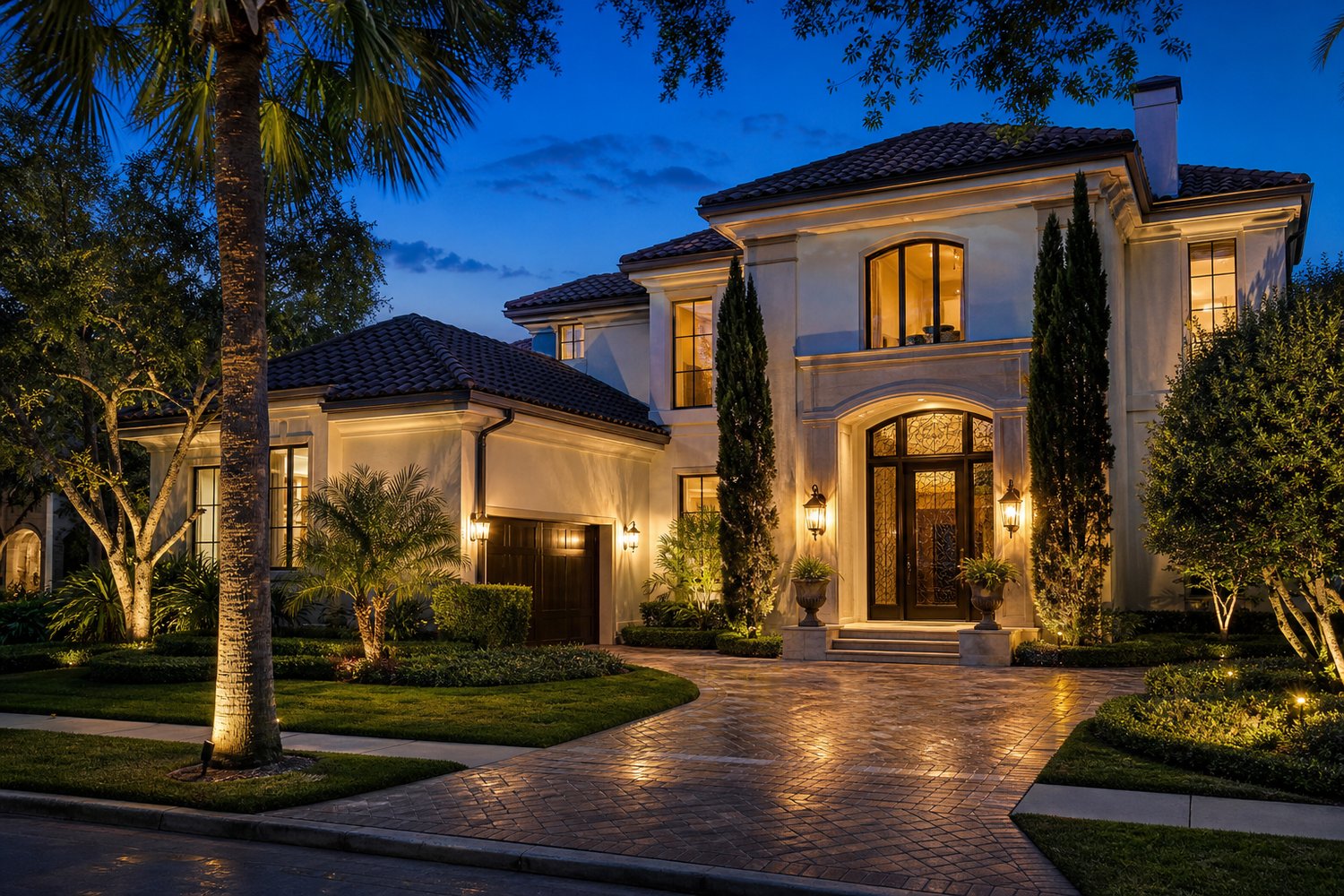
Build your launch price from three things: recent closed sales in your exact comparison area, the homes competing with yours today, and listings that have already cut their price or expired. Adjust for condition and features, then price where the market will respond in week one, not where you hope it ends up.
How do you price a Tampa home right in the first week?
To price a Tampa home right in the first week, build the number from recent closed sales, the active listings you'll compete with, and homes that have already cut their price or expired. Then adjust for your home's condition and features. The opening week is when your listing is freshest to buyers, and an aspirational price can cost you that early attention.
Key Takeaways
- Recent local market data shows 95 homes sold in South Tampa over roughly the last 90 days, with a median sale price of $424,999, but that is an area-level number and not a value for your home.
- About 27% of active Tampa-area listings carried a price reduction in September 2026, versus 20.8% nationally, so an aspirational launch price can land above competitors that already adjusted.
- Your launch price should come from three data groups: closed sales, current competing listings, and reduced or expired listings.
- The metro-wide median combines different counties, property types, and price bands, so it works as context only and never as a valuation benchmark.
- Treat week one as a measurement period: showings without offers point to price, condition, or terms, while few showings point to visibility, access, or price.
I walk my clients through this before we ever list, because the number you launch with sets the tone for everything after it. Here's how I'd approach it.
What data should set your launch price in Tampa?
Your launch price should come from three data groups: recent closed sales, current competing listings, and recently reduced or expired listings. Each one tells you something different, and you need all three to see the full picture.
Closed sales show what buyers actually paid
Closed sales are the strongest evidence you have, because they reflect real money changing hands. Keep the window tight. In a shifting market, older sales can reflect different mortgage rates, inventory levels, buyer leverage, insurance costs, or storm-related concerns.
Use the most recent comparable sales available, then explain any adjustments for renovations, lot size, pool, garage, roof age, view, elevation, and location. This is the kind of work behind a data-driven home valuation before you sell.
Active listings are your real competition
Buyers don't compare your home to a sale from six months ago. They compare it to what they can tour this weekend. In South Tampa, recent local market data shows 102 homes for sale now and 40 new listings in the last 30 days. That is a lot of choice sitting next to your launch.
Reduced and expired listings show where the market said no
A price cut or an expired listing marks a price point that failed to bring an acceptable response. If homes like yours have been cut once or twice nearby, launching above those original prices usually repeats their mistake.
Which comparison area should you use?
Use the same county, municipality, neighborhood, property type, and housing style as your home. A Tampa mailing address does not guarantee the same buyer pool or pricing pattern as St. Petersburg, Clearwater, Pasco County, or another Hillsborough County submarket. If you're in Hillsborough, pricing your Hillsborough County home right covers the county-level view.
Even within Tampa, area medians vary widely. Here's what recent local market data shows for the areas with enough closed sales to be reliable.
| Area | Median Sale Price |
|---|---|
| South Tampa | $424,999 |
| Harbour Island | $670,000 |
| Ybor City | $220,000 |
| Seminole Heights | $361,900 |
| Westchase | $559,923 |
| New Tampa | $421,250 |
These are area-level medians. Your home's value depends on its condition, street, build year, and timing, which is why a median is a starting point and never a price tag.
Why does an aspirational price hurt a Tampa listing in week one?
An aspirational price puts you above the homes buyers are already comparing, so the people most ready to act scroll past you or tour and move on. You spend your freshest week on the market without a real test of what buyers will pay.
The competition is already adjusting. According to Tampa Bay Business & Wealth, about 27% of active Tampa-area listings had undergone a price reduction in September 2026, compared with 20.8% nationally. If you launch high, you may be priced above homes that have already come down.
Homes are also taking longer to sell across the metro in 2026, which means buyers have time and options. They don't feel pressure to stretch for a listing that looks overpriced next to its neighbors.
Why chasing the market down costs more than launching right
I see this pattern often. A seller launches high, waits, then trims the price a little at a time. By the third cut, the listing looks stale, and buyers wonder what's wrong with it. Getting the number right at launch beats chasing it down later, every time.
For more on this, I break down how to price your Tampa home to sell fast. If you're in the 33629 corner or nearby, pricing in South Tampa's competitive market is worth a read too.
Is it better to price below market to attract multiple offers?
Sometimes a sharp price creates competition, but it's a strategy and not a rule. It only works when your price sits clearly under what comparable homes are asking and your home shows well. Pricing low by guesswork can leave money on the table. Whether it fits your situation depends on your home, your timeline, and the competition on your street, so run it through a local market analysis first.
How do you read the first week after you list?
Treat the first week as a measurement period and track what buyers actually do. The signals tell you whether your price, your condition, or your visibility needs attention.
- Showing requests: how many come in, and how quickly after launch.
- Private-tour feedback: what buyers say about price, layout, and condition.
- Online engagement: views and saved listings.
- Offer activity: any offers, and how close they come to your price.
- Second looks: whether qualified buyers come back for another tour.
What the signals usually mean
Few showings can point to a visibility, access, condition, or pricing problem. Plenty of showings with no offers more often means you should take a hard look at price, condition, terms, or the objections buyers keep raising.
How many days should you wait before lowering the price?
There's no magic number of days. The right move depends on the activity you're seeing, not the calendar. If buyers are touring and the feedback keeps landing on price, waiting won't change that. If few people are looking, the fix may be photos, access, or marketing before it's price. I review this with sellers as the data comes in, so you're deciding on evidence and not on worry.
How do you price a Tampa home right when condition or features set it apart?
You price a Tampa home right by letting comparable sales decide what your upgrades are worth, not by adding up what you spent. Condition can support a stronger price, but only to the extent that buyers in your area have actually paid more for it.
Features that move the number include a renovated kitchen or baths, newer roof, pool, garage, larger lot, and a view. So can flood exposure and elevation, which buyers and insurers look at closely. Each one needs a comparable sale or active listing to back it up. Without that, it's an opinion, and buyers won't pay for an opinion.
How should a condo be priced differently from a single-family home?
Condos should be compared against other units, ideally in the same building or complex, and not against single-family homes. HOA dues, building condition, and the specific unit's floor, view, and finishes all shape what buyers will pay. Single-family pricing leans more on lot, roof, and the surrounding street.
Don't use the metro median as your benchmark
You'll see broad numbers in the news. For example, Tampa Bay Business & Wealth reported a September 2026 metro median listing price of about $385,400, down 6.6% year over year. That figure blends different counties, property types, and price bands. It's useful context for the direction of the market, but it says very little about your home on your street.
Your specific number depends on your home's condition, location, and timing. That's where a local market analysis comes in.
Frequently Asked Questions
How do I price my Tampa home when similar listings have recently reduced their prices?
Price against the reduced prices, not the original ones. A cut tells you the first number didn't work, so launching above those original prices repeats the problem. Compare your home to the new asking prices and to recent closed sales, then adjust for what sets your home apart.
What comparable sales should I use for a Tampa home?
Use recent closed sales in the same neighborhood, with the same property type and similar style, size, and condition. Keep the window tight, because older sales can reflect different rates and buyer leverage. Adjust for differences like pool, lot, roof age, and location.
How do I compare my home with listings in Hillsborough, Pinellas, or Pasco County?
Start with your own county and municipality, since each can have a different buyer pool and pricing pattern. Cross-county listings are useful for context but shouldn't set your number. A comparison built around your exact submarket is more reliable than a Tampa Bay-wide average.
Why are Tampa homes taking longer to sell in 2026?
Buyers have more choice and more leverage, and many sellers are cutting prices to compete. About 27% of active Tampa-area listings carried a price reduction in September 2026, which shows how many sellers launched too high. Pricing to the current market, not last year's, is the clearest way to avoid that.
Does a Tampa home's condition justify pricing above nearby comparable sales?
Only if buyers in your area have paid more for that level of condition. Upgrades help a home sell, but they don't automatically add their cost to the price. Comparable sales of renovated homes are the evidence that supports a premium.
The goal is a price that earns attention in the first week and holds up against what buyers are comparing. If you want a number built on current comps, competing listings, and your home's real condition, I'm happy to run it with you. Start with an instant home valuation, and we can talk through how to price a Tampa home right before you list.
Equal Housing Opportunity. Patrick Uhler, Broker Associate, Pineywoods Realty, licensed in Florida and regulated by the Florida Real Estate Commission. This article is general information and not legal, tax, or financial advice; confirm your own numbers with your closing agent, tax advisor, or lender.