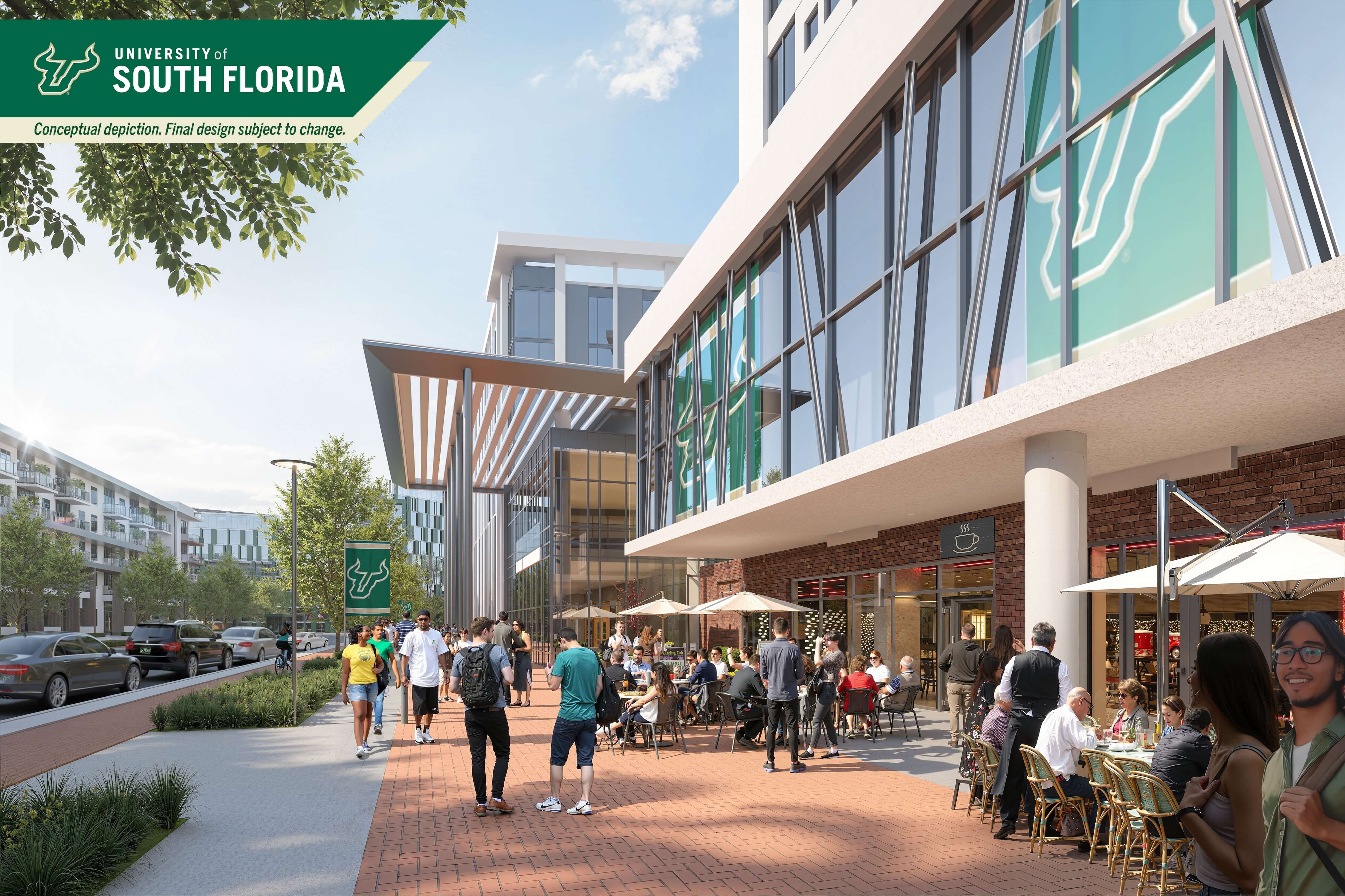
How is USF's expansion affecting Tampa Bay real estate?
USF's continued growth as one of Florida's largest public universities, with a systemwide enrollment of more than 50,000 students, is creating sustained housing demand across Tampa Bay's north and east Hillsborough neighborhoods. Buyers, investors, faculty, and staff are all competing for homes close to campus, and proximity to USF is increasingly showing up as a pricing factor in neighborhoods like Temple Terrace, the University area, and parts of Seminole Heights.
Why USF's Footprint Changes the Housing Equation
A university the size of USF is not just a school. It is one of the largest employment and economic anchors in the Tampa Bay region. When a campus this size grows, whether through new academic buildings, research facilities, or expanded student services, the surrounding housing market feels it.
More students need housing. More faculty and staff get hired. More contractors, researchers, and support workers relocate to the area. That steady inflow of demand does not evaporate when the broader market softens, which is part of what makes campus-adjacent neighborhoods worth paying attention to as a buyer or seller right now.
According to USF's institutional profile, the university's Tampa campus is the main anchor of a three-campus system and one of the largest public research universities in the Southeast. That scale matters. A campus community of this size generates the kind of consistent, year-round housing demand that more isolated suburban submarkets simply do not have.
The Neighborhoods That Benefit Most
Not every Tampa Bay ZIP code benefits equally from USF's growth. The submarkets that tend to see the most direct impact are the ones with fast, practical access to campus:
- University area (33612, 33617): The closest neighborhoods to campus. High renter concentration, but also a growing number of first-time buyers drawn by relative affordability compared to South Tampa.
- Temple Terrace: A city within Hillsborough County that borders USF's eastern edge. It attracts faculty, staff, and graduate students who want a quieter, more residential feel with short commutes.
- Forest Hills and Lake Magdalene: Slightly farther out but still within a reasonable drive. These areas appeal to buyers who want more space without sacrificing access to the USF corridor.
- Parts of Seminole Heights: A neighborhood I work in regularly. The USF connection is less direct here, but buyers who work at the university and want a walkable, established neighborhood do look here.
For context on the broader Tampa Bay market, Florida Realtors' monthly market statistics track Hillsborough County pricing and inventory trends, and the National Association of Realtors provides metro-level comparisons. Both are worth bookmarking if you are tracking this market over time.
What the South Tampa Numbers Tell Us About the Broader Market
To give you a sense of where the Tampa Bay market stands heading into the second half of 2026, here is a snapshot from recent Zillow market data for the South Tampa area. Keep in mind that South Tampa and the USF corridor are distinct submarkets, but these figures illustrate the kind of conditions buyers and sellers are navigating across the metro:
| Market Indicator | South Tampa (Recent Data) |
|---|---|
| Median sale price | $572,500 |
| Median days on market | 54 days |
| Active listings | 100 |
| New listings (last 30 days) | 29 |
| Homes sold (last ~90 days) | 122 |
South Tampa is one of the pricier pockets in the metro. The USF corridor typically offers more accessible price points, which is part of what draws first-time buyers and investors there. But the days-on-market figure is a useful signal: at 54 days for South Tampa, the broader market has slowed from the frenzied pace of a few years ago, and that dynamic plays out across submarkets, including near USF. Sellers need to be priced accurately. Buyers have a bit more room to breathe than they did in 2022, but well-positioned homes near major demand drivers like the university still move.
For the most current neighborhood-level data in the University area and Temple Terrace, the Hillsborough County Property Appraiser is a reliable public resource for sales history and assessed values by ZIP code.
What This Means If You Are Buying or Selling Near USF
For Buyers
If you are looking near USF, you are competing with a mix of investors buying rentals, parents buying for their college students, and professionals who work at the university or nearby medical facilities like Tampa General Hospital and the USF Health complex. That is a wide buyer pool, and it keeps demand from disappearing even when broader market conditions soften.
One thing I walk my clients through early is the full picture of what they qualify for before we start touring homes. If you have not already, it is worth exploring whether any down payment assistance programs apply to your situation, especially if you are a first-time buyer eyeing the University area or Temple Terrace. You can read more about today's down payment programs on our blog. Many buyers assume they need 20% down and rule themselves out of neighborhoods they could actually afford.
The CFPB's homebuying resource center is also a solid starting point for understanding what lenders will look at before you make an offer.
For Sellers
If you own near USF, you have a built-in demand story to tell. University proximity is a concrete, durable selling point, and it resonates with a specific buyer profile that is not going away. The key is making sure your pricing reflects actual comparable sales in your neighborhood, not just the general Tampa Bay narrative. A home in the University area and a home in South Tampa are operating in different markets, and pricing them the same way is a mistake I see sellers make when they rely on broad metro headlines instead of street-level data.
An accurate, data-driven valuation is where that conversation starts. Your specific number depends on your home's condition, location, and timing, and the only way to know it with confidence is to run a proper market analysis. That is something I do for every seller before we talk about list price.
The NAR's existing home sales data and Florida Realtors' county-level reports are the benchmarks I use alongside local MLS data when I build a comparative market analysis for a seller.
For Investors
The rental demand near USF is structural, not cyclical. A campus with 50,000-plus students does not stop generating renters because interest rates move or the economy slows. That said, the investment math still has to work, and it depends on purchase price, property condition, rental rates, and your financing structure. Every situation is different, and the only way to know if a specific property pencils out is to run the numbers with someone who knows this submarket. That is a conversation I have with investor clients regularly.
For broader context on where Tampa Bay's market is heading, our post on the housing market forecast covers the supply and demand dynamics shaping the region.
Frequently Asked Questions
Is buying near USF a good investment in Tampa Bay?
Proximity to a major university creates structural rental demand that tends to hold up better than purely residential submarkets during market slowdowns. The University area and Temple Terrace have historically attracted a steady mix of student renters, faculty buyers, and investors. Whether a specific purchase is a good investment depends on your price point, financing, and property condition, so it is worth running the numbers with a local agent before committing.
Which Tampa neighborhoods are closest to USF and still affordable?
Temple Terrace and the University area (ZIP codes 33612 and 33617) are the closest neighborhoods to USF's Tampa campus and generally offer lower price points than South Tampa or Davis Islands. Forest Hills and Lake Magdalene are slightly farther out but remain more accessible than the city's pricier west-side submarkets. Affordability is relative and changes with inventory, so a current market analysis is the most reliable way to compare your options.
Does USF expansion increase home values near campus?
Campus growth, whether through new buildings, expanded research facilities, or increased enrollment, tends to increase housing demand in the surrounding area, which puts upward pressure on prices over time. The effect is most direct in neighborhoods within a short commute of campus. That said, broader market conditions, interest rates, and local inventory also shape values, so university proximity is one factor among several, not a guarantee of appreciation.
Are there more renters or buyers near the USF area?
The University area has a high concentration of renters, driven by student demand, but Temple Terrace and adjacent neighborhoods attract a meaningful share of owner-occupants, particularly faculty, staff, and professionals who work at USF or the nearby medical facilities. The mix shifts depending on how close you are to campus, and it affects both the character of the neighborhood and the competitive landscape when you are buying or selling.
What neighborhoods do USF faculty and staff usually look at?
In my experience working with buyers who work at USF, Temple Terrace comes up most often because it borders campus and has established, single-family neighborhoods. Forest Hills, Lake Magdalene, and parts of New Tampa also attract faculty and staff who want more space. Some buyers willing to trade a longer commute for a different neighborhood feel look at Seminole Heights or even Wesley Chapel, where newer construction offers different trade-offs.
USF's scale as a Tampa Bay anchor is not going away, and neither is the housing demand it generates. Whether you are buying near campus for the first time, selling a property in the University corridor, or evaluating an investment, the key is working from accurate, neighborhood-specific data rather than metro-wide headlines. If you want to know what your home is worth near USF, or what you can realistically buy in Temple Terrace or the University area right now, get an instant home valuation or reach out to The Uhler Group directly. I will walk you through what the numbers actually say for your specific situation.
Equal Housing Opportunity. Patrick Uhler is a Broker Associate with Pineywoods Realty, licensed in Florida and regulated by the Florida Real Estate Commission. This article is general information only and does not constitute legal, tax, or financial advice. Broker compensation is fully negotiable and not set by law. Confirm all costs, tax obligations, and transaction details with your attorney, tax advisor, lender, or closing officer.


