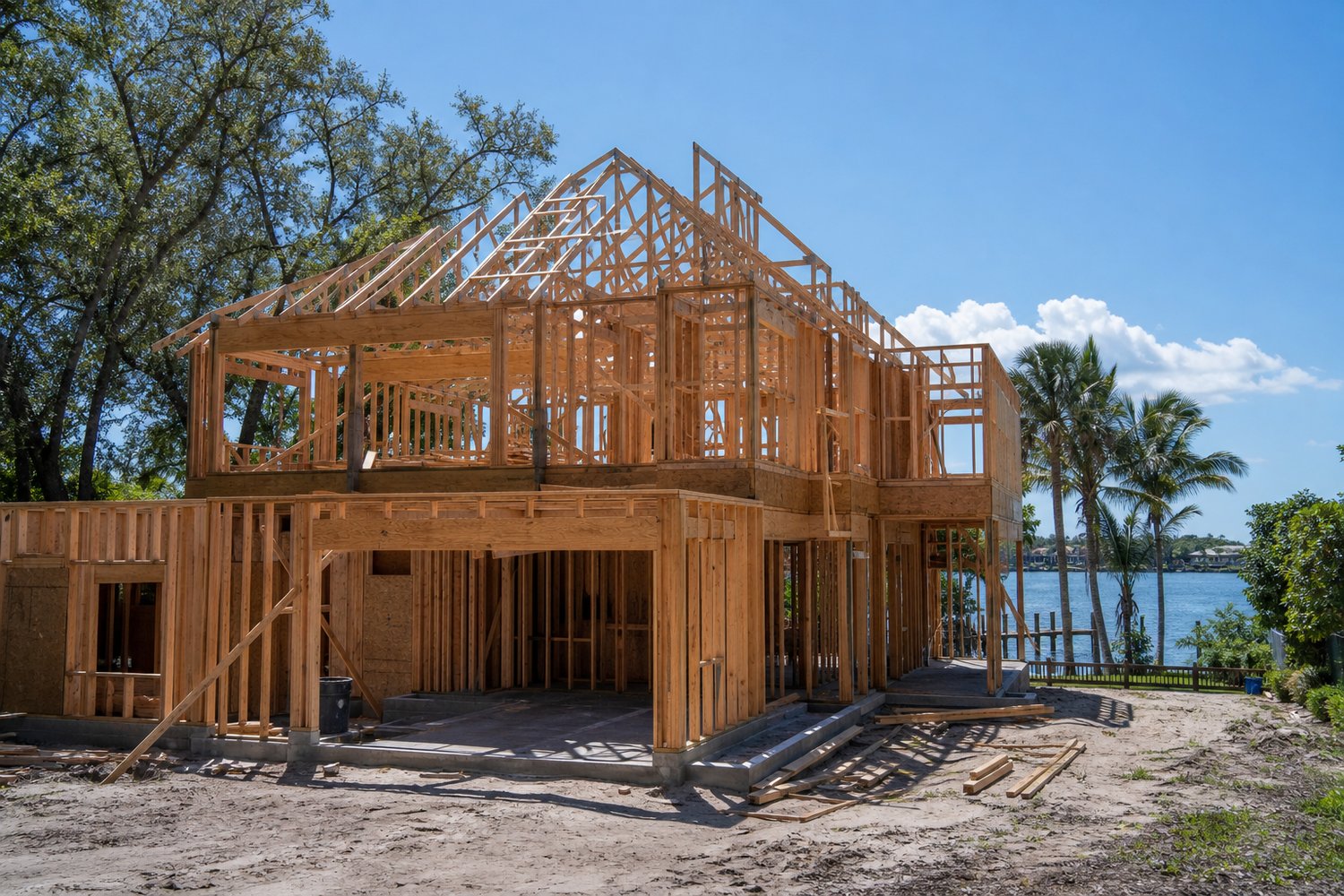
Before you sign, get four things in writing: the completion and cancellation terms, the permit and certificate of occupancy status, an itemized list of fees and included features, and a real insurance quote for the address. Then compare that total against a comparable existing home, not just the sticker price.
What should you verify before buying new construction in Tampa Bay?
Verify before buying new construction in four places: the contract (completion date, deposit, and cancellation rights), the permit and certificate of occupancy status, the full list of fees and included features, and a written insurance quote for the exact address. Add your own independent inspections at key stages, because city sign-offs don't replace a check of workmanship. Then compare the total against an existing home, not just the price tag.
Key Takeaways
- In recent local market data, the median sale price for homes sold over the trailing 90 days (as of October 2026) was $1,875,000, so a missed contract term or surprise charge carries real weight.
- A municipal permit sign-off confirms code compliance, not the quality of workmanship, drainage, or HVAC performance, so you still want your own inspector.
- An estimated completion date is a target unless the contract makes it enforceable, so check deposit, rate-lock, and cancellation terms before you sign.
- Incentives and closing-cost credits don't offset recurring costs like HOA dues, insurance, and community assessments.
- More than 27% of active listings in the broader Tampa metro had price reductions in a September 2026 report, which means existing homes are a real comparison, not a fallback.
I walk my clients through a short list to verify before buying new construction, because builder incentives and a polished model home make everything feel settled when it isn't. The sales center sells the finish. Your job is to check the paper, the permits, and the real monthly cost.
Market context helps here. Recent local market data shows 49 homes for sale now and 20 homes sold over the last 90 days as of October 2026, with the median sale price above. That's an area-level snapshot on a small sample, and an individual home's value depends on condition, lot, build year, and timing. Separately, a September 2026 Tampa Bay Business & Wealth market report found more than 27% of active listings across the Tampa-St. Petersburg-Clearwater market had price reductions. That report covers the whole metro, not new construction alone, but it tells you resale sellers are negotiating.
What should you verify before buying new construction in the contract?
Read the contract for completion timing, deposit treatment, change orders, and your cancellation or refund rights before you fall in love with a floor plan. These terms decide who carries the risk if the build slips.
Is the completion date enforceable?
Treat an estimated delivery date as a target unless the contract says otherwise. Look for the permissible extensions, the causes of delay the builder can claim, and the notice you're owed.
Then connect it to your life. If the home slips, what happens to your rate lock, your lease, your storage, and your move-out date on a home you're selling? This is where I see buyers get squeezed, and it's worth working through before you sign, not after.
What happens to your deposit?
Ask who holds the deposit, when it becomes non-refundable, and what triggers a refund. Your closing agent can confirm how funds are held. Also ask how change orders are priced and approved in writing, so a verbal promise from the sales center doesn't become your problem later.
What exactly is included in the base price?
Model homes often show upgrades that aren't in the advertised price. Get the builder's specification sheet attached to the contract, naming the appliances, countertops, cabinets, flooring, fixtures, windows, doors, insulation, HVAC equipment, landscaping, fencing, and any storm-related features. If it isn't written down, assume it isn't included.
Who is the builder, and are they licensed?
Confirm the builder and any contractor named in your paperwork through the Florida Department of Business and Professional Regulation (DBPR) license lookup. Florida regulates construction contracting under the state's construction statutes, and a license check takes minutes. One more point: the on-site sales representative works for the builder, so decide before your first visit whether you want your own representation, and ask about any builder registration rules up front.
Which permits and inspections protect you on a new build?
Verify that every required permit is issued, inspected, and finalized, then add your own independent inspections, because the two do different jobs. Local-government inspections check compliance with building requirements. They don't evaluate workmanship, drainage, or how well the HVAC actually performs.
How do you check permits in Hillsborough, Pinellas, or Pasco?
Tampa, Hillsborough County, Pinellas County, Pasco County, and the cities inside them each use their own permitting systems. Search the property address on the right portal and confirm that building, electrical, plumbing, mechanical, roofing, and other applicable permits are finalized, not merely applied for. The City of Tampa publishes a permit fee schedule that shows the permit categories, such as complete buildings, additions, and standalone trade permits, so you know what to ask about.
Final or temporary certificate of occupancy?
Ask which one you'll get at closing. The City of Tampa has a process for a Temporary Certificate of Occupancy, outlined in its construction services documents and forms. If a temporary certificate is acceptable under your contract, get a written list of unfinished items, who completes each one, the deadline, and your remedies if the work doesn't get done.
When should you bring your own inspector?
Yes, you can bring your own inspector, though your contract may set rules on site access, so ask early. I'd build inspections around the construction sequence:
- **A pre-drywall inspection**, before framing and utility systems are concealed.
- **A final inspection** after substantial completion.
- **A blue-tape or punch-list walk-through** with the builder.
- **A reinspection** before closing to confirm the fixes were made.
Have the inspector look at drainage, grading, standing water, attic ventilation, roof penetrations, windows, doors, HVAC operation, outlets, plumbing fixtures, and visible moisture. Miami-Dade County's guidance on newly constructed homes recommends walking the property with the builder before signing closing documents and bringing someone knowledgeable in construction. It's not a Tampa Bay rule, but the advice carries over.
Which documents should you request?
The same Miami-Dade guidance suggests collecting approved plans, a survey, flood-zone information, roof and product approvals, contractor and subcontractor information, termite documentation if available, and warranties from the builder, subcontractors, and appliance makers. Read the builder's warranty closely for how it treats drainage, stucco cracks, roof leaks, and workmanship, since coverage differs by builder.
How do fees, insurance, and upgrades compare with an existing home?
Compare total obligations, not sale price, because a new build can trade a lower repair risk for higher recurring and contractual costs. The comparison below shows the questions I ask on both sides.
| What to check | New construction | Existing home |
|---|---|---|
| Inspection history | No track record, so inspect at stages | Visible wear, with systems you can test |
| Permits | Confirm all finalized, plus certificate of occupancy | Check for open or unpermitted work |
| Warranty | Builder warranty, read the exclusions | Usually none unless negotiated |
| Community charges | HOA, plus possible district or infrastructure charges | HOA only, if any, with a history to review |
| Timing | Completion date can move | Closing date is set by the contract |
| Insurance quote | Based on elevation, mitigation features, and roof | Based on age, roof condition, and claims history |
Which fees can the builder pass to you?
Ask for a written itemization and sort every charge into three buckets: fixed by law, imposed by a public agency, or negotiable under the contract. The City of Tampa's permit fee page lists a Florida Building Permit Surcharge calculated at 2.5% of permit value or a $4 minimum. That's a government charge, but the city's material doesn't tell you who pays it in your deal, so confirm that in your contract and closing statement. Official fee schedules also won't cover your HOA, utility connections, lender, title, or builder-specific charges. For the closing side, here's what Tampa Bay buyers actually pay at closing.
What should you ask about the community?
Get the HOA declaration, rules, budget, assessments, and architectural restrictions before you sign. Ask whether roads, stormwater facilities, streetlights, gates, landscaping, or amenities are privately maintained and who pays. Ask whether the lot sits inside a community development district (CDD), and if so, get the assessment in writing. If you're considering a large mixed-use project rather than a subdivision, I cover what to check first at Water Street Tampa.
How do flood zone and insurance change the math?
A new home isn't automatically low-risk because it meets current building requirements. Review the official flood-zone designation, finished-floor elevation, drainage plan, and stormwater responsibilities with your lender and insurance agent. Get a written homeowners quote before your inspection period expires, based on the actual address, roof construction, elevation, and mitigation features, not the builder's marketing description. Evaluate flood, wind, and water-backup exclusions separately.
Do incentives actually save you money?
Not always. Don't assume a closing-cost credit offsets recurring costs or contractual risk. Add up upgrade costs, lot premiums, HOA and community fees, insurance, taxes, utility activation, landscaping, window coverings, appliances, and the cost of fixing unfinished work. Then line that total up against an existing home. Your number depends on the specific builder, lot, and loan, and that's where a side-by-side analysis with someone who knows this market pays off.
FAQ
What should I inspect before closing on a new-construction home in Tampa Bay?
Inspect drainage and grading, the roof and penetrations, attic ventilation, windows and doors, HVAC operation, electrical outlets, plumbing fixtures, and any visible moisture. Do it at a final inspection and again after the builder completes the punch list. Confirm permits are finalized and the certificate of occupancy status is documented.
Can I hire my own home inspector for a new construction home in Florida?
Yes, you can hire your own inspector, and I recommend it. Your contract may set rules for site access and timing, so ask the builder before you schedule. A municipal inspection doesn't replace an independent check of workmanship.
What happens if the builder hasn't finished the home by the closing date?
It depends on what your contract says about extensions, delay causes, notice, deposit treatment, and cancellation rights. Treat the estimated date as a target unless the contract makes it enforceable. Talk through your rate lock and housing plans before you sign.
Should I close if the house only has a temporary certificate of occupancy?
Only if you have a written list of unfinished items, who completes them, the deadline, and your remedies if work stays incomplete. Ask whether your contract requires a final certificate or allows a temporary one. If the answer is unclear, get it clarified before closing day.
Should I compare the builder's included features with upgrade and insurance costs before signing?
Yes, because the advertised price often reflects a base package, not the model you toured. Get the specification sheet attached to the contract and a written insurance quote for the actual address. Then compare the full total against an existing home.
The core point is simple: verify before buying new construction, and treat the builder's incentive as one line in a longer comparison. I work with buyers across Hillsborough, Pasco, and Pinellas on exactly this side-by-side review, with The Uhler Group's local knowledge behind it. If you're selling an existing home to fund the move, start with an instant home valuation, and then let's talk through your build contract before you sign.
Equal Housing Opportunity. Patrick Uhler, Broker Associate, Pineywoods Realty; regulated by the Florida Real Estate Commission. This article is general information, not legal, tax, or financial advice. Confirm your own numbers with your closing agent, tax advisor, or lender.