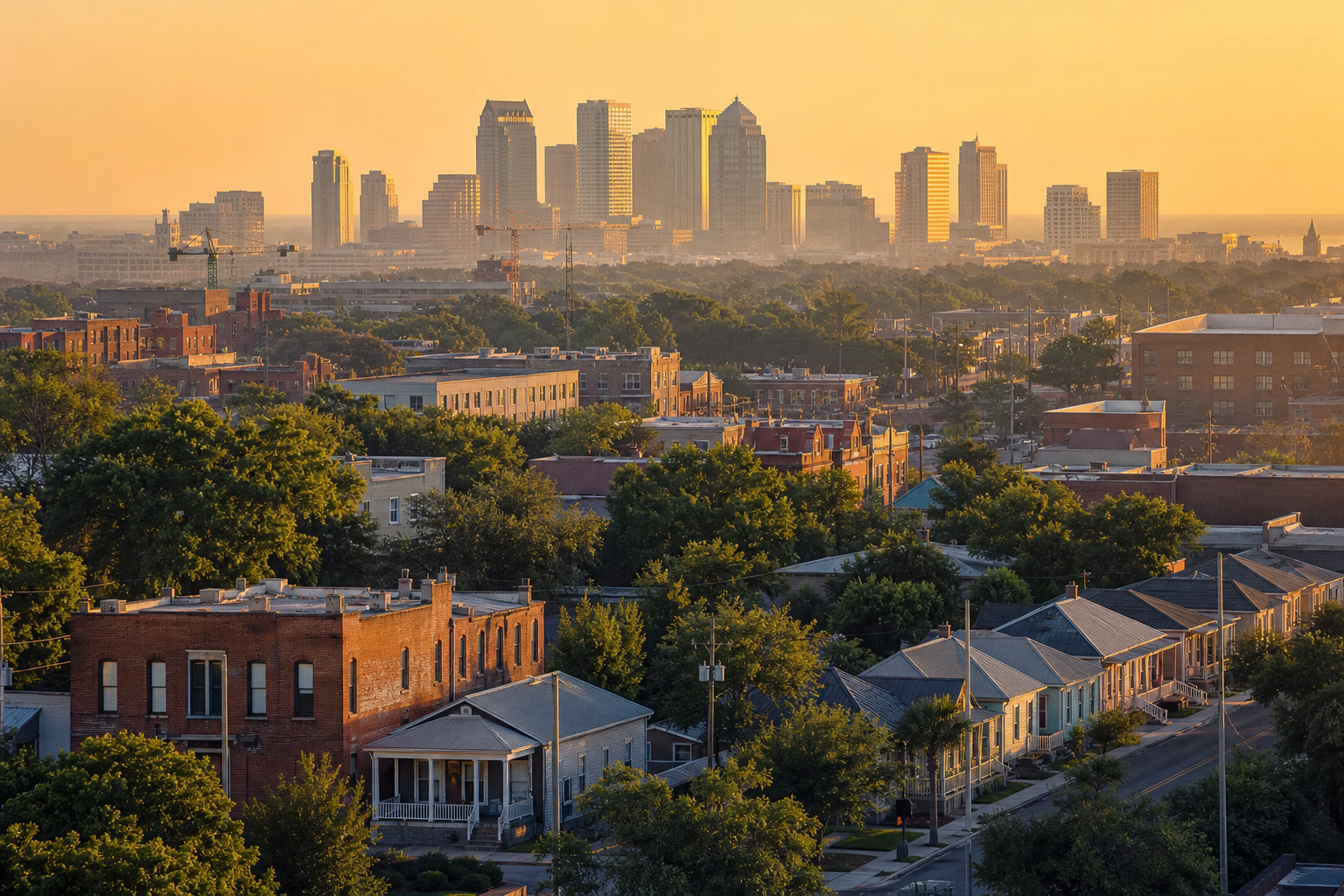
Ybor City offers unique real estate options ranging from pre-World War I historic homes and adaptive-reuse buildings to newer condominiums, all within a National Historic Landmark District northeast of downtown Tampa. The median sale price is $230,000, making it one of the most accessible entry points in the Tampa Bay urban core.
Does Ybor City offer unique real estate opportunities for buyers?
Ybor City offers unique real estate opportunities that you won't find anywhere else in Tampa Bay. It's a federally designated National Historic Landmark District with more than 950 historic buildings, a median sale price of $230,000, and a housing stock that ranges from pre-World War I worker cottages to adaptive-reuse lofts and modern condominiums, all within walking distance of restaurants, galleries, and one of the most culturally layered neighborhoods in Florida.
Key Takeaways
- Ybor City's median sale price is $230,000, the lowest entry point among the major urban Tampa neighborhoods tracked in recent local market data.
- The neighborhood is a National Historic Landmark District covering approximately 600 acres and 2,054 structures, with a period of significance running from 1886 to 1940.
- Historic homes are concentrated between 4th and 6th Avenues and 15th and 22nd Streets, the core of the pre-World War I residential grid.
- Properties inside the local historic district may require city review before exterior changes, so due diligence before you make an offer matters here more than in most neighborhoods.
- The city's active Community Redevelopment Areas (CRA 1 and CRA 2) mean conditions can vary block by block, and ongoing redevelopment is still reshaping parts of the district.
What types of real estate does Ybor City offer buyers?
Ybor City offers unique housing options that reflect its layered history as a cigar-manufacturing boomtown. The district's residential fabric was built to house workers from Cuba, Spain, Italy, Germany, and other countries who came to roll cigars in the late 1800s and early 1900s. That origin story shaped everything from lot sizes to architectural details, and it's why Ybor looks and feels nothing like Westchase or New Tampa.
Historic single-family homes
The largest concentration of pre-World War I houses sits between 4th and 6th Avenues and 15th and 22nd Streets, according to the National Park Service. These are worker-era cottages and small multifamily structures, many with original wood detailing, front porches, and the kind of lot-line proximity that creates a genuine neighborhood feel. Condition and alteration history vary dramatically from one property to the next, so a thorough inspection and title review are non-negotiable.
Adaptive reuse and converted spaces
Ybor holds the largest collection of cigar factories in the United States, along with commercial buildings and ethnic social clubs. Some of those structures have been converted into residential lofts or mixed-use spaces, and others remain candidates for redevelopment under the city's CRA framework. If you're drawn to industrial bones and high ceilings, this is where to look in Tampa Bay.
Newer condominiums and apartments
Not every buyer in Ybor is chasing historic character. Newer condominium and apartment projects have filled gaps in the district, giving buyers a low-maintenance option with walkable access to 7th Avenue and the broader neighborhood. For someone who wants urban proximity without the responsibility of a century-old structure, condos here can be a practical fit.
How does Ybor City's market compare to nearby Tampa neighborhoods?
The numbers tell an important story. At a median sale price of $230,000, Ybor City offers unique pricing relative to every comparable urban neighborhood in the Tampa Bay area. Here's how it stacks up against recent local market data for surrounding areas:
| Area | Median Sale Price | Median Days on Market |
|---|---|---|
| South Tampa | $424,999 | 43 |
| Harbour Island | $585,000 | 62 |
| Ybor City | $230,000 | 69 |
| Seminole Heights | $370,000 | 53 |
| Westchase | $559,845 | 49 |
| New Tampa | $422,000 | 60 |
Ybor's median is roughly half of South Tampa's and less than 40% of Harbour Island's. The tradeoff is a longer median time on market, 69 days, which reflects a more selective buyer pool and, in some cases, the additional due diligence that historic properties require. For buyers who do that homework, the price gap relative to nearby neighborhoods is real.
That said, these are area-level medians. An individual home's value in Ybor depends heavily on its specific block, build year, condition, and whether it carries local historic-district designation. The only way to know what a specific property is worth is to run a data-driven analysis on that address. That's exactly what I do before my clients make an offer anywhere in Tampa Bay.
The broader development momentum in the area is worth noting too. The Water Street Tampa development has reshaped the downtown core just west of Ybor, and that rising tide has influenced buyer interest throughout the urban neighborhoods northeast of downtown.
What should buyers know before purchasing in Ybor City's historic district?
Buying inside a National Historic Landmark District is different from buying in a conventional neighborhood, and I walk every client through those differences before we start touring properties here.
Historic-district review requirements
The City of Tampa describes Ybor as Florida's Latin Quarter, and that designation carries real regulatory weight. The local historic district covers approximately 600 acres and 2,054 structures, and properties inside it may require city review before exterior changes are made. The City of Tampa Designations Book establishes the district's boundaries and history, but the approval process for a specific project depends on the property's individual status. Before you plan a renovation, verify your property's designation and the applicable review requirements with the city directly.
Community Redevelopment Areas
Ybor City's redevelopment is ongoing. The city administers two Community Redevelopment Areas, Ybor CRA 1 and CRA 2, under Chapter 163 of the Florida Statutes. Those CRAs fund streetscape improvements, arts activity, new businesses, historic office space, and affordable-housing projects. What that means practically for a buyer is that conditions can vary significantly from one corridor to the next, and a block that looks quiet today may be adjacent to a planned project. I always tell clients to evaluate the specific block and any nearby planned development, not just the property itself.
The investment angle
With 34 active listings and 21 homes sold in roughly the past 90 days, Ybor City is a relatively tight market with a selective buyer pool. That dynamic, combined with the neighborhood's ongoing redevelopment and its position as the most affordably priced urban neighborhood in this comparison set, draws attention from buyers interested in long-term appreciation and rental potential. Whether that fits your situation depends on your goals, your financing, and the specific property. Those are conversations worth having before you start making offers.
For context on how urban Tampa neighborhoods are evolving more broadly, my post on the Water Street Tampa lifestyle covers the development energy reshaping the western edge of downtown, which sits just minutes from Ybor.
FAQ
What types of homes are available in Ybor City?
Ybor City's housing stock includes pre-World War I worker cottages, small multifamily buildings, adaptive-reuse lofts in converted historic structures, and newer condominiums. The mix is genuinely varied, and the right fit depends on whether you prioritize historic character, low maintenance, or investment potential. No two properties in the district are quite the same, which is part of the appeal and part of the reason thorough due diligence matters here.
Are Ybor City historic properties subject to renovation or design restrictions?
Properties inside the Ybor City Local Historic District may be subject to city review before exterior changes are made. The district covers approximately 600 acres and 2,054 structures, but not every property within those boundaries carries the same designation or the same review requirements. Before buying a property you plan to renovate, verify its specific status with the City of Tampa and factor any approval process into your timeline and budget.
How does living in Ybor City compare with living in downtown Tampa or Channelside?
Ybor City sits northeast of downtown Tampa and offers a distinctly different character from Channelside or the Water Street corridor. The architecture is older, the streetscape is more historic, and the cultural identity is rooted in the neighborhood's cigar-industry past rather than new mixed-use development. The median sale price in Ybor is also substantially lower than in most adjacent urban neighborhoods, which can make it an appealing alternative for buyers who want urban proximity without the premium price point.
Which parts of Ybor City are quieter and more residential?
The most established residential concentration is in the area between 4th and 6th Avenues and 15th and 22nd Streets, where the bulk of the pre-World War I worker housing was built. That corridor sits away from the 7th Avenue entertainment strip and tends to have a quieter, more neighborhood-scale feel. Conditions still vary by block, and I'd recommend walking a specific street at different times before committing.
Is Ybor City a good area for an investment property or rental?
Ybor City has characteristics that attract investment-minded buyers: a low median sale price relative to comparable urban Tampa neighborhoods, an active Community Redevelopment Area framework driving ongoing improvements, and strong walkability to employment, entertainment, and transit. Whether a specific property works as an investment depends on the property's condition, any historic-district review requirements that affect renovation plans, local rental regulations, and your financing structure. I can help you run through those variables on a property-by-property basis.
The bottom line on Ybor City real estate
Ybor City offers unique real estate options that simply don't exist anywhere else in Tampa Bay: a National Historic Landmark District with a median sale price of $230,000, a genuinely mixed housing stock, and a neighborhood identity built over more than a century. The due diligence is more involved than in a conventional suburban purchase, but for the right buyer, the combination of price, character, and location is hard to match in this market.
If you're thinking about buying in Ybor City or anywhere else in the Tampa Bay area, start with an accurate picture of what your money can get you. Get an instant home valuation or reach out directly and I'll walk you through what the current market looks like for your specific situation.
Equal Housing Opportunity. Patrick Uhler is a Broker Associate with Pineywoods Realty, licensed by the Florida Real Estate Commission. This article is general information only and is not legal, tax, or financial advice. Confirm your specific numbers and circumstances with your closing agent, tax advisor, or lender.


